
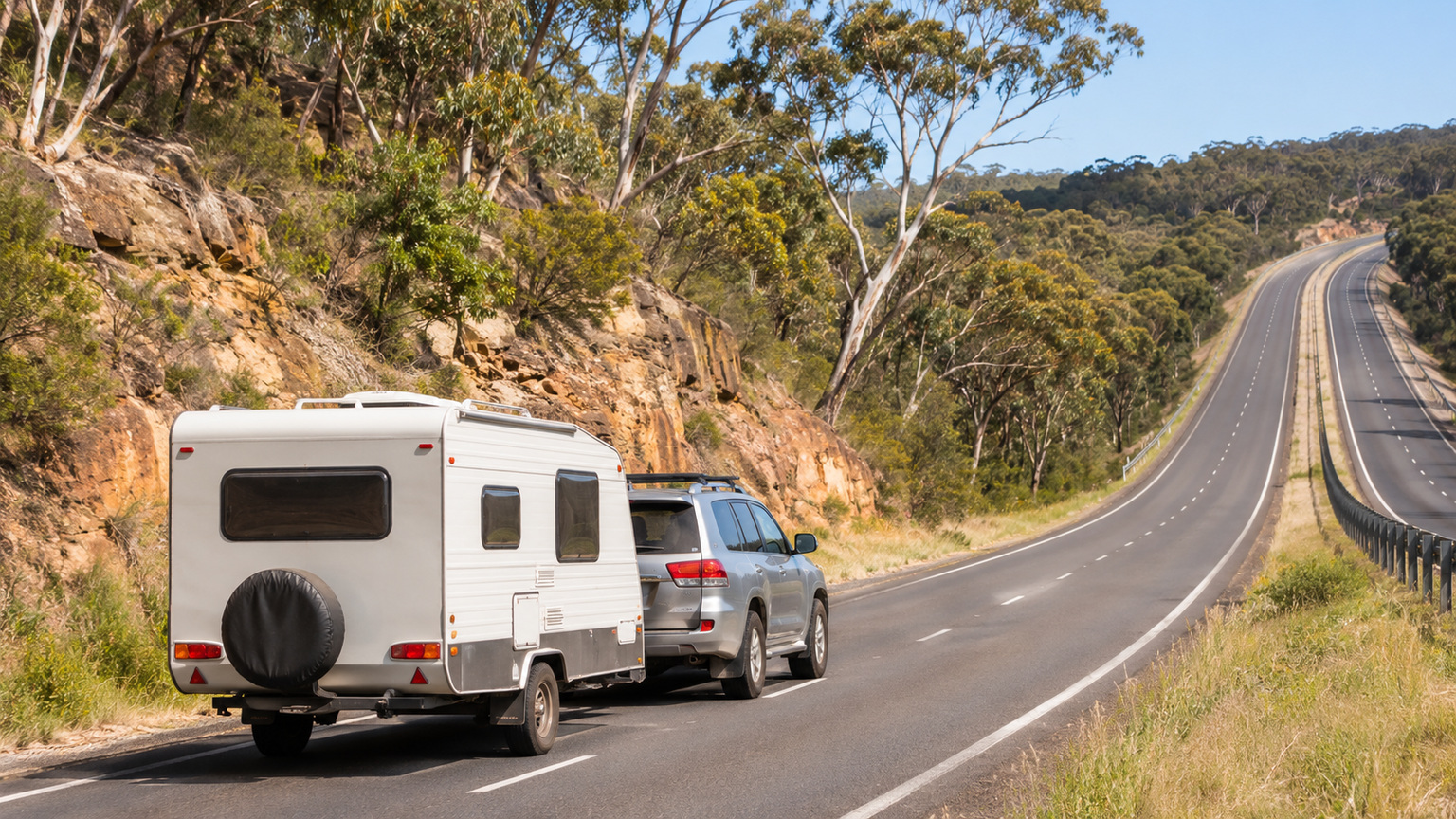
Your 4WD’s auto gets hot when you tow because its torque converter slips under load. Slip turns engine power into heat in the transmission fluid. A long climb with a van behind is the worst case. The converter slips the most there, and at low road speed less air moves through the transmission cooler. Heat wears out the fluid, and worn-out fluid is what eventually wears out the gearbox.
Picture the M1 north with the camper on, and the long climb out of the Hawkesbury towards Mount White. The transmission temperature reading creeps up, then eases back at the top. That is a gearbox doing its job. The reading to worry about is one that keeps going.
| What you notice | What it usually means | How urgent |
|---|---|---|
| The transmission temperature reading climbs on a long pull, then settles at the top | The converter slipped under load, as designed | Normal. Keep watching it |
| The gearbox hunts between two gears on the climb | Each change adds heat and can unlock the converter | Pick a lower gear and hold it |
| The reading keeps climbing over the top, or rises on the flat | Heat is building faster than the cooler can shed it | Ease off and pull over when safe |
| A shudder at light throttle or a burnt smell after a hot pull | The fluid may be heat-damaged | Book an inspection before you tow again |
What to check once you are home is in our guide to common 4WD problems after a long trip.
How the torque converter turns slip into heat
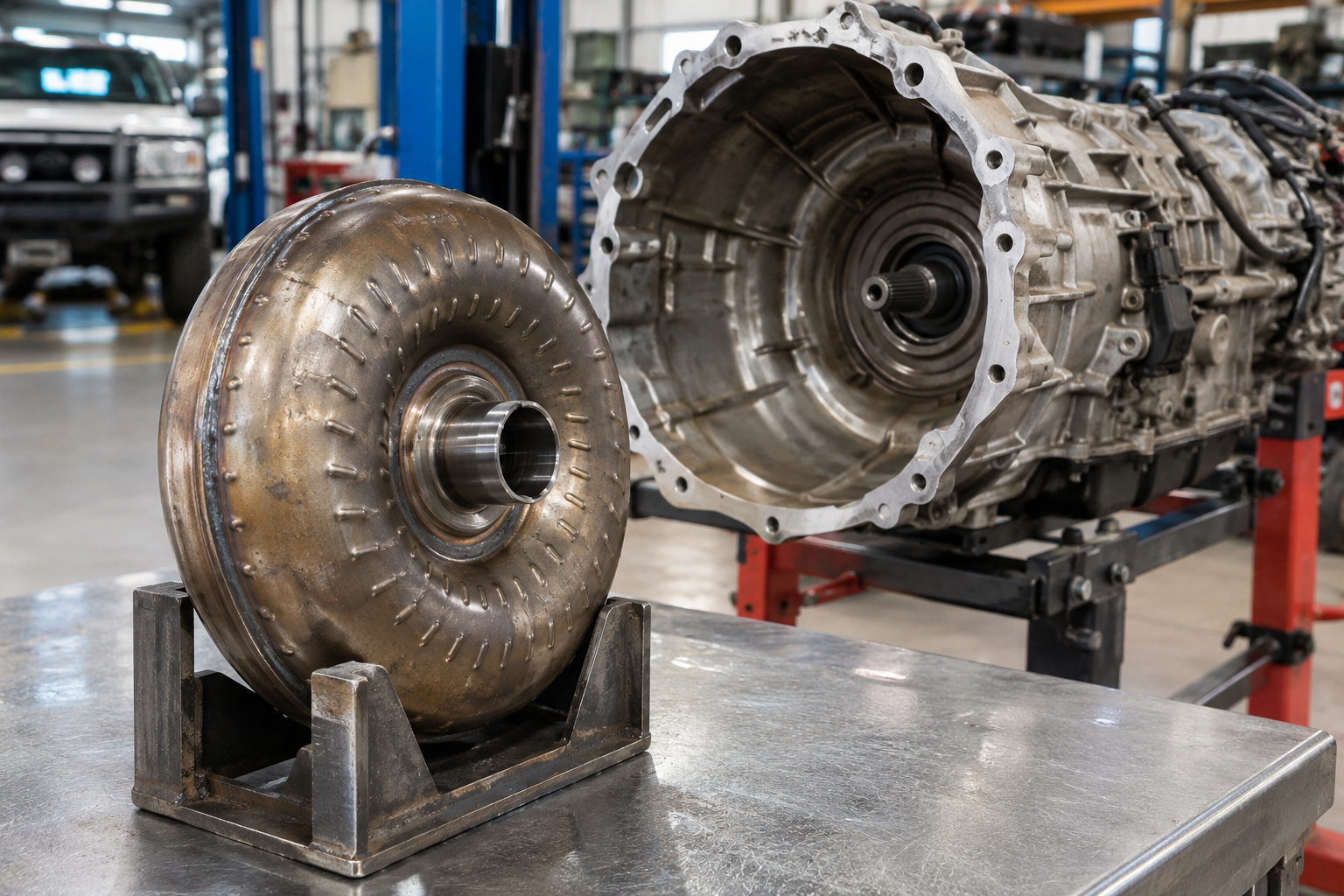
A torque converter is the fluid coupling between the engine and an automatic gearbox. It lets the engine keep turning while the vehicle sits still.
Because the link is fluid, it slips. Whatever engine power does not reach the gearbox goes into the fluid as heat. More slip means more heat.
At a steady cruise, a clutch inside the converter can lock it solid. This is called lock-up, and it stops the slip.
Why a long climb with a load behind is the worst case
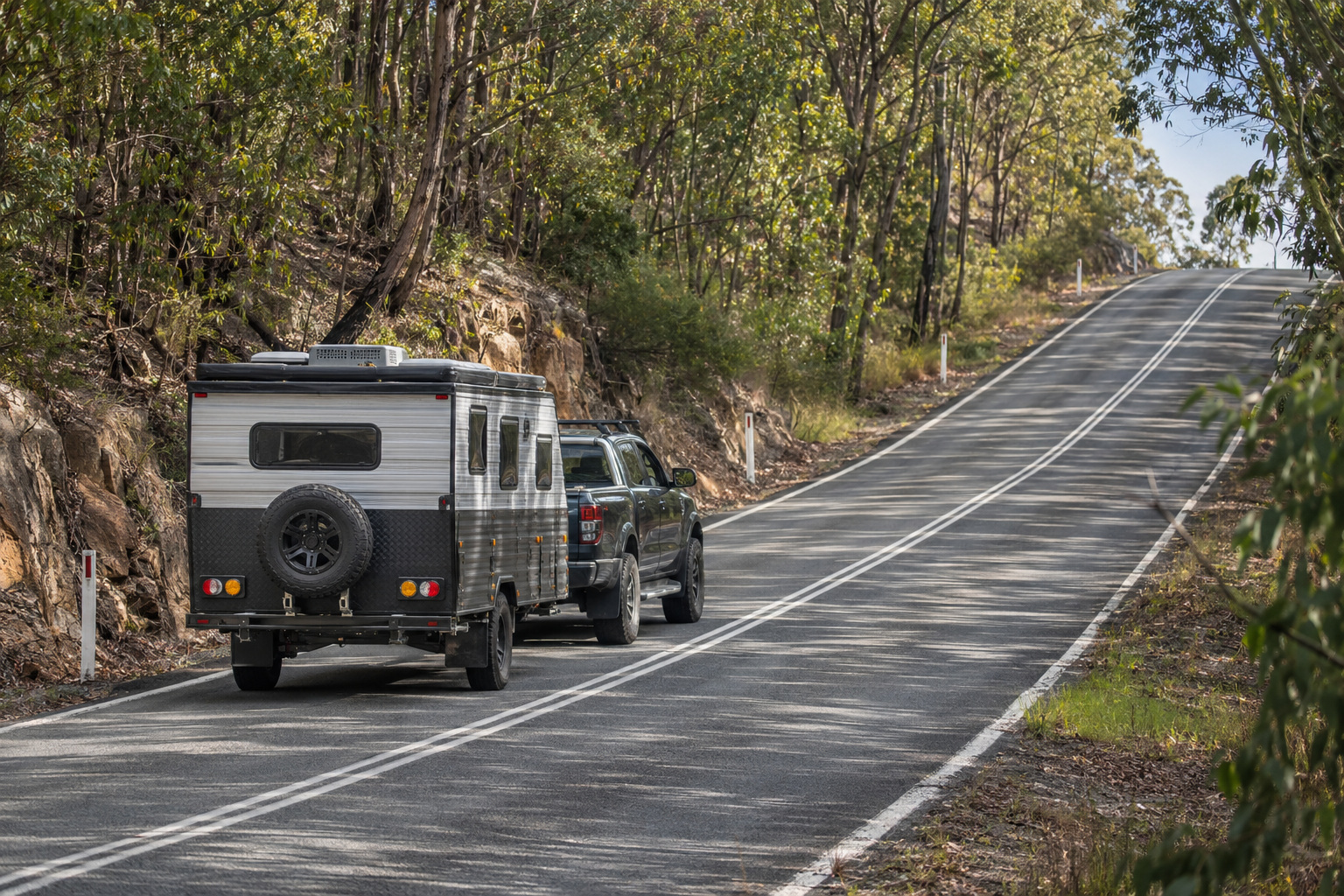
On a long climb with a van, boat or camper behind, several things stack up at once.
A hot day can add to this, but the climb and the load are the cause. What your rig is rated to tow is a separate question, covered in our heavy caravan towing guide.
- The engine works hard for minutes at a time. A short hill ends before much heat builds. A long pull keeps the converter working all the way up.
- The load asks for more pulling power. A converter can multiply the engine’s torque, or turning force, and it does that by slipping. Under a heavy load, that slip is the converter doing its job of getting you up the hill.
- The converter works unlocked. Lock-up is made for steady cruising. Under a heavy load on a climb, the converter often works unlocked, and that is when heat jumps. Lifting off or touching the brakes unlocks it too.
- Road speed drops. On many 4WDs the transmission cooler sits at the front of the vehicle. It is a small heat exchanger that passes heat from the fluid into the air moving through it. At low speed less air moves through it, just when the gearbox makes the most heat.
Cooked transmission fluid does not come back
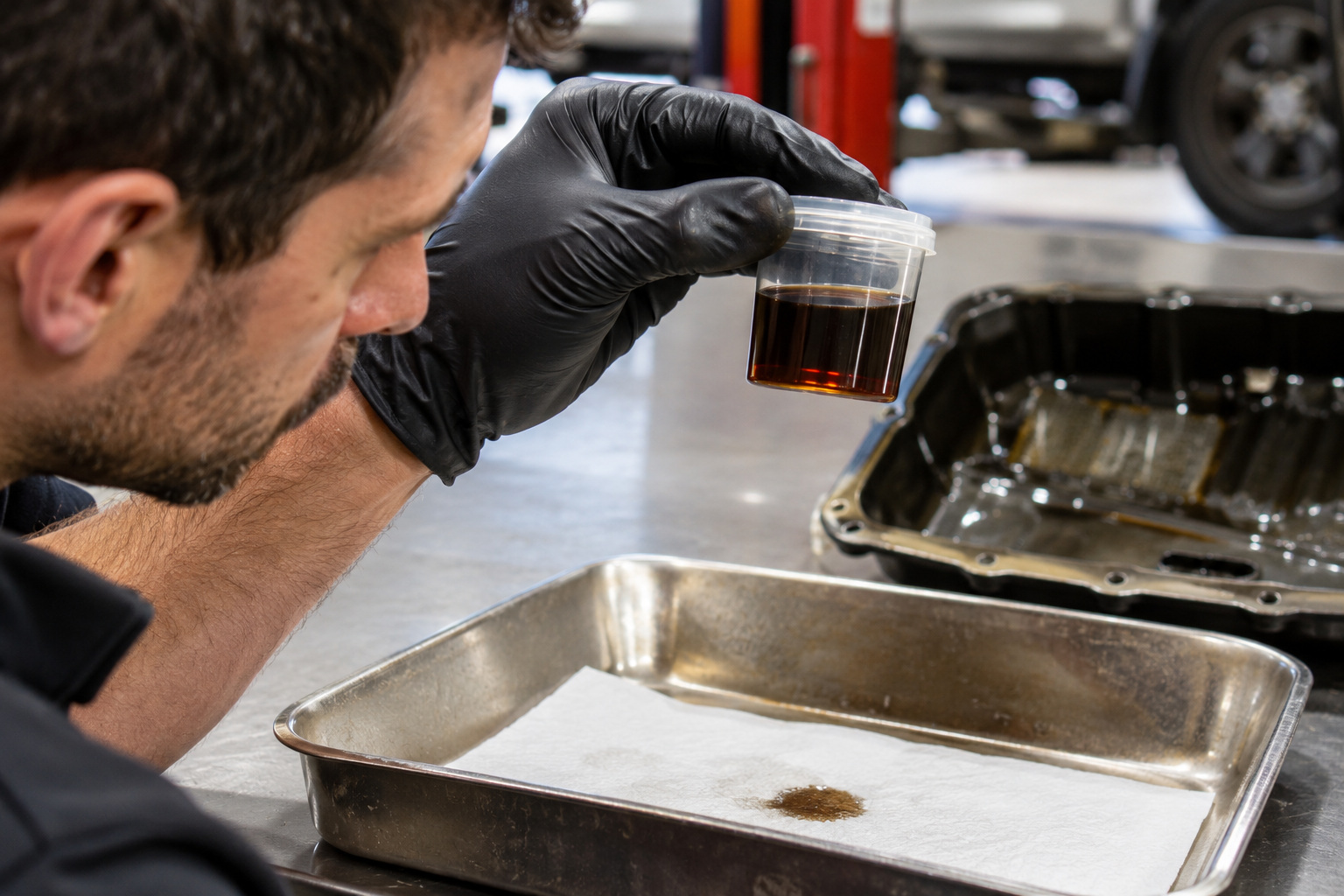
Transmission fluid lubricates the gearbox, carries the pressure that changes gears and carries heat to the cooler. Additives help it do all three.
Heat changes the fluid chemically. It oxidises, meaning it reacts with oxygen, and the additives get used up. Run it hot often enough and it darkens and smells burnt. That is what a workshop means by ‘cooked’ or ‘burnt’ fluid.
The damage stays when the fluid cools. Cooked fluid does not recover, and the fix is new fluid.
Signs the gearbox is too hot on a climb
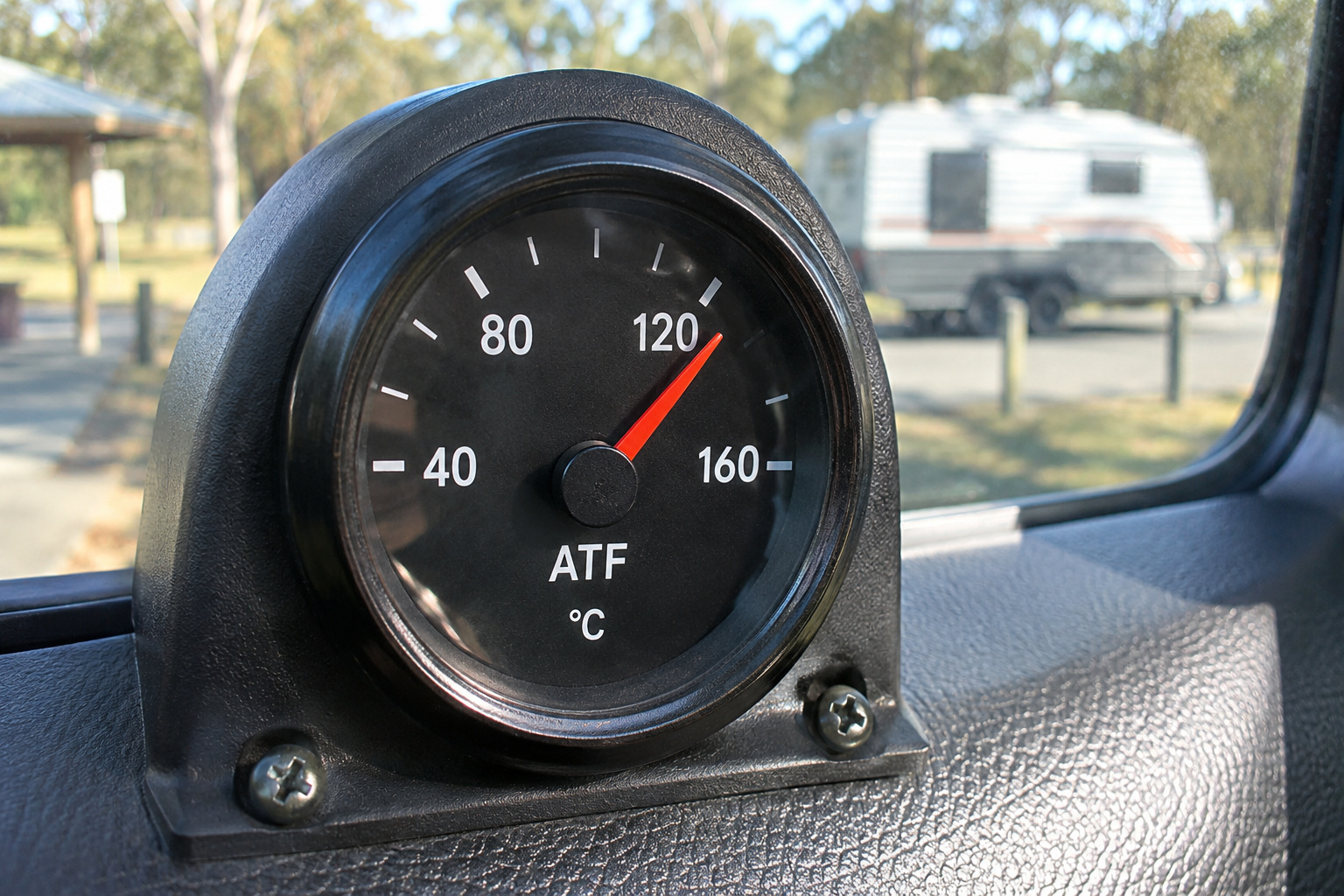
Too much heat shows up in the order you drive the hill.
A reading that will not come down needs action on its own. The other signs mean more together: two or more on the same pull are worth taking seriously.
- Partway up: shifts turn lazy. The gearbox changes late, or flicks between two gears without settling.
- Over the top: the transmission temperature reading keeps climbing instead of easing back.
- Back on the flat: a shudder at light throttle as you settle into a cruise.
- At the servo: a burnt smell when you pull up.
How to drive a long climb with a van behind
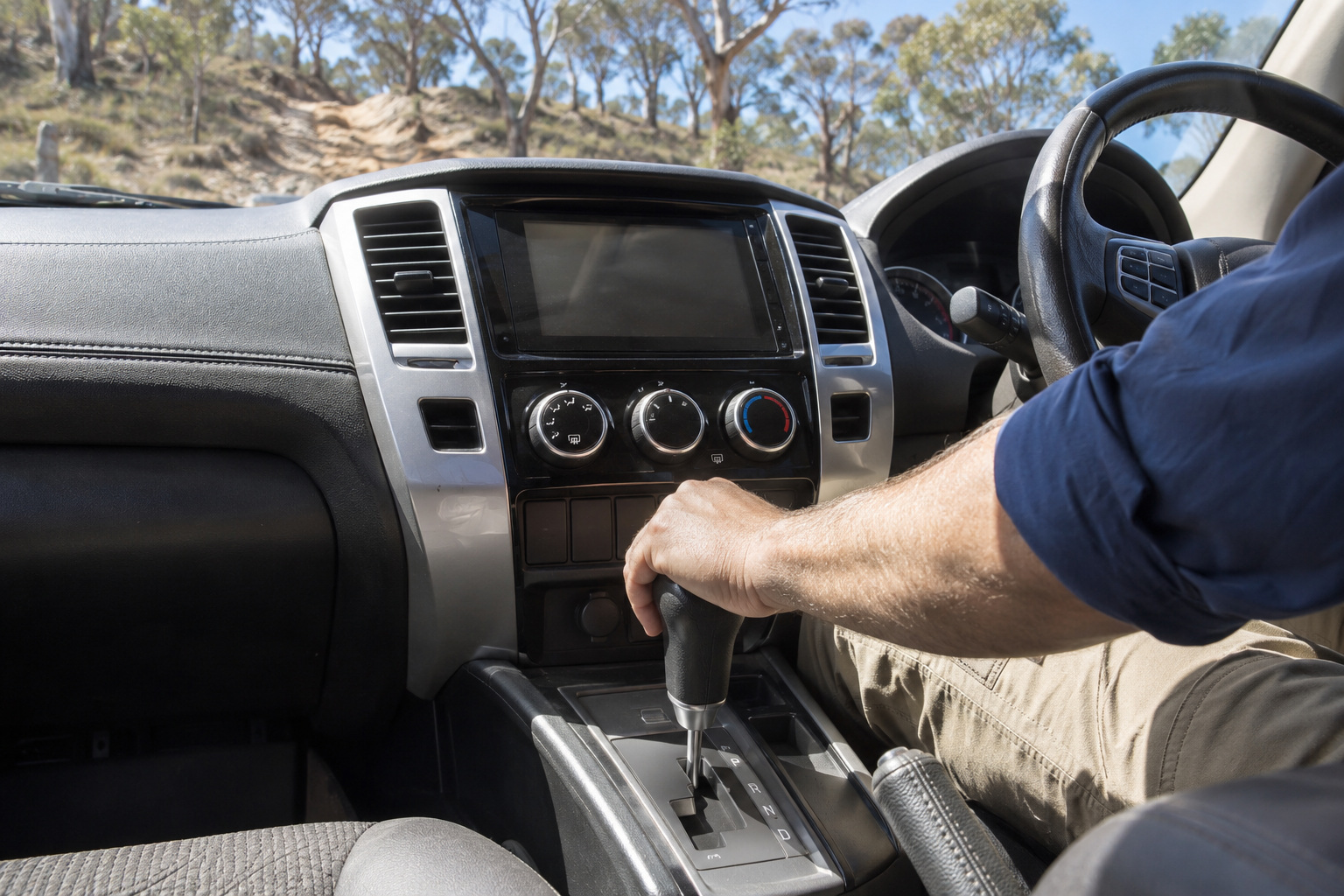
The aim is less slip and fewer gear changes.
Pick the gear before the climb, not partway up it. If your vehicle is comfortable in a certain gear on that kind of hill, select it at the bottom. Then the gearbox is not fighting for a gear halfway up with the load pulling against it.
Hold one lower gear rather than letting it hunt. Every change under load makes heat as the clutches inside engage. Each change can also unlock the converter and restart the slip. Some gearboxes will lock the converter in a gear you have selected yourself. So one held lower gear can run cooler than two swapped back and forth.
Use tow or haul mode if your vehicle has one. Not every vehicle has one, and the name differs between makes. Where it exists, it changes when the gearbox shifts and how long it holds a gear. It does not add power. Your owner’s manual says what yours does.
Ease off if the reading is still climbing. Back off the throttle and let it recover, even if you slow down. Pull over somewhere safe if it keeps going. Pushing hard over the top to save a minute is how fluid gets cooked.
Coming down the other side is a different job, with different advice.
Where a transmission cooler helps, and where it does not
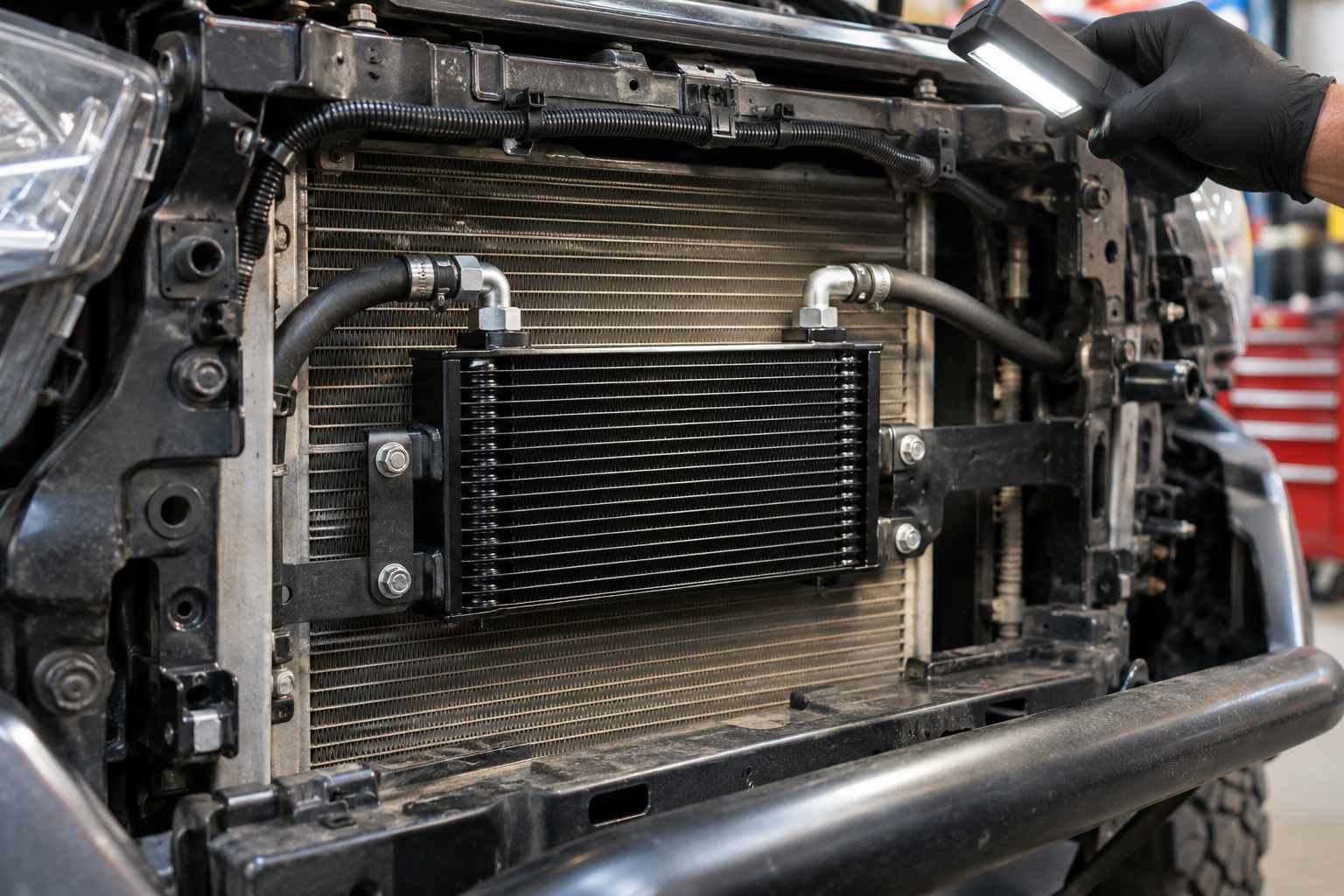
An auxiliary transmission cooler is a second heat exchanger in the gearbox’s fluid circuit. It gives the heat more surface and more air, so the fluid runs cooler on slow, heavy work like a loaded climb.
It is not the answer in two cases:
- The fluid is already cooked. A cooler keeps new heat down. It does nothing for fluid that heat has already damaged.
- The gearbox is already worn or slipping. A cooler controls temperature. It does not repair internal wear.
A towing 4WD needs its own fluid schedule
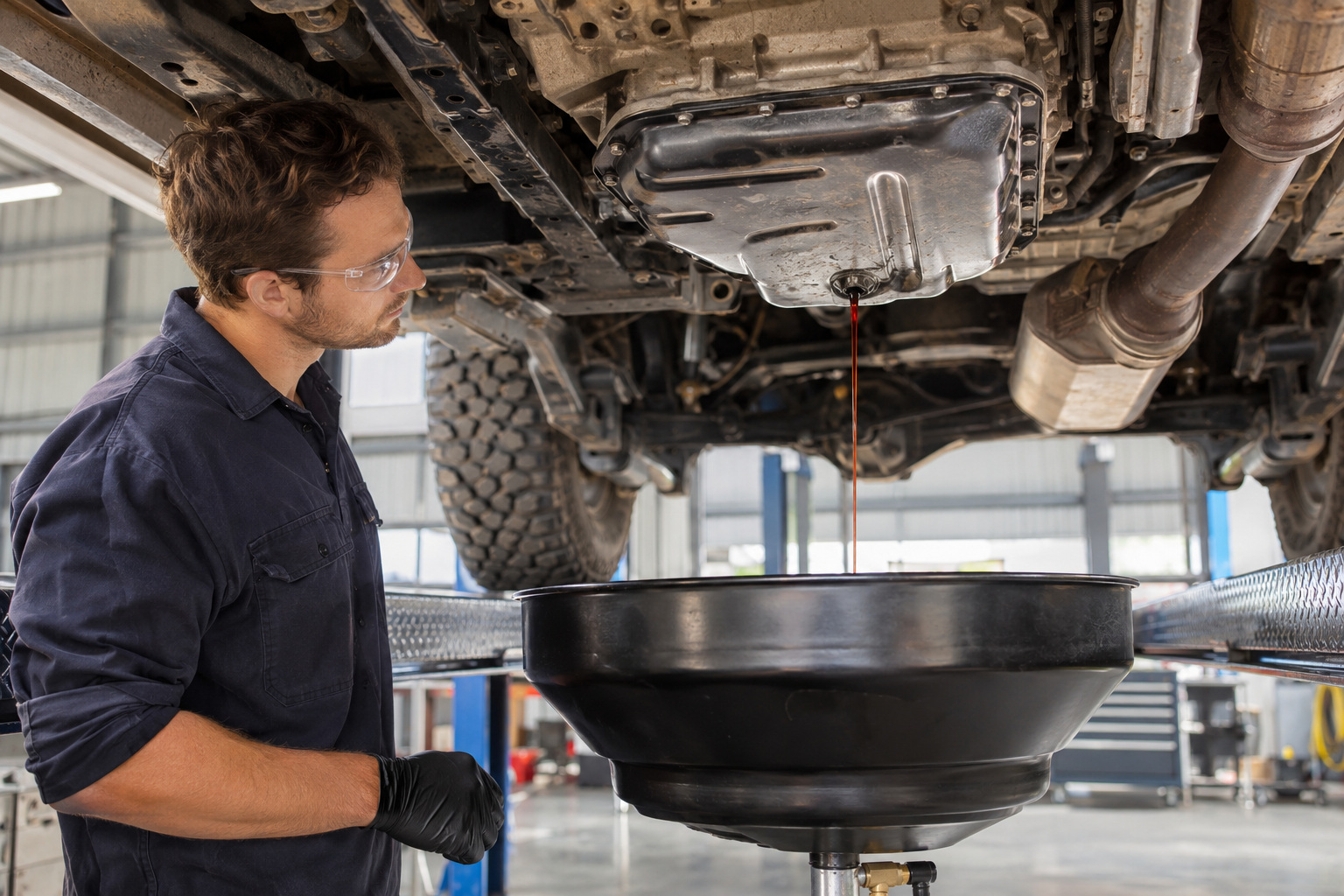
The same 4WD has two lives. Running empty around the Northern Beaches is light work for the fluid. Pulling a boat or a van up long grades is heavy work, and the fluid wears at the rate of the work.
Manufacturer intervals vary, so check your handbook. If it lists a separate schedule for heavy use or towing, that is yours. ‘Sealed for life’ does not mean sealed for a towing life.
A drain and fill swaps the fluid that runs out of the pan, which is only part of what the gearbox holds. A full flush pushes new fluid through and replaces most of it. Which suits a towing vehicle depends on the gearbox and its condition, so ask first.
Fluid condition is hard for an owner to judge and easy for a workshop to check. If you tow, book a 4×4 service with Xtreme 4×4 before towing season. When you book it in, ask to have the transmission fluid condition and the cooler looked at.
When a rising reading is worth stopping for
Some vehicles show transmission temperature in a dash menu, so look there first. If yours does not, a separate gauge or a plug-in reader earns its place. It tells you which of two situations you are in.
A reading that climbs on a pull and settles over the top is normal. The cooler caught up once the load came off.
A reading that keeps climbing on the flat, or will not come back down, is not normal. Ease off and pull over when it is safe. Before the next tow, have a 4×4 mechanic check the fluid condition and read the gearbox temperature under load. If cooked fluid has already left the gearbox slipping, new fluid alone may not fix it. At that point the gearbox itself may need 4WD repairs.
Frequently asked questions
Does towing wreck an automatic gearbox?
Not on its own. An auto is built to slip and make heat when it pulls a load. The harm comes from fluid run too hot, too often, and then left in service.
Does transmission fluid need changing on a modern 4WD?
The handbook decides, so look in it for a heavy-use or towing schedule. A sealed gearbox still runs on fluid that heat wears out, and towing is the hardest work it does.
What should I do if the reading climbs halfway up a hill?
Back off and drop to a lower gear you can hold. If the reading is still rising near the top, stop somewhere safe and give it time.