
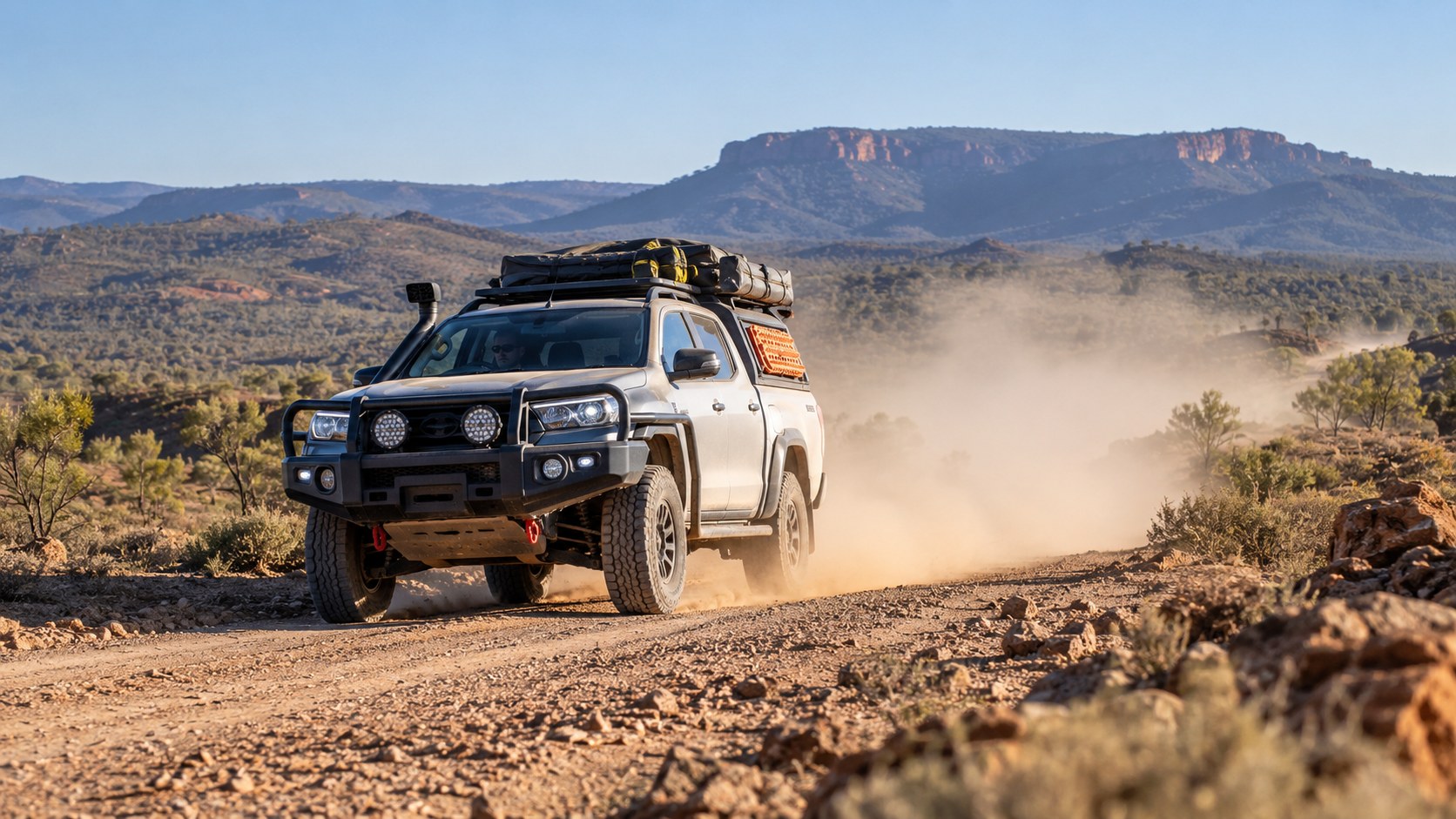
A diesel particulate filter catches soot from the exhaust and burns it off in a cycle called regeneration. That cycle needs the exhaust to stay hot across a sustained stretch of driving. A 4WD spends much of its life at low road speed under load, idling at camp, or doing short runs between the two. Those are the conditions manufacturers name as the ones that stop a regeneration finishing. A commuter car blocks its filter because it never gets hot enough. A 4WD blocks its filter for almost the opposite reason: it often runs very hot, and still never gets the twenty uninterrupted minutes the cycle wants.
| What you are seeing | What stage it points to | How urgent |
|---|---|---|
| A DPF light on its own, nothing else changed | Soot has built up and the filter is asking for a proper run | Not an emergency. Plan a sustained drive in the next day or two |
| The light appearing more often than it used to | The way the vehicle is driven is not letting cycles finish | Worth raising at the next service |
| The light still on after a long steady drive | The cycle is no longer completing on its own | Book it in. Driving on makes the next step bigger |
| The light plus reduced power or a limp mode | The filter is loaded past what a drive will clear | Stop planning trips and have it read |
| Oil above the full mark on the dipstick | Fuel from unfinished cycles collecting in the sump | Have the oil checked before the next long drive |
| The engine idling faster than usual and not settling | A regeneration running as designed | Nothing to do. Let it finish |
What a DPF does, and what a regeneration is
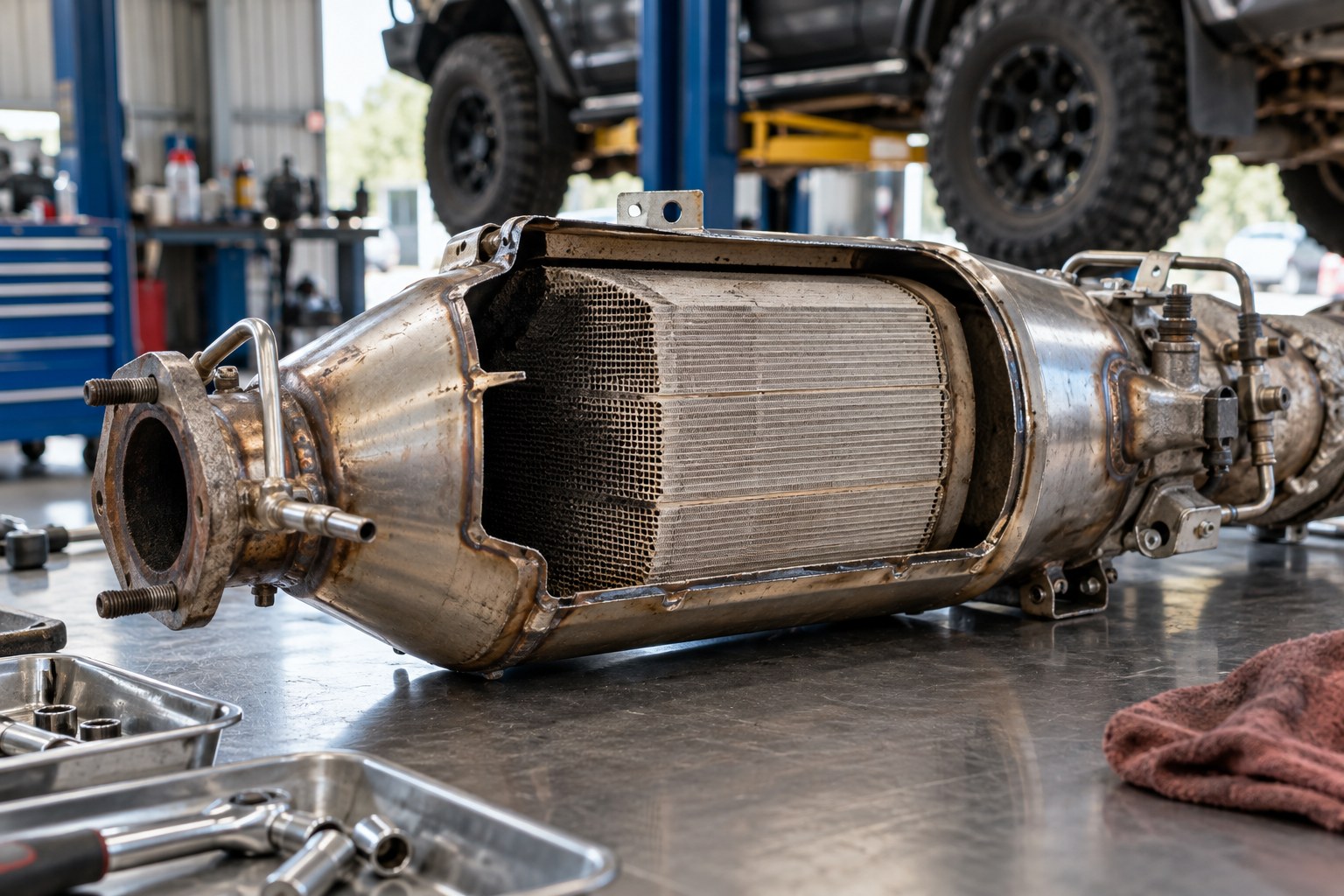
A diesel particulate filter, or DPF, sits in the exhaust and traps soot before it reaches the tailpipe. Regeneration burns that soot away again, so the filter has room for more.
Regeneration happens two ways, and neither asks anything of the driver. Passive regeneration happens when the exhaust is already hot enough from the way you are driving. Active regeneration is the one the engine starts deliberately, injecting extra fuel to lift the exhaust temperature until the soot burns.
An active cycle needs a stretch of driving to finish. Isuzu’s manual for the D-MAX is plain about it: switch off mid-cycle and the process stops, and the vehicle asks again once it is warm next time. Nothing breaks, and you will not ruin a cycle by pulling up at the lights.
Why a 4WD blocks its filter when a commuter car doesn’t

Manufacturers publish the conditions that stop a regeneration finishing, and the lists are short. Isuzu names driving only at low speeds, frequent starting and stopping, idling for an hour or more, and stopping the engine before it has warmed up. Ford’s list for the Ranger has the same shape: short distances, long idling, frequent switching on and off, and hard acceleration and braking.
Read that list as a 4WD owner and something jumps out. It is not a description of bad driving. It is a description of a good weekend.
Low range is the set of very low gears a 4WD uses for slow, high-effort work. In low range on soft sand or a steep fire trail, the engine works hard while the vehicle barely moves. A permit day on Stockton Beach, up past Newcastle, can be three or four hours of that. Salt and sand do their own separate damage to a 4WD, but this one is about speed, not grit.
Idling is next. An engine ticking over at camp is warm and making soot, but not the exhaust flow a cycle needs. Isuzu puts an hour on that.
Towing is the one that surprises people. Pulling a camper up the coast is heat and load all the way, which suits a filter. Then you turn into the site, park, and switch off. If a cycle had begun in the last few kilometres, that is where it ended.
Then Monday comes: ten minutes to the shed and ten minutes home. Four kinds of driving, all of them normal, and not one of them the steady half hour the filter wants.
This is for someone who already owns the vehicle and has a light on the dash, not someone weighing up a used ute.
What the DPF light means, and whether a drive will clear it
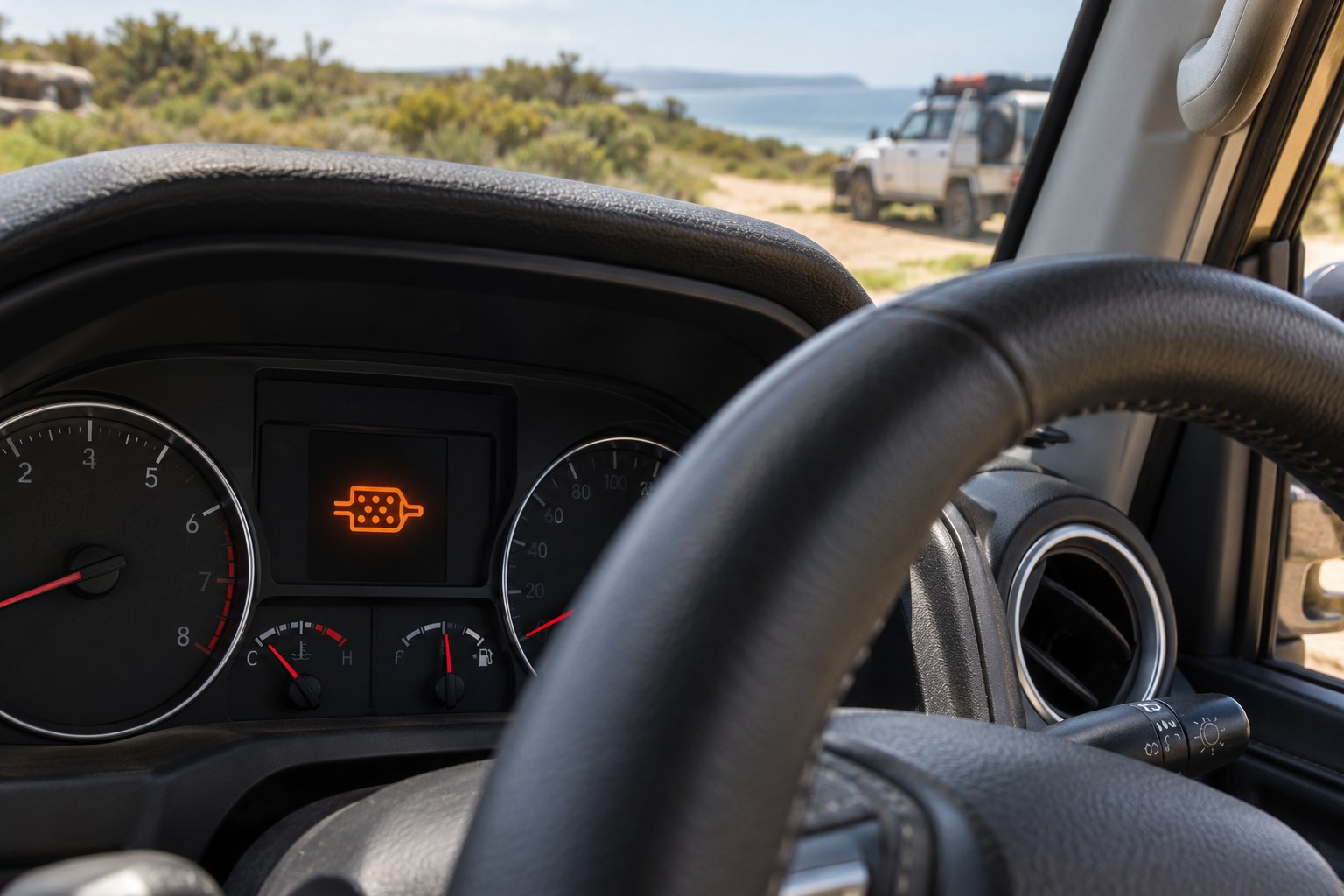
A DPF light means the filter needs a regeneration and the driving has not allowed one. It does not mean the filter has failed.
Each manufacturer describes the drive that clears it a little differently. Mitsubishi says 40 km/h or more with the engine warm, and expects the light out after about twenty minutes. Ford’s Ranger manual asks for a steady 48 km/h or above for roughly twenty minutes. Isuzu UTE Australia says a constant speed above 50 km/h until the light goes out. All three come to the same thing: a warm engine, a steady speed, twenty minutes without stopping. Your own handbook has the number for your vehicle.
A light with reduced power behind it is the other situation. Mitsubishi’s guidance is that a regeneration should finish within about 100 km of the light appearing. If it has not, the vehicle needs a workshop, and it can be driven there on low revs, away from heavy loads and high speeds.
Why the oil level going up is a warning
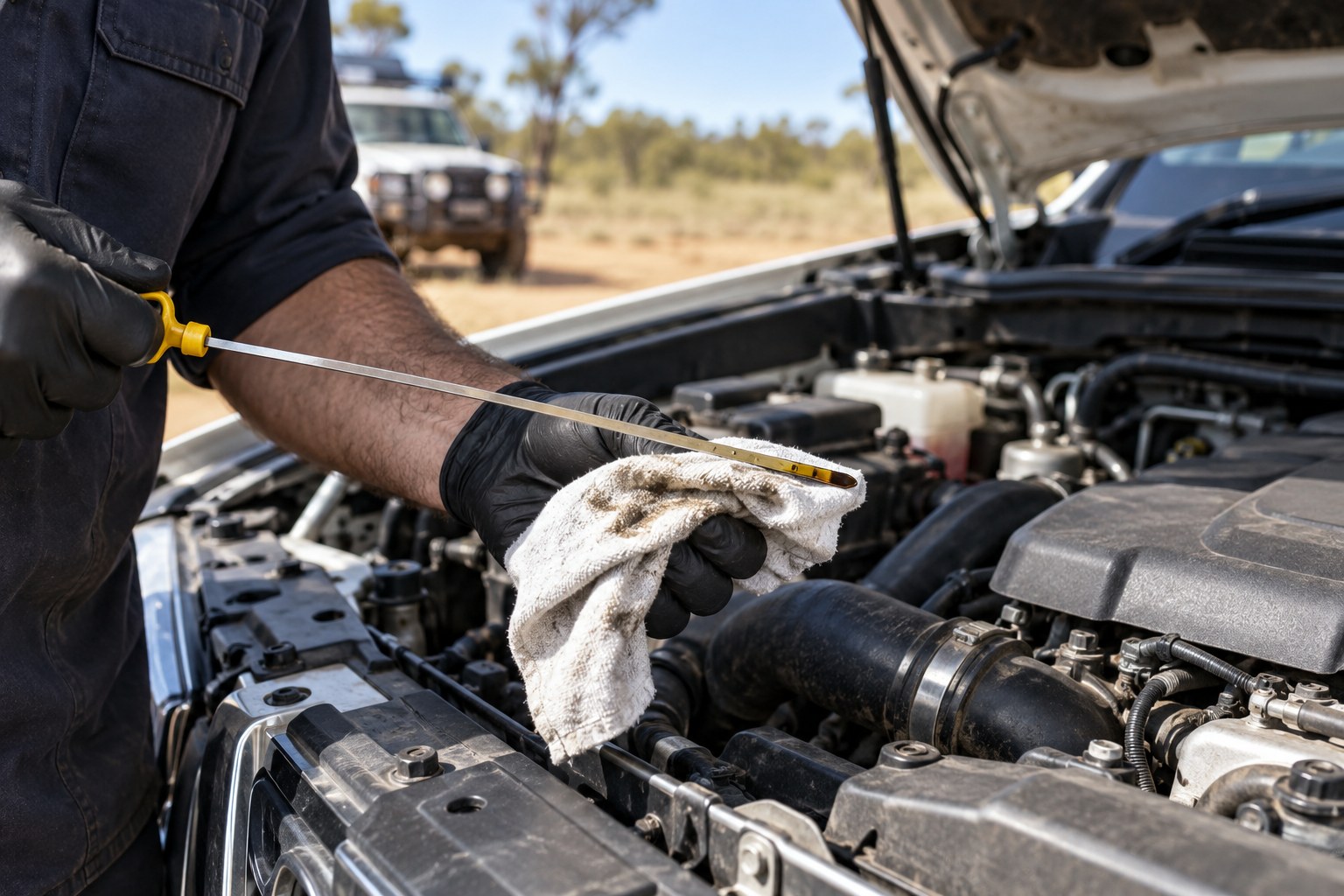
This is the part owners are least often told, and the one you can check tonight.
An active regeneration works by injecting extra fuel. Not all of it burns. Some ends up in the sump, and the level on the dipstick rises. A small rise is expected, and Mitsubishi says so plainly: the extra fuel may cause a small increase in the oil level, possibly above the maximum mark, and that is normal and does no harm.
The warning is not the rise. It is the rise that keeps going.
On a vehicle whose DPF light keeps appearing, cycle after cycle starts and does not finish. Each one puts fuel in. The level climbs and stays climbed. Mitsubishi tells its dealers the oil may need replacing for that very reason when a vehicle comes in. So the answer to a raised oil level is an oil change. Not a top-up, and not a shrug.
Go and look at the dipstick. Not because you might be low. Because you might be high. It takes a minute on a cold engine parked level, and it is the only DPF symptom you can read without a scan tool.
What can be done when a drive no longer clears it
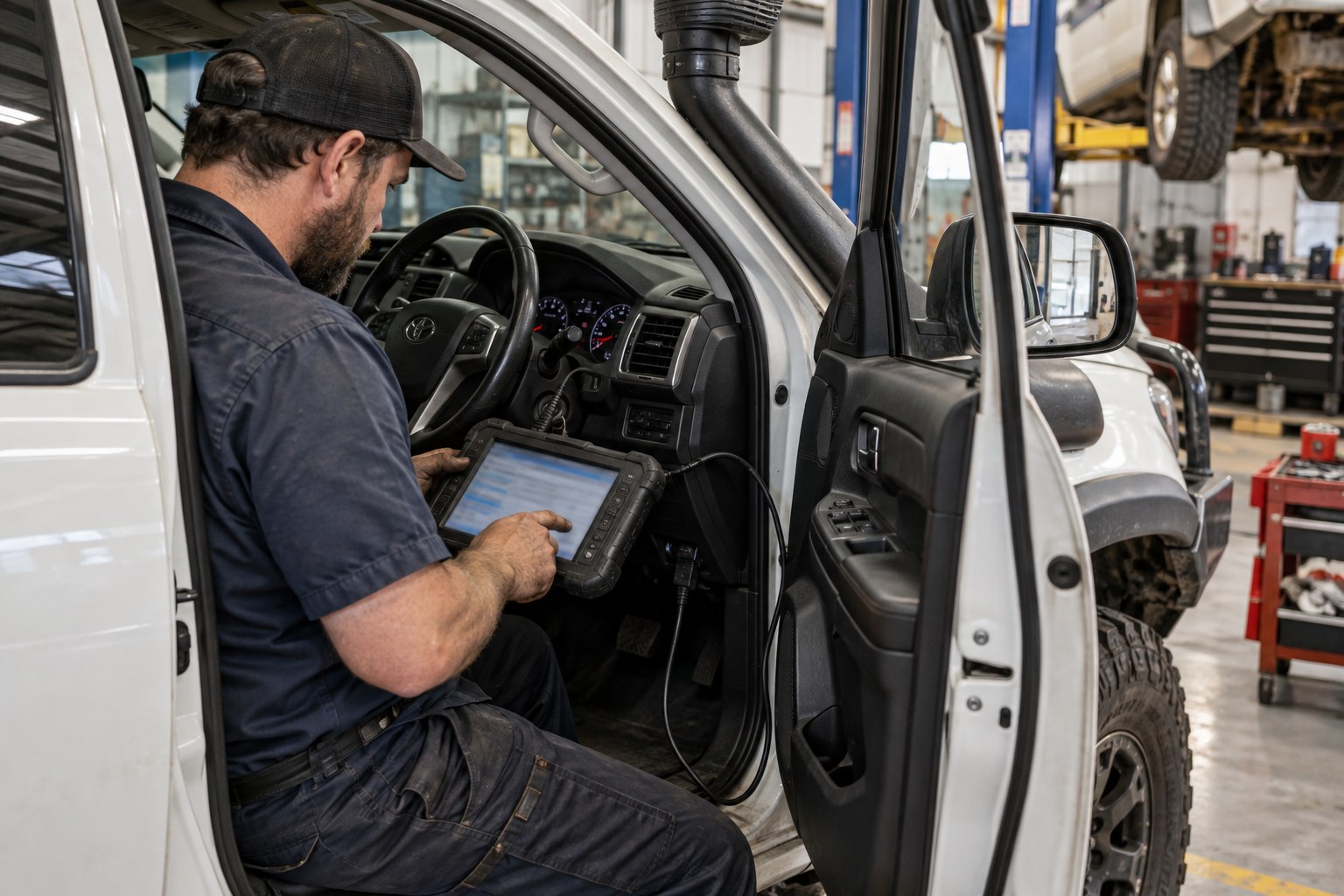
The order of escalation starts with reading rather than doing. A workshop reads the filter’s soot loading with a scan tool, which separates a filter needing one good cycle from a filter past that point.
If the diagnosis is clean, the workshop can command a regeneration rather than wait for the driving to allow one. Cleaning and then replacement come after that. Mitsubishi is direct about where it leads: a vehicle driven a long way with an overloaded filter may need the DPF replaced. Ash is the other reason a filter ends its life: it is what the soot leaves behind, and it never burns off.
Owners often ask about a fifth option. In New South Wales a particulate filter is a prescribed anti-pollution device, and using one on the road after it has been removed, disconnected or altered to emit more is an offence. Software counts as much as a cutting disc, and the maximum penalty for an individual is $22,000.
What it costs turns on the vehicle and the fault. The piece on what to check on a used HiLux or Ranger before you buy goes further into what DPF work can run to.
What stops a DPF blocking in the first place
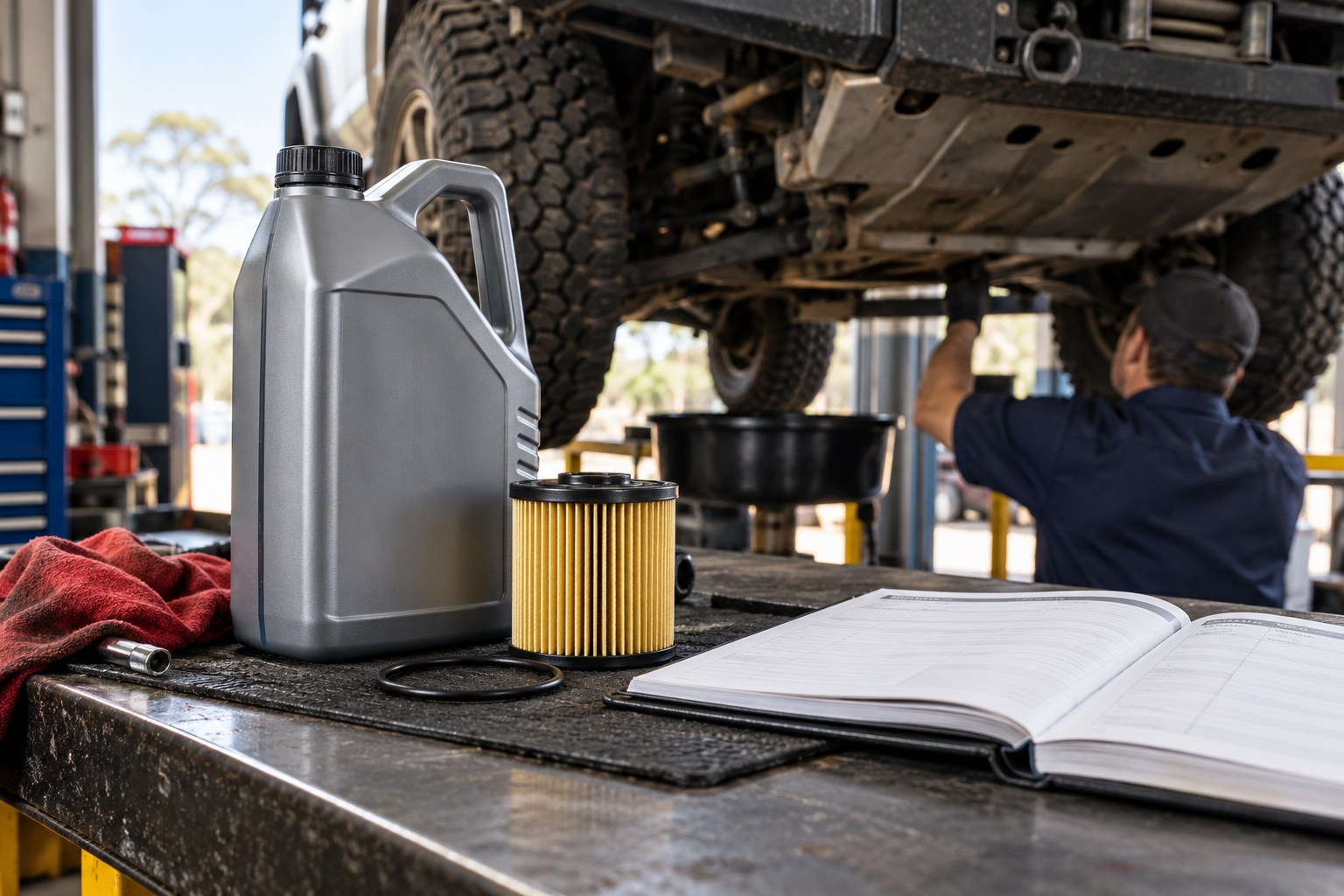
None of it is about buying anything. It is four habits.
Keeping to the service schedule matters too, and a hard trip is worth a look over afterwards in its own right.
- Let a cycle finish where you safely can. A lifted idle means one is running, and another ten minutes is worth it.
- Give it a proper run on purpose. A steady half hour at highway speed every few weeks is not an old wives’ tale.
- Use the oil the manufacturer asks for, and check that whoever services it does the same. A DPF needs low-ash oil, and Mitsubishi specifies ACEA C1, C2 or C3, or JASO DL-1, because ordinary oil leaves ash behind faster.
- After a hard tow, give it a few minutes of easy driving before you park.
If the light has appeared twice this year, or the oil level has crept up, ask for a reading rather than guess. Book your 4WD in for a service at Xtreme 4×4 in Mona Vale and ask for the filter’s soot loading and regeneration history while it is there. That tells you which of the two situations in the table above you are in, and it is better known before a big trip than after one.
Frequently asked questions
Can a blocked DPF be cleaned, or does it have to be replaced?
It depends how far it has gone. A filter still carrying soot can often be cleared by a commanded cycle, while one filled with ash can be past helping.
Is it safe to keep driving with the DPF light on?
A light on its own is a request for a proper drive, not a warning to pull over. If power has dropped away too, that is a workshop job.
Does towing make a DPF block faster?
Towing itself is not the problem, because a hard-working engine makes heat. The trouble comes at the end, when a cycle under way is cut short by switching off.