
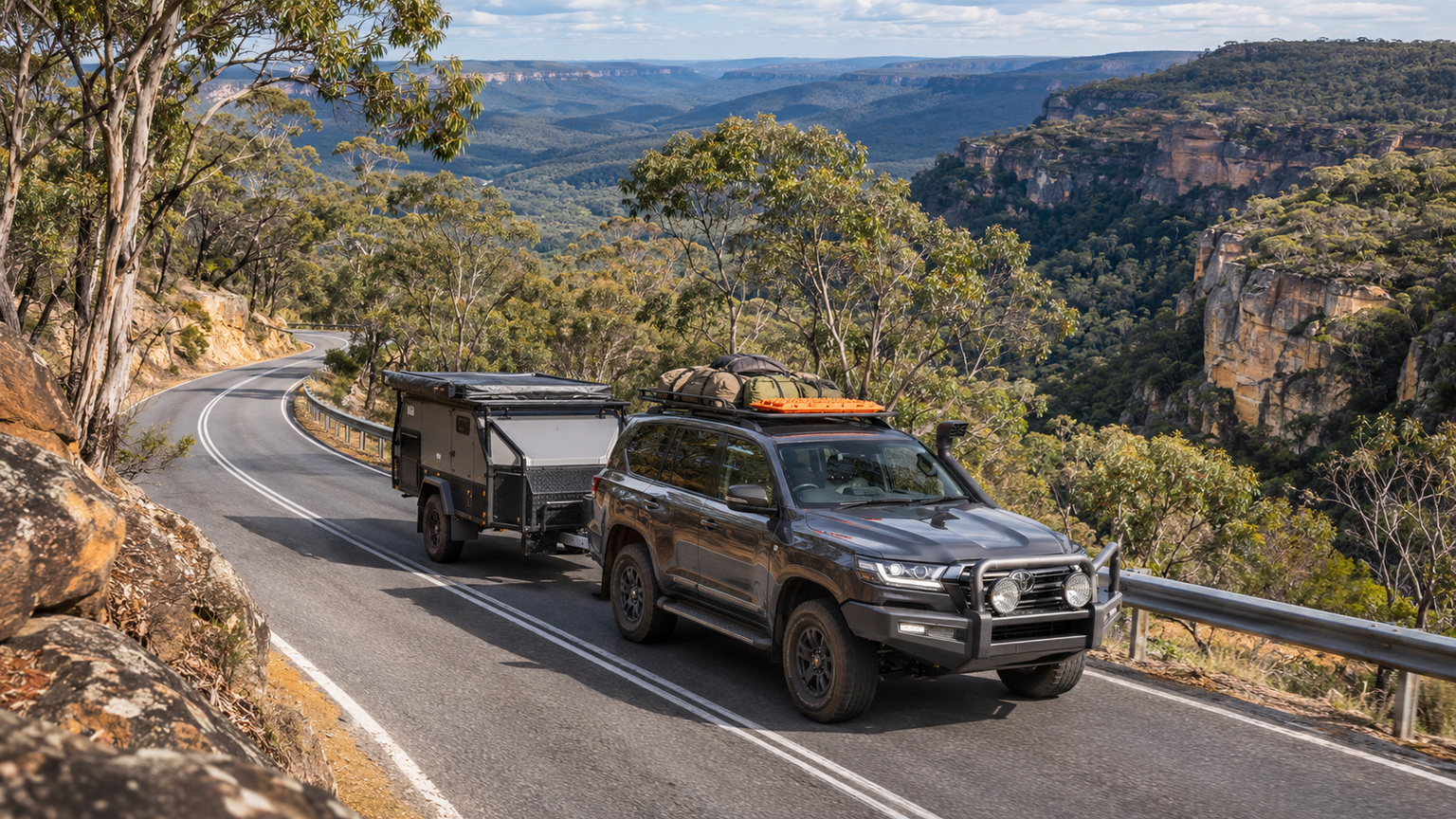
A loaded 4WD’s brakes fade on a long descent because they make heat faster than they can shed it. Every bit of speed the brakes remove becomes heat they then have to get rid of. Past a point, the pads grip less and the pedal travels further. The fix is a lower gear, picked at the top of the hill. The engine then holds the vehicle back, and the brakes only trim the speed.
You came down a long hill an hour or two out of Sydney, with the van behind. There was a hot smell at the bottom, and the pedal sat lower than it did at the top. That was fade. It is common, and the brakes usually come back once they have cooled.
What is brake fade?
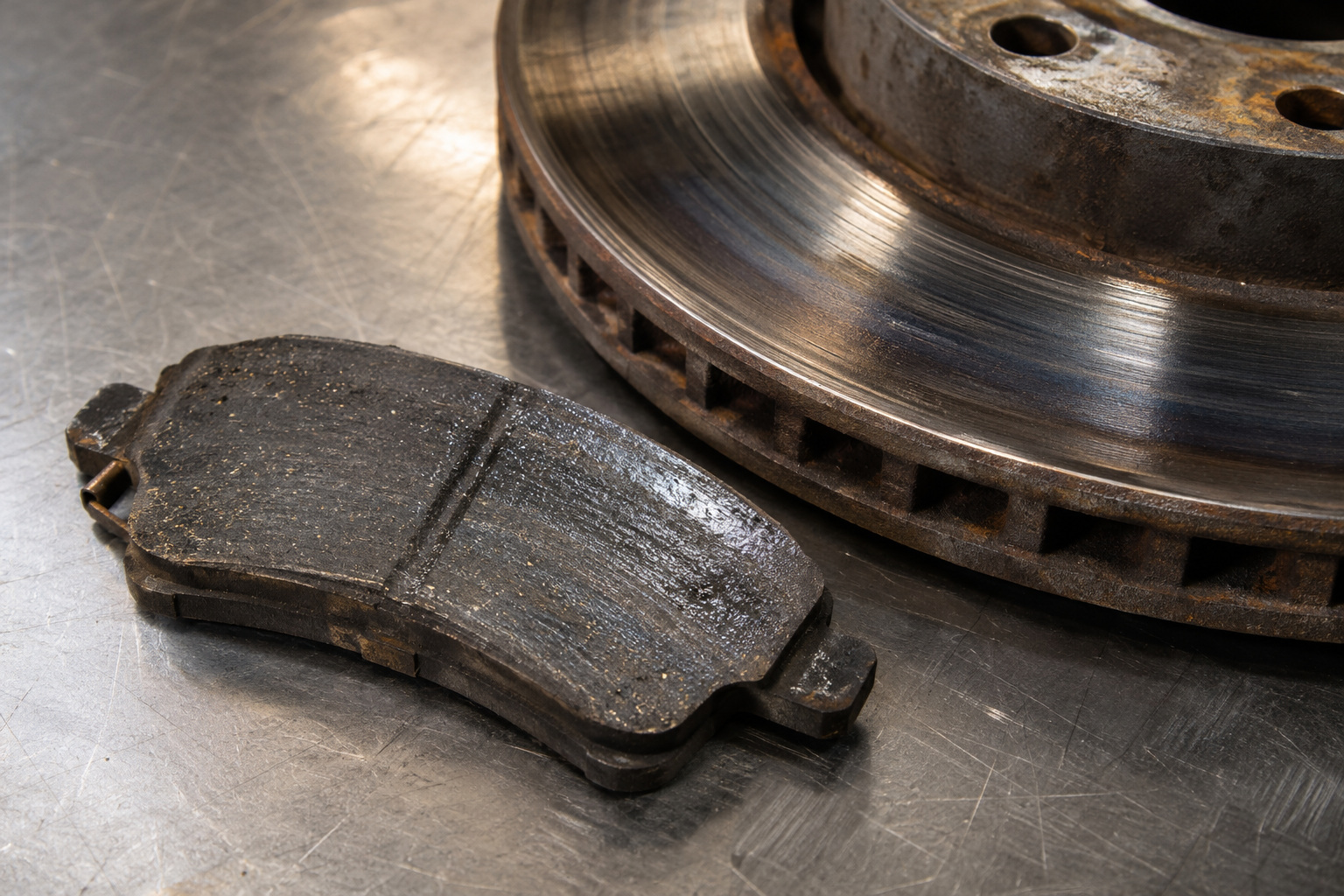
Brake fade is a loss of braking caused by heat. It comes in two forms, and on a long hill they often turn up together.
Pad fade starts in the friction material. A brake pad grips the disc well across its working temperature range. Push it well past that range and it grips less, so the same push on the pedal slows you less. Keep it there long enough and the pad face can glaze. That means it goes hard and glassy, and grips less even after it cools.
Fluid fade starts in the hydraulics. Heat soaks from the pads into the callipers and the brake fluid, and any moisture in the fluid can boil into vapour. Your foot then has to compress that vapour before the brakes bite, so the pedal goes further.
On a loaded descent the smell tends to come first. A pedal that goes long tells you the heat has reached the fluid too.
Why a loaded 4WD fades sooner than a car
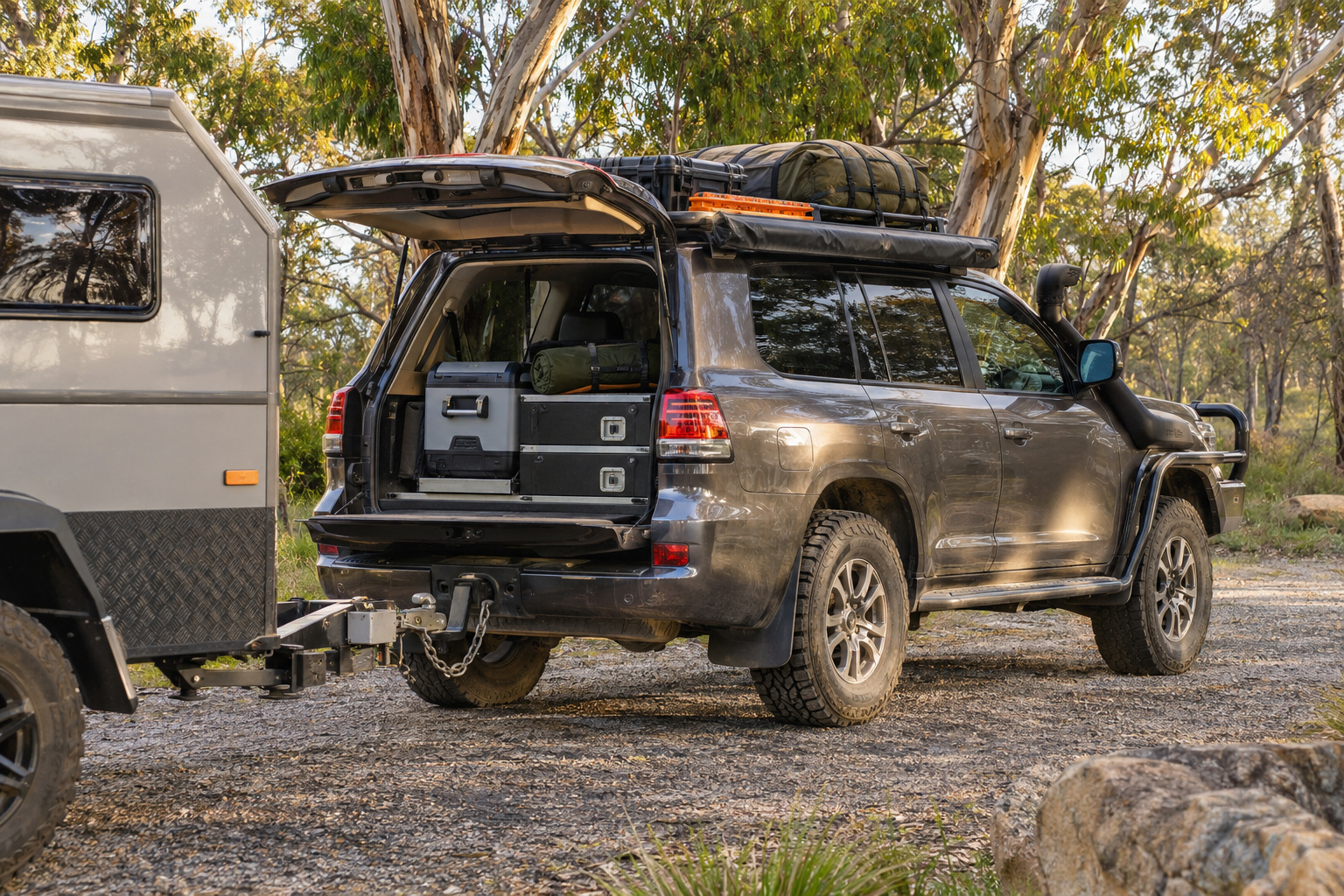
It comes down to weight. Going downhill, gravity keeps adding speed. Whatever the engine does not hold back, the brakes have to turn into heat. The heavier the vehicle, the more heat there is, and it all goes into the same pads and discs.
A touring 4WD carries a lot of weight:
- bar work, drawers and a fridge
- a full water tank and a roof load
- passengers and their gear
- a van, camper or boat on the back
Bigger wheels and tyres add weight too, and they take more work to slow down. Working out what your rig weighs on the road is its own job. For this problem, the point is simpler: everything the vehicle carries or tows comes down the hill through its brakes.
What you notice, in the order it happens
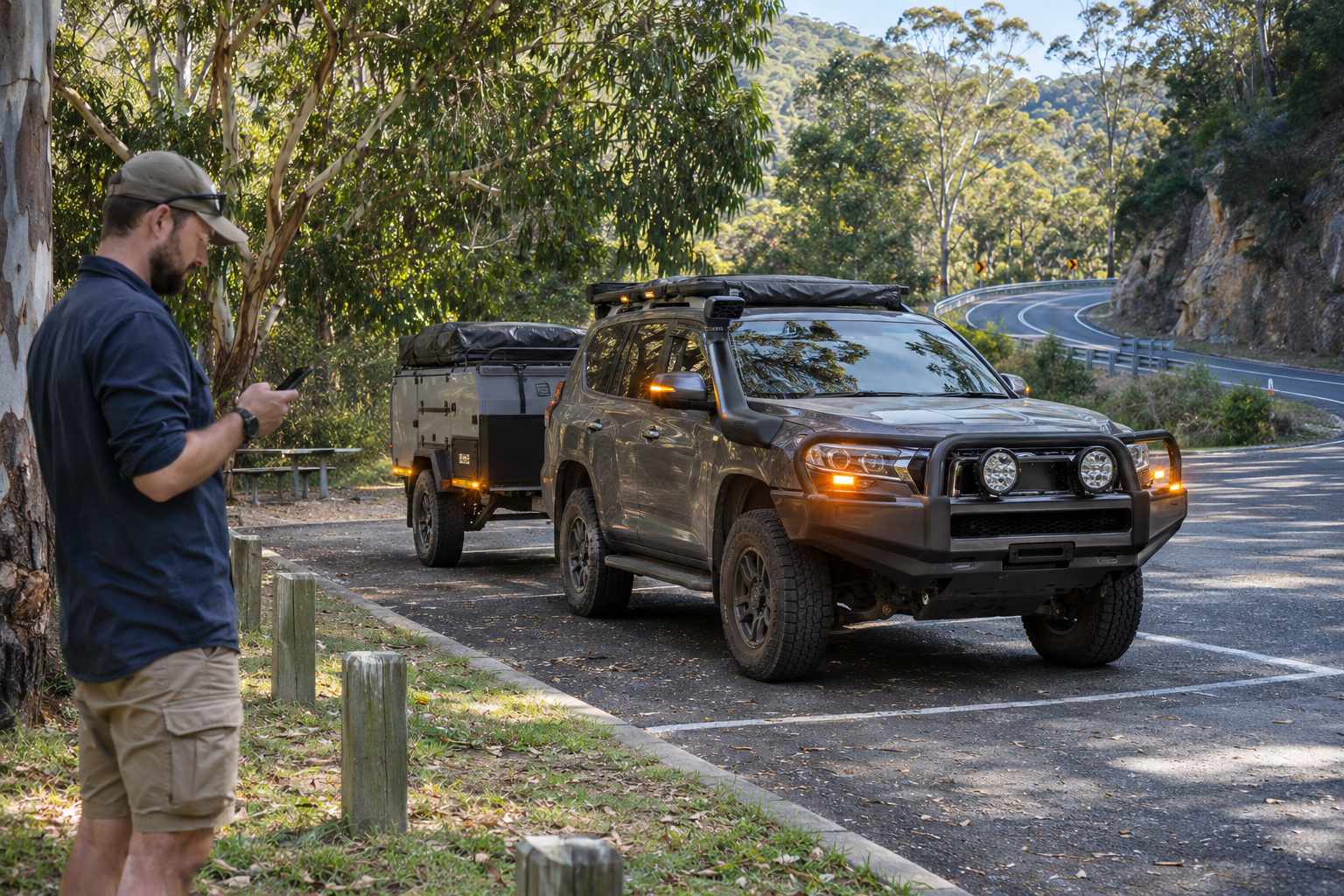
Fade gives warnings, and they usually arrive in this order. The first two are common and recoverable. A pedal near the floor is the line.
A smell on its own, with a pedal that feels normal, means the brakes are working hard. It does not mean they have failed. A pedal heading for the floor is different. That is the point where you stop, not the point where you push on to the bottom.
| What you notice | What it usually means | What to do now |
|---|---|---|
| A hot, sharp smell on the way down or at the bottom | The pads are running very hot | Change down a gear so the brakes do less |
| The pedal sits lower than it did at the top | Heat is reaching the fluid | Slow down early and look for a safe place to stop |
| You need more pedal for the same slowing | The pads are losing grip as they heat up | Pull over as soon as it is safe and let the brakes cool |
| The pedal goes close to the floor on the descent | The brakes are near their limit | Use the lowest gear you safely can and stop at the first safe spot |
| The pedal still feels soft the next morning | Something did not recover once it cooled | Have the brakes inspected before you tow again |
How to drive a long descent without fade
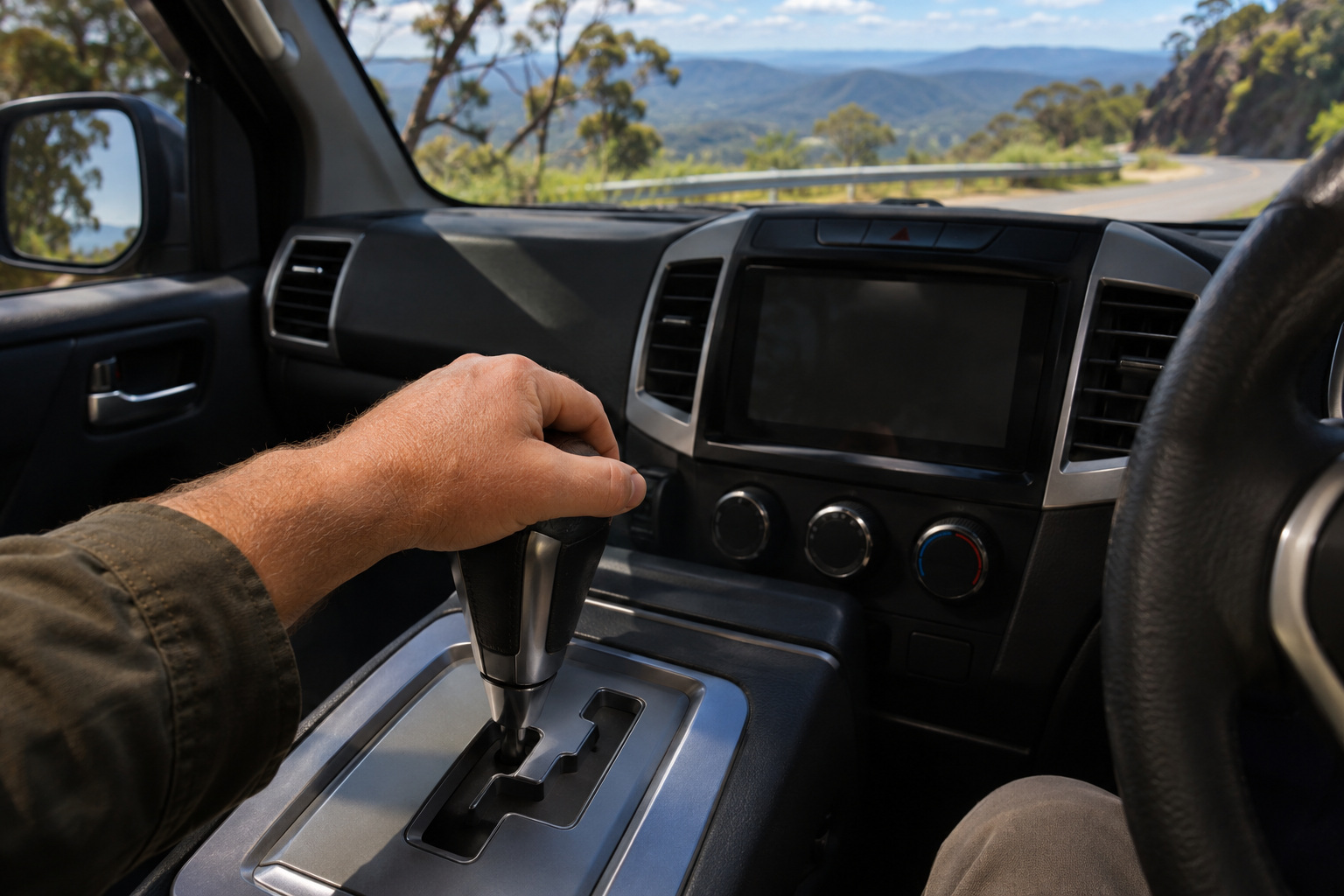
The aim is to make the engine do part of the slowing, so the brakes make less heat. Some steep NSW descents carry signs telling trucks and buses to use a low gear. A loaded 4WD with a van behind is closer to that truck than to an empty car.
If you tow a van with its own brakes, its brake controller should be doing its share. That is a setup check in its own right.
- Choose the gear at the top, before you need it. A lower gear makes the engine hold the vehicle back, which is engine braking. Select it before the road tips down. Once speed has built, you have to brake hard just to slow down enough to change down. On an automatic, use the manual or lower-gear positions on the selector.
- Use low range on steep, slow tracks. Low range is the set of very low gears a 4WD uses for slow, heavy work. On a steep fire trail it lets you walk the vehicle down with little braking. On a sealed highway hill, a lower gear in high range is the right tool. Your owner’s manual says how your vehicle wants low range selected.
- Let the engine set the pace. If you are on the brakes most of the way down, the gear is too high. Change down another one.
- Stop if the smell stays. If changing down has not cleared it, find somewhere safe, stop, and give the brakes time. Do not carry on down with the smell and a long pedal.
- Let them cool before you park hard on them. After a hot run, do not leave the vehicle sitting on a hot handbrake. Chock a wheel or leave it in gear where that is safe.
Before a long trip, have the brakes looked at. The long weekend prep guide covers what to have checked before you go.
What a workshop checks after a hot descent
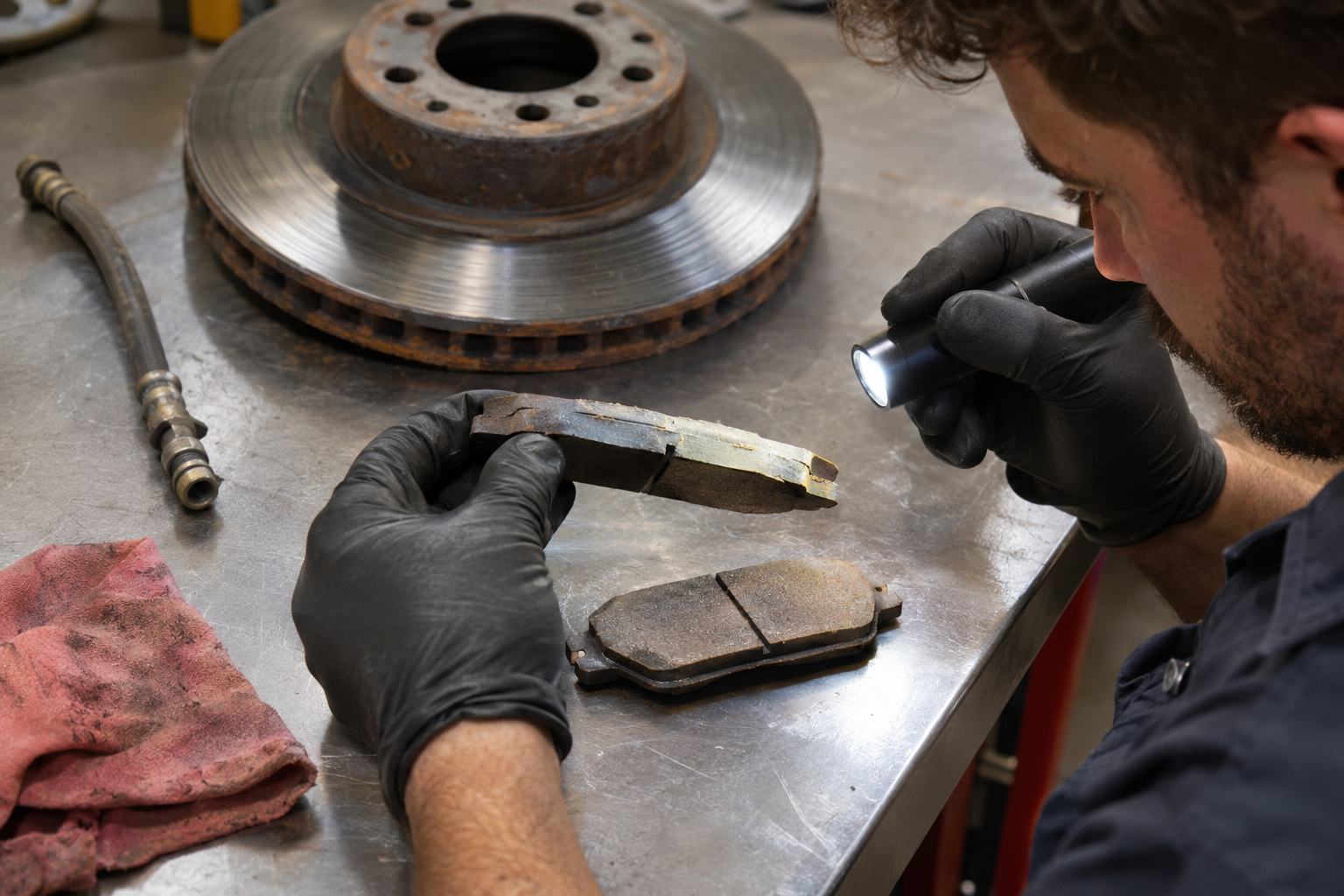
After a hot descent, a mechanic looks at the parts that took the heat. That means:
If the descent left you with a long pedal, say so when you book and ask for the fluid to be checked too.
- the pad faces, for glazing and how much material is left
- the discs, for signs of overheating
- the flexible brake hoses
What turns up in the driveway after a hard trip is a different list.
Do bigger brakes stop fade?
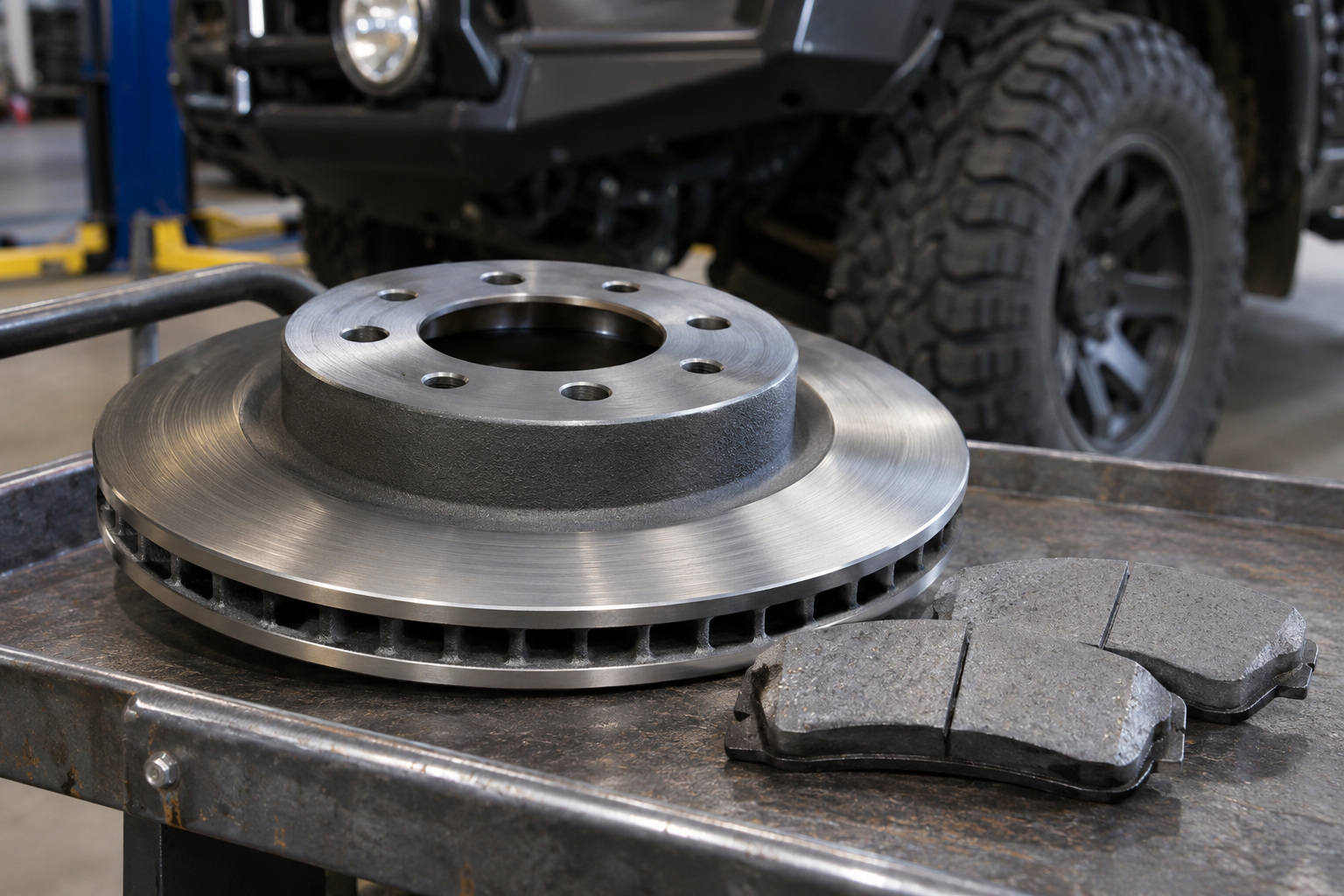
Sometimes, but for many owners they are not the first fix. A lower gear on the hill does more than a big brake kit. So does less weight in the vehicle, and the right pad for towing. That is the honest answer.
Where an upgrade helps, it helps in one of two ways:
- It sheds heat faster. Larger or better-ventilated discs give the heat more metal and more air to go into.
- It holds grip when hot. Pads rated for higher temperatures are made to keep their bite when the brakes run hot.
A specialist 4×4 workshop can fit heavier-duty braking parts for towing. Whether your vehicle needs them depends on what it weighs, what it tows and where you take it. A brake upgrade does not let you skip the gear choice at the top of the hill.
Does the vehicle carry more now than when the brakes were last checked? Then get them looked at before the holiday towing starts. At Xtreme 4×4 a full brake inspection is part of the minor service. Book a 4×4 service with a full brake inspection, and tell us what the vehicle carries and tows.
Frequently asked questions
Does brake fade damage anything?
It can, but not always. Pads that ran too hot can come out with a hardened face that grips less, and the fluid may need attention. If the pedal feels normal once everything is cold, an inspection at the next service is enough to find out.
Is it safe to keep driving once the pedal has gone long?
Not down the rest of that hill. Stop somewhere safe and let the brakes cool, then go on in a lower gear. If it is still soft the next day, have it looked at before the van goes back on.
Will my brakes fade again on the next big hill?
They can, if the brakes are left to do all the work again. Pick a lower gear before the road drops away, so the engine takes part of the load. Glazed pads, or fluid that needs changing, will fade sooner, so get those checked first.