

Dust and corrugations damage a 4WD in two separate ways. Dust gets into parts that were never sealed against it and wears them from the inside. Corrugations shake fasteners, bearings and bushes loose at a frequency the vehicle was never designed around. Both are slow, both add up, and neither turns on a warning light.
The vehicle that suffers most is not the one that does a big trip once a year. It is the one that drives unsealed road every other weekend. Cross the Hawkesbury at Wisemans Ferry, take the gravel through to St Albans, and that is about twenty kilometres of fine dust and washboard. That vehicle never gets a post-trip inspection, because there is no moment that counts as after the trip. The damage lands anyway.
| What you notice | What is causing it | How urgent |
|---|---|---|
| The engine feels flat and fuel use creeps up | A dust-loaded air filter choking airflow | Check it at the next service, sooner after a dusty run |
| The demister takes ages to clear the windscreen | A blocked cabin filter | Not urgent, and a cheap fix when you get to it |
| An oily film on the back of the diff housing | A blocked breather pushing oil past the seal | Book it in, a diff losing oil is on a clock |
| A low hum that rises and falls with road speed | A wheel bearing worn by grit past the seal | Have it looked at now, not next service |
| A split rubber boot behind a front wheel | A torn CV boot letting grit into the joint | Urgent on gravel, because there is grit everywhere |
| A rattle from the roof or the front of the vehicle | Accessory bolts backed off on corrugations | A spanner and a few minutes |
| Dust through the cabin and inside the drawers | Door and tailgate seals past their best | Annoying rather than serious |
What dust does to your air filter
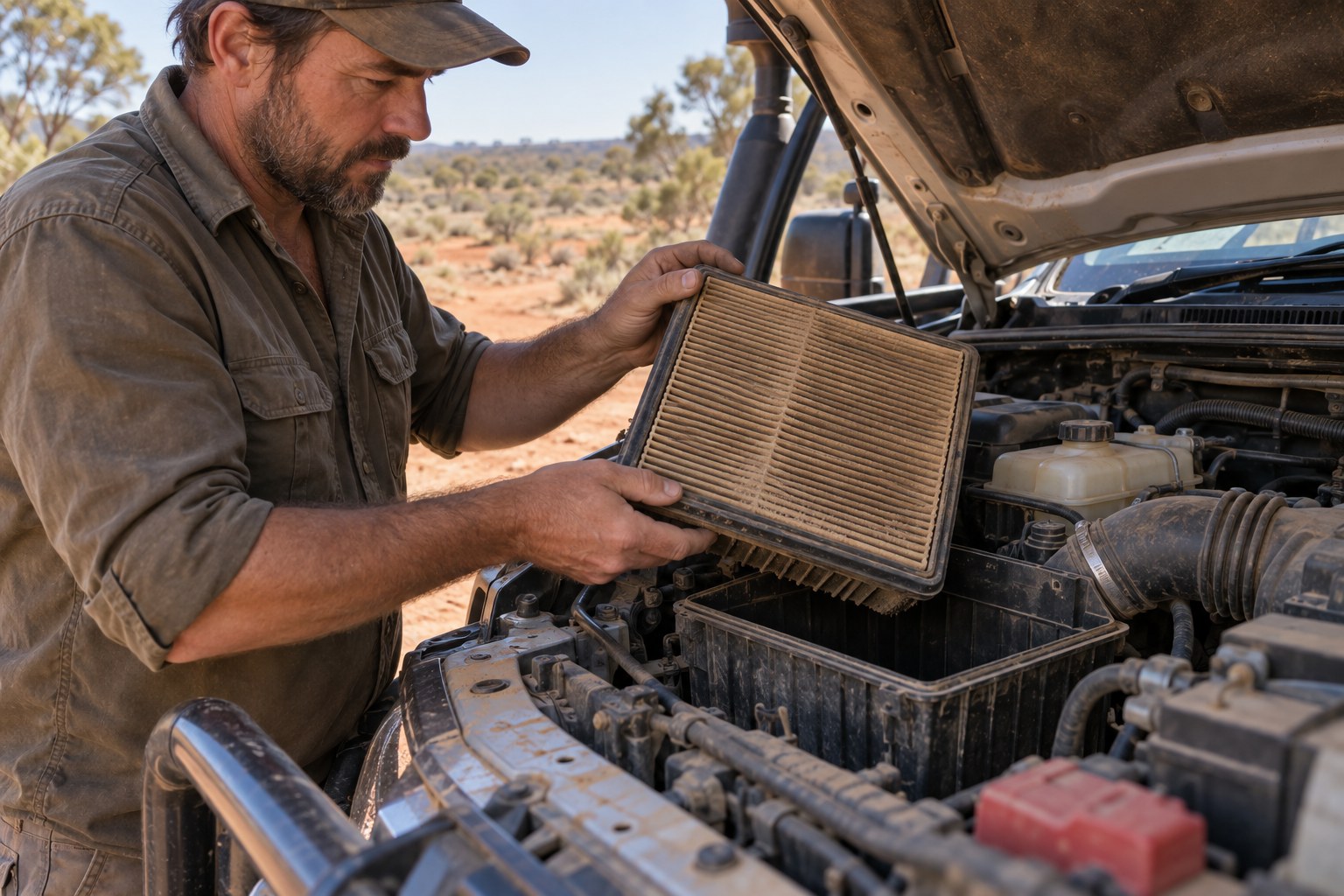
The air filter is a paper element in a sealed box that catches dust before it reaches the engine. On unsealed roads it loads up far faster than on bitumen. A turbo-diesel with a restricted filter feels flat off the line, holds a gear too long, and drinks more fuel over the same run.
Do not blow a paper element out with compressed air. Ryco, the Australian filter maker, is direct about it: standard air filters “aren’t designed to withstand the force of compressed air which can tear, puncture, and weaken the filter media”. It also pushes dirt deeper into the element, often straight through to the clean side. Tapping it out on the ground is no better, because it can deform the element so it no longer seals in the airbox. Either way you get a filter that looks cleaner and filters worse.
So how do you tell when one is done? Hold it up to a light. If it comes through the pleats evenly, the filter has life left. If they are packed grey and no light gets through, replace it. Intervals move by vehicle, so read your own logbook. Toyota’s HiLux schedule gives a sense of the gap: for diesels frequently driven on unmade roads or in extremely dusty conditions with dry air, it calls for the filter to be inspected every 5,000 km.
Ryco’s other tip for gravel is a good one: carry a spare. A snorkel also lifts the intake out of the worst of the dust at bumper height.
The cabin filter many owners have never seen
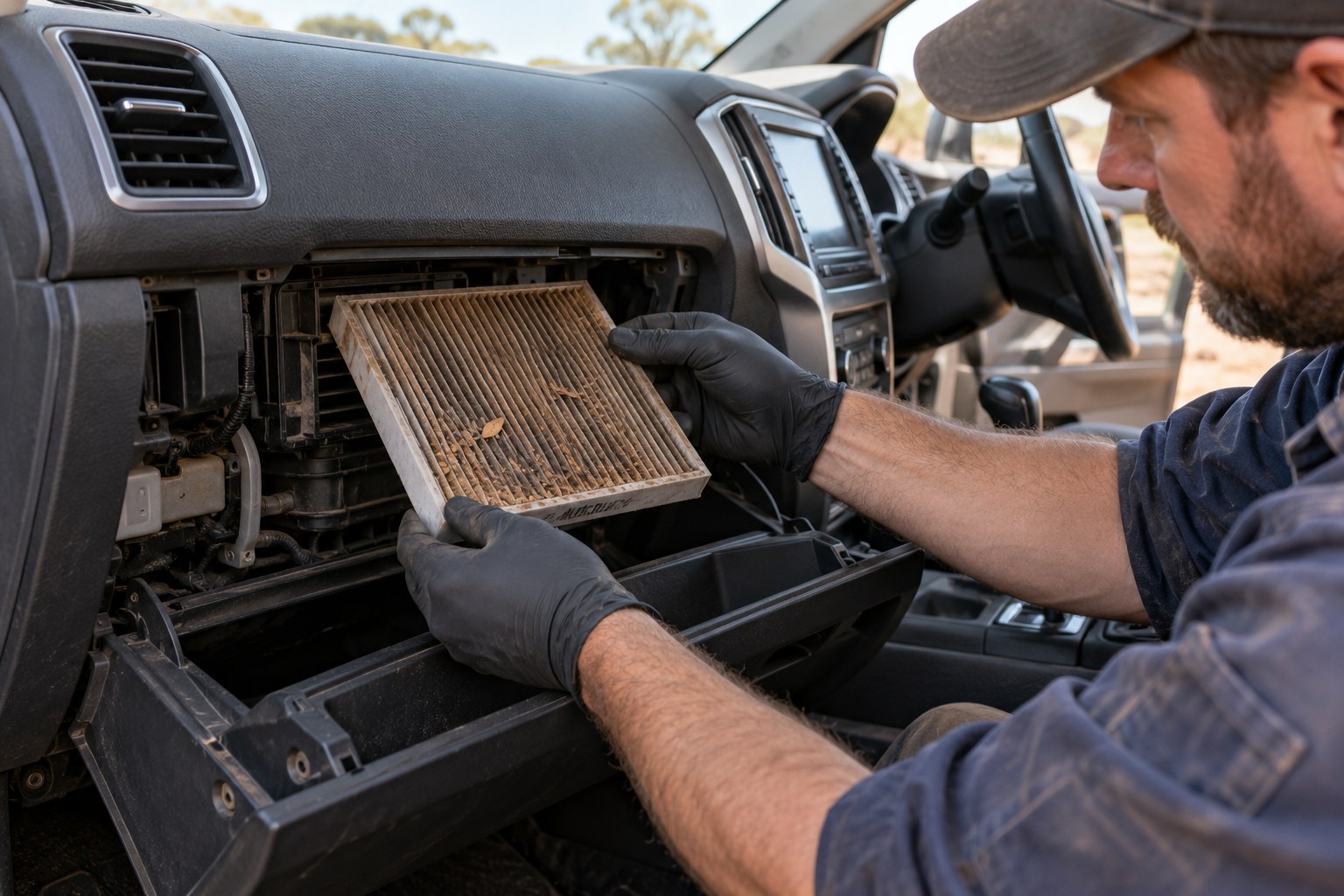
The cabin filter cleans the air coming into the vents. It is not the engine’s filter and does nothing for the motor. On many utes and wagons it sits behind the glovebox, which drops down to reach it.
Dust blocks it the same way, and every symptom is about airflow. The fan sounds like it is working hard but little air arrives, and the demister takes far longer to clear the windscreen.
Go and look at yours. If it comes out grey and matted, it has finished.
What a diff breather is, and why dust and water get past it
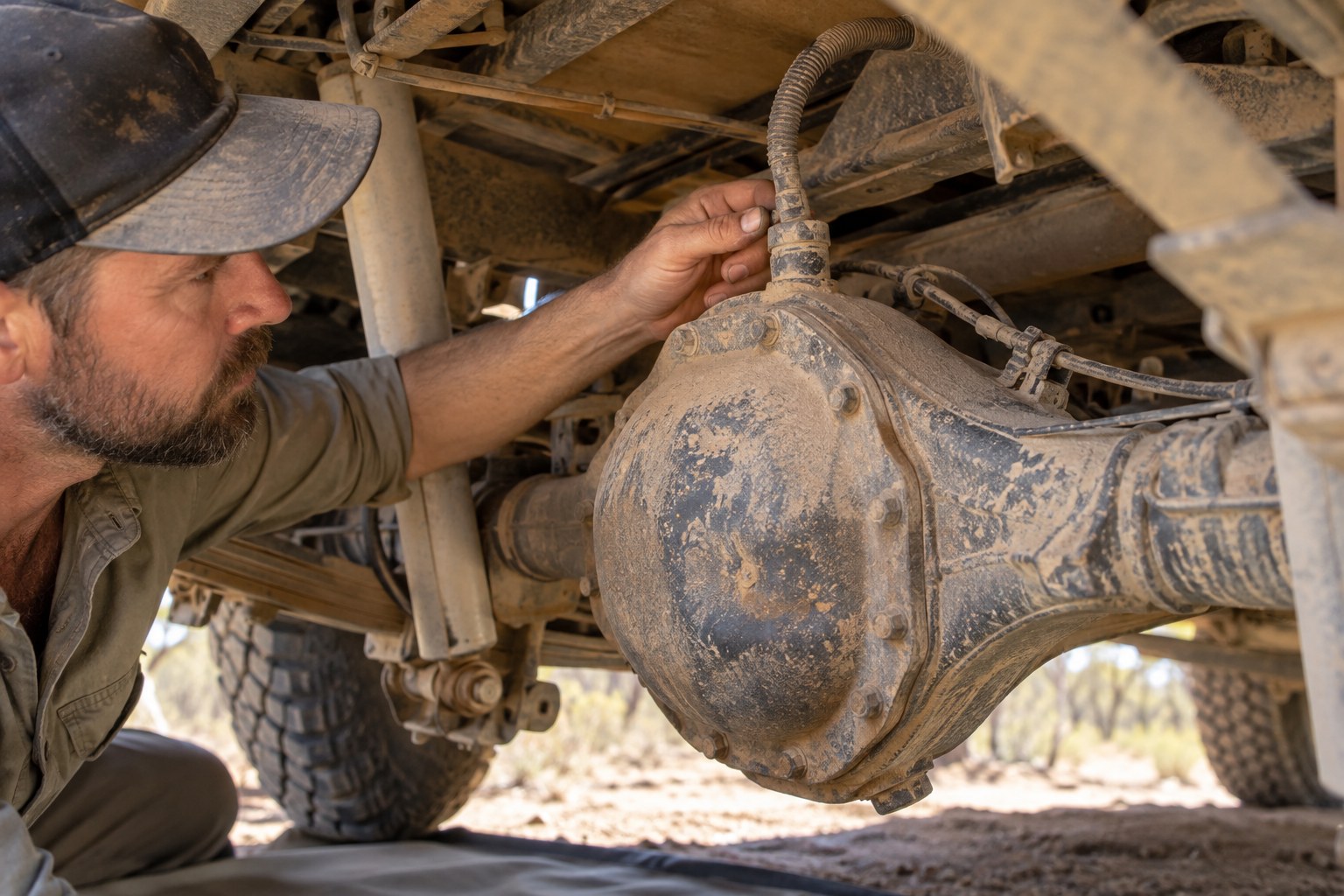
A breather is a small vent on the differential housing that lets air move in and out as the oil heats and cools. Gearboxes and transfer cases have them too. Without one, a hot diff would push oil straight out past its seals.
Drive, and the diff heats up. The air inside expands and vents out through the breather. Stop, and everything cools. The air contracts and the diff draws it back in through the same opening. Whatever is sitting on that opening comes in with it.
On dusty roads that is fine dust. It cakes the breather and works into the housing on every cool-down. Diff oil with grit through it stops being oil and starts being a grinding paste. A breather blocked solid is worse again, because the pressure has nowhere to go and pushes oil past the pinion seal instead. ARB, which sells breather kits for this exact problem, names both risks together: factory breathers are “often poorly located and offer limited protection”, open to dust on dry tracks and to water on a crossing. Water does the same thing, and faster.
An extended breather is the fix. A hose runs from each breather point up to a filtered fitting high in the engine bay, usually on the firewall. The diff, gearbox and transfer case then breathe clean air instead of whatever sits at axle height. It is not a big job, and it is worth asking about if you spend real time on unsealed roads.
If you fit nothing at all, at least check the factory breather is not caked over.
Wheel bearings, hubs and CV boots on gravel
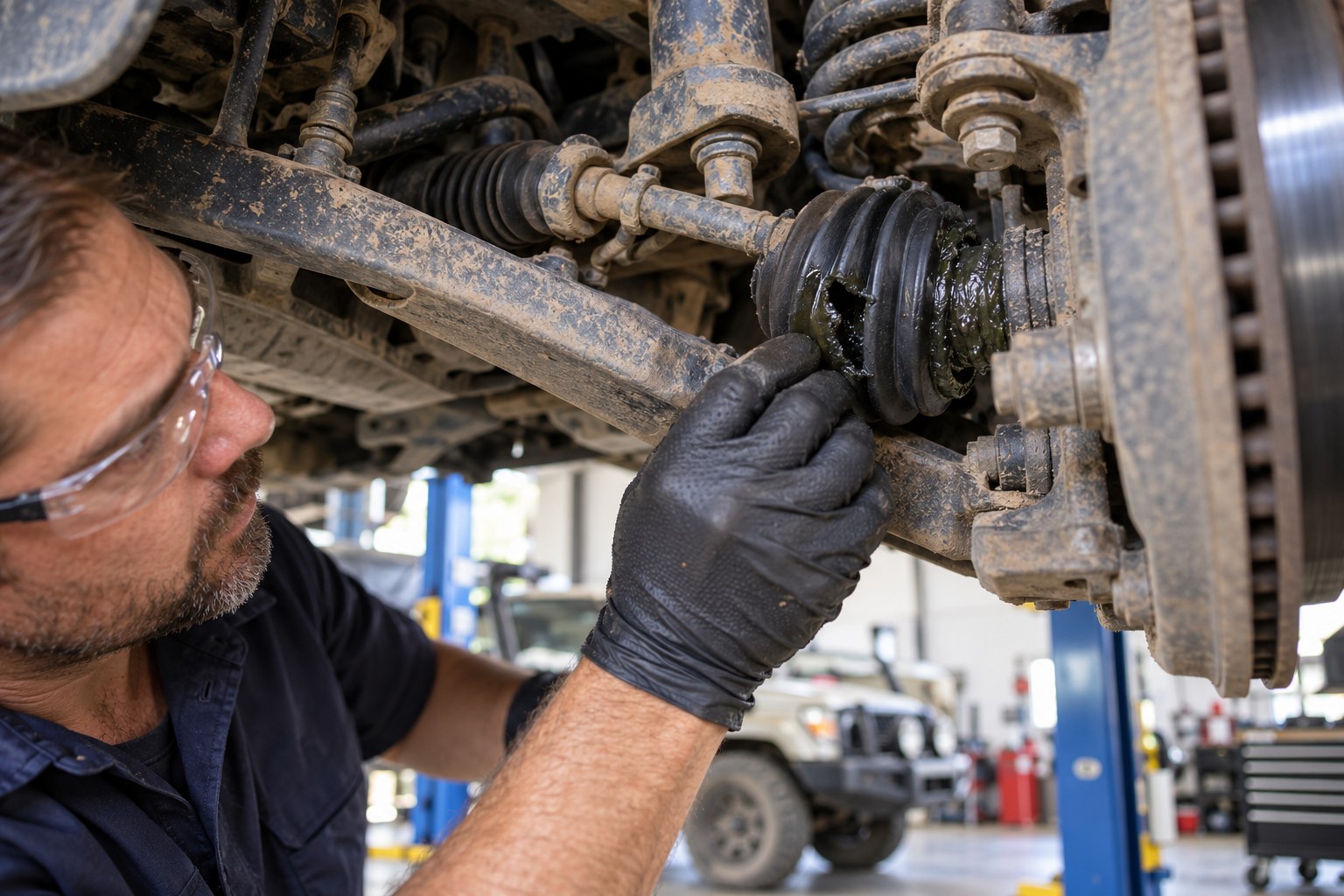
Grit is an abrasive. A wheel bearing carries the weight of the vehicle and lets the hub spin, running in grease behind a seal. Corrugations hammer that seal, and once fine grit gets past it the grease turns into a cutting paste.
A worn bearing makes a low hum or growl that rises and falls with road speed, not engine speed. Turn the wheel and the noise often changes, because the load shifts across the bearing. A hum that is new since your last few gravel runs is worth looking at now: a bearing left to fail can take the hub with it.
A CV boot is the pleated rubber cover over the joint at the end of each front driveshaft. It holds grease in and keeps dirt out. A split boot on bitumen is a job you get to when you can. The same split on gravel fills the joint with grit, and then the repair is a whole shaft.
This is abrasion, not rust. Salt air and beach sand attack the same parts a different way, which is a separate story.
What corrugations shake loose
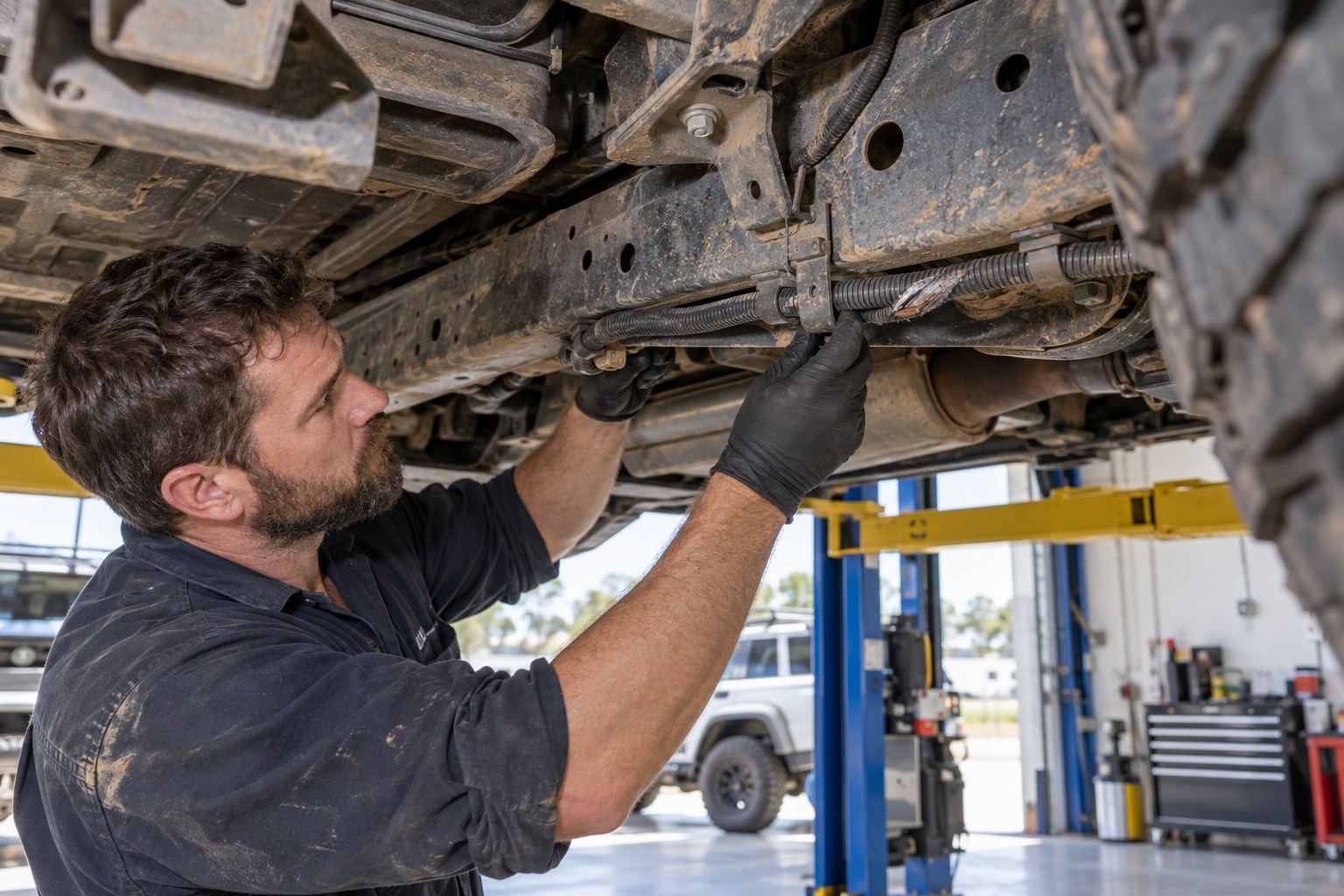
Corrugations vibrate the whole vehicle at a steady frequency, and vibration undoes threads. The fasteners that come loose tend to be the ones fitted after the vehicle left the factory: bar work, roof racks, drawer frames and long-range tank brackets. Exhaust hangers are the other one, and the first sign is a knock over speed humps.
The one that matters most is wiring. A loom vibrating against a bracket or a chassis rail rubs through its own insulation. It does not show up as a rattle, but months later as an intermittent electrical fault that takes hours to trace. Anywhere a loom touches metal, tie it off that metal.
Suspension bushes take a hammering on corrugated dirt too, and do not always make a noise about it. Ask for them to be checked. Not all of this is equally serious: a loose roof rack bolt is a spanner and a few minutes, a chafed loom is not.
Where the dust ends up inside
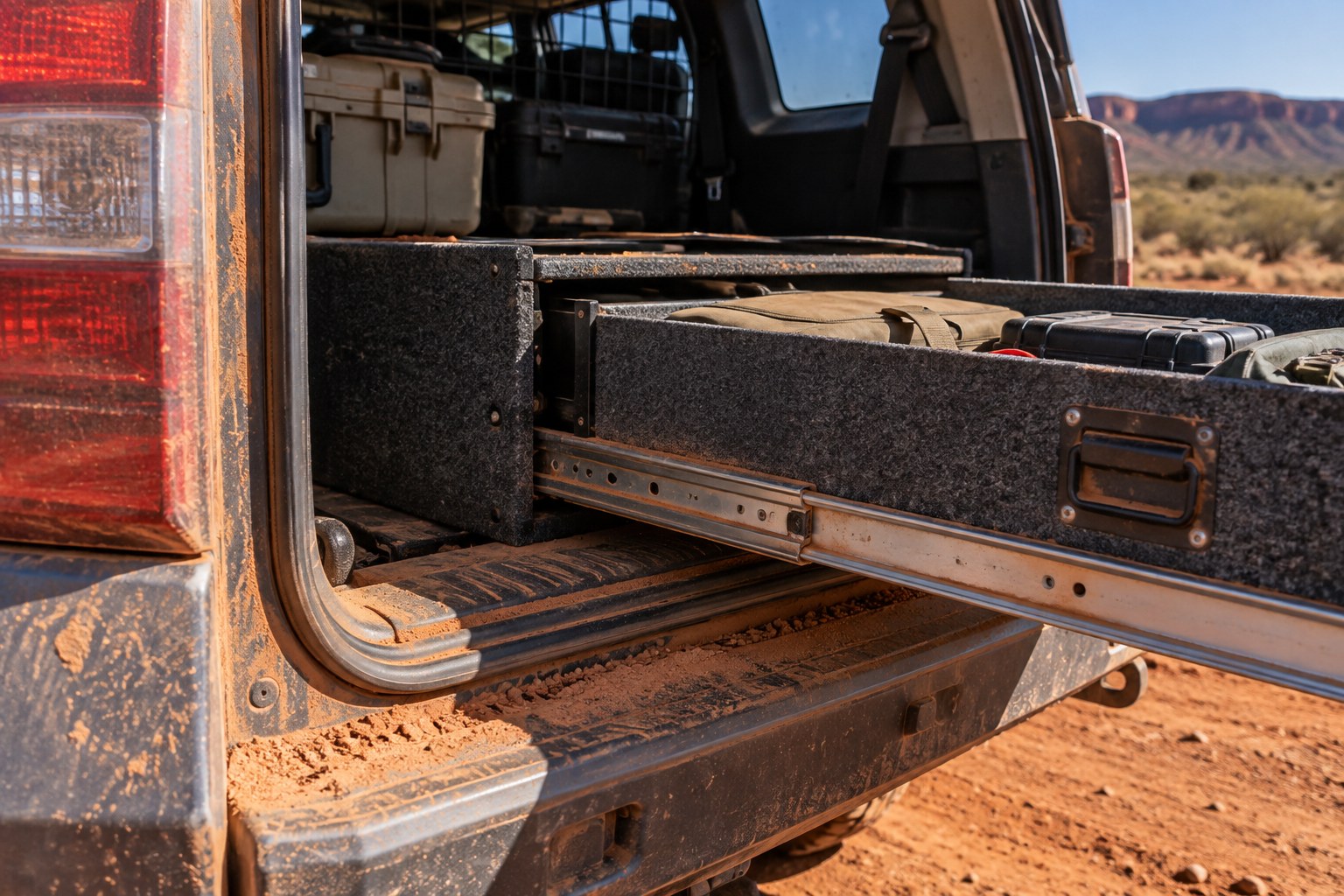
Fine dust gets in through door and tailgate seals, and wagon tailgates are the worst. Inside it settles in drawer runners, window seal tracks, and the pins of trailer plugs, where grit shows up as a connector that reads fine one day and not the next.
None of this will strand you. A vacuum, a damp cloth over the seals and contact cleaner in the plugs handles most of it.
What to check yourself after a dusty run, and what needs a hoist
This is ordinary ownership rather than trip preparation. Getting a vehicle ready for a big trip is a different job with its own list.
Standing next to the vehicle you can do a fair amount. Pull the air filter and hold it up to the light. Look at the cabin filter behind the glovebox. Put a hand on the bar work, roof rack and side steps, feeling for movement. Look behind each front wheel for a split boot or flung grease, and check the diff breather is not caked over.
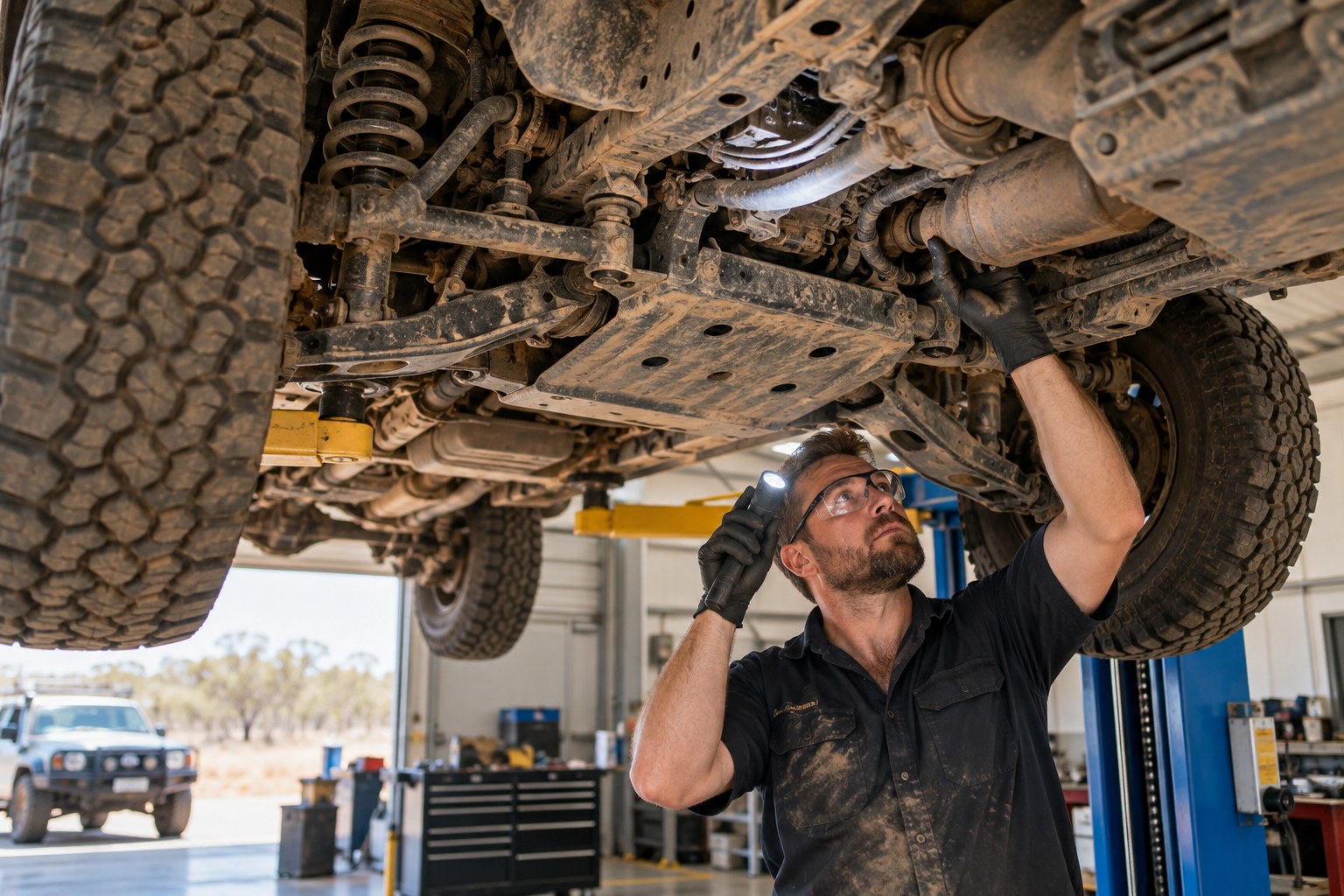
What you cannot do from the ground is the half that matters most. Bearing play, bush condition, the wiring along the chassis, a diff weeping past a seal, and the exhaust hangers all need the wheels off the ground and a light underneath.
None of these sit in a standard minor or major service list, so name them when you book. Ask for the filters, breathers, bearings and fasteners to be looked at while the vehicle is up. On the Northern Beaches, Xtreme 4×4 can go through the lot in one go.
Frequently asked questions
Can you clean a 4WD air filter instead of replacing it?
Not a standard paper element. Compressed air and tapping both damage the media, so a filter that no longer passes light gets replaced rather than cleaned.
What does a diff breather do?
It lets the differential take air in and push it out as the oil heats and cools. Without that vent, a hot diff would force oil past its seals. The trouble on unsealed roads is that it draws dust in with the air.
How do I know if a wheel bearing is going on my 4WD?
Listen for a low hum or growl that tracks with road speed rather than engine speed. It often changes as you steer, because the load moves across the bearing. A noise that is new since your last dirt run is worth booking in.
Do I need extended breathers for gravel roads?
Not necessarily, though they help if you are on unsealed roads often. They move the vent up into clean air on the firewall, so the diff, gearbox and transfer case are not breathing dust at axle height.