
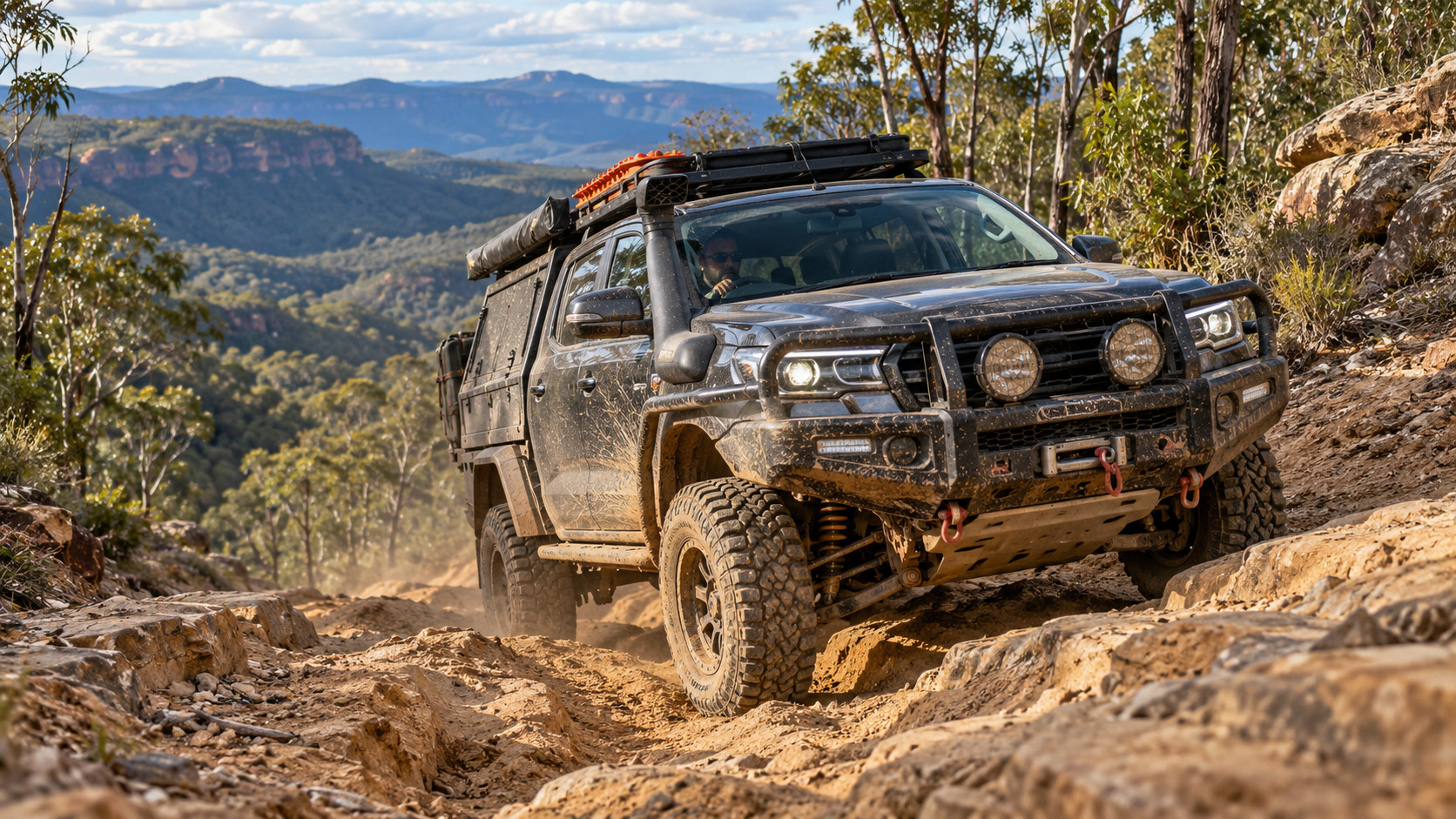
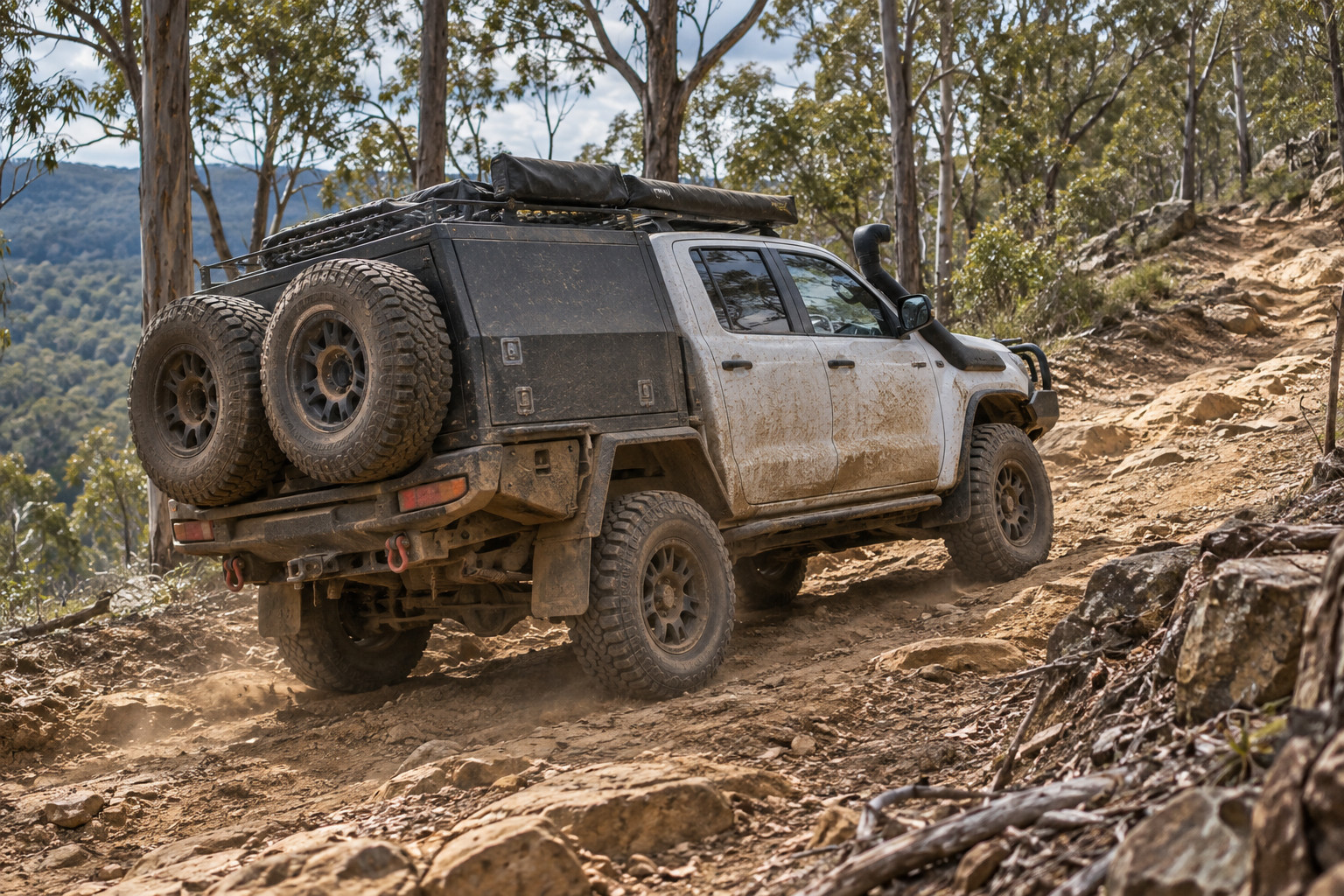
Some 4WD performance upgrades do, and the ones you feel are not always the ones on the quote. On a modern turbo-diesel, a good ECU tune and a well matched intercooler change how it drives far more than an exhaust does alone. The gain worth paying for is usable torque low in the rev range, where you sit when the vehicle is loaded and climbing, not a peak power figure on a dyno sheet.
A quote with four lines can easily have two that change your drive and two that change your invoice. Build order is covered in a guide to the first mods worth doing on a new 4WD. This is about the power half.
| Upgrade | What you are likely to feel | What it will not fix |
|---|---|---|
| ECU tune | Stronger pull low in the rev range, and a sharper answer to the pedal | A cooling problem sitting underneath the extra power |
| Performance exhaust | Mostly a deeper sound, on a diesel with a filter in the exhaust | A lack of pull on its own |
| Intercooler | Power that holds up near the top of a long climb instead of fading | Anything at all on a short, cool, empty run |
| Turbo upgrade | A wider spread of power, and headroom when towing heavy | Being a substitute for the tuning and cooling behind it |
What a performance upgrade quote usually covers
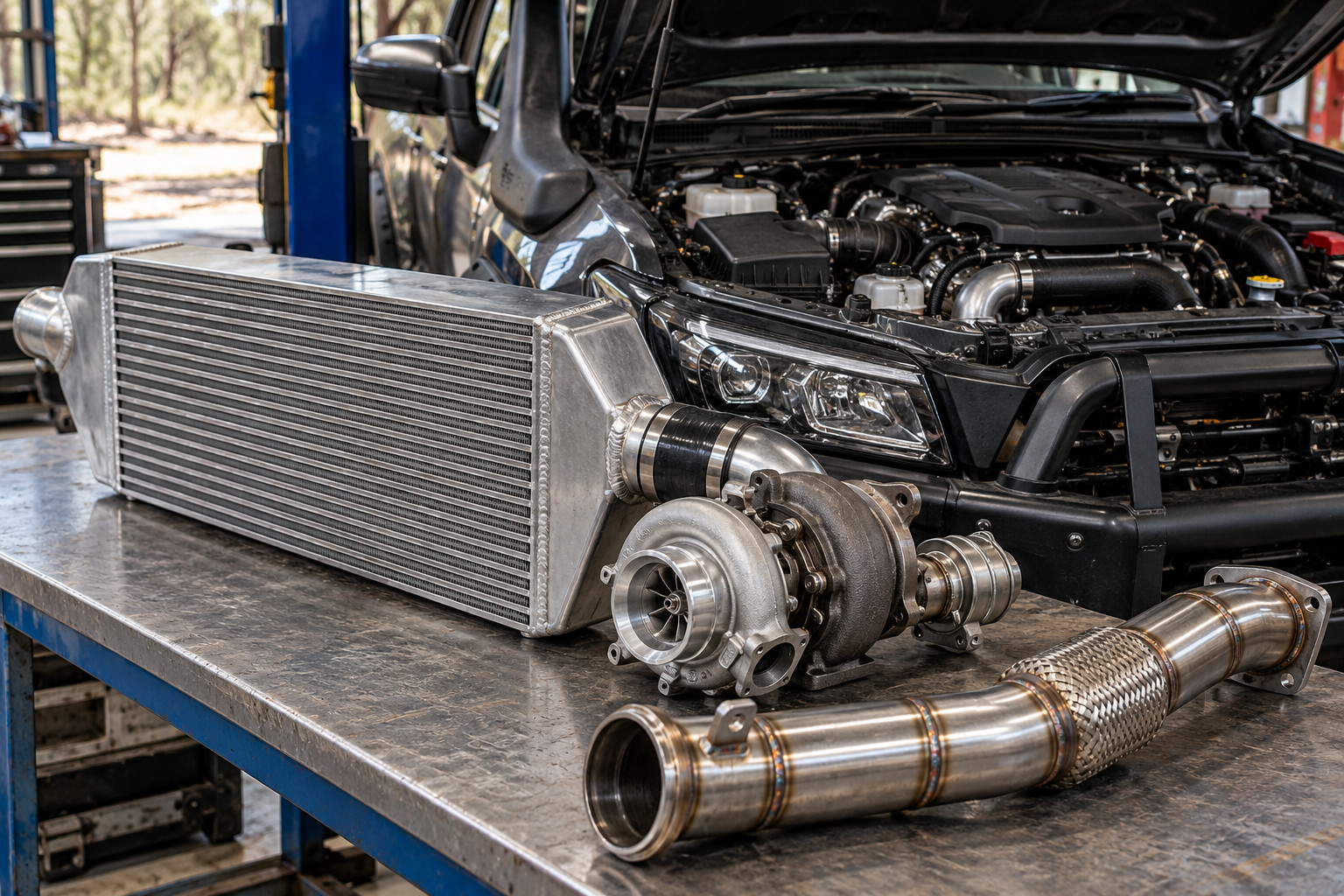
Four things turn up on these quotes.
No prices here: the spread between vehicles and workshops is wide enough that a figure would mislead. What moves it is the vehicle, whether the tune is written for your car or bought ready-made, and whether the work needs certifying.
- ECU tune. New software for the engine’s computer, setting fuelling and how much boost the turbo makes. Boost is the pressure the turbo forces air in at.
- Performance exhaust. A replacement system, usually a larger diameter, to let the engine breathe out more freely.
- Intercooler. The small radiator that cools the air after the turbo squeezes it, because hot air carries less oxygen.
- Turbo upgrade. A larger turbo moving more air, and the item that drags the most other work with it.
Peak power or usable torque: which one you feel
Torque is the twisting effort that gets a loaded vehicle moving and keeps it climbing. Power is that effort multiplied by engine speed. A dyno sheet reports the highest point on both curves, and power is the figure that ends up on the sticker.
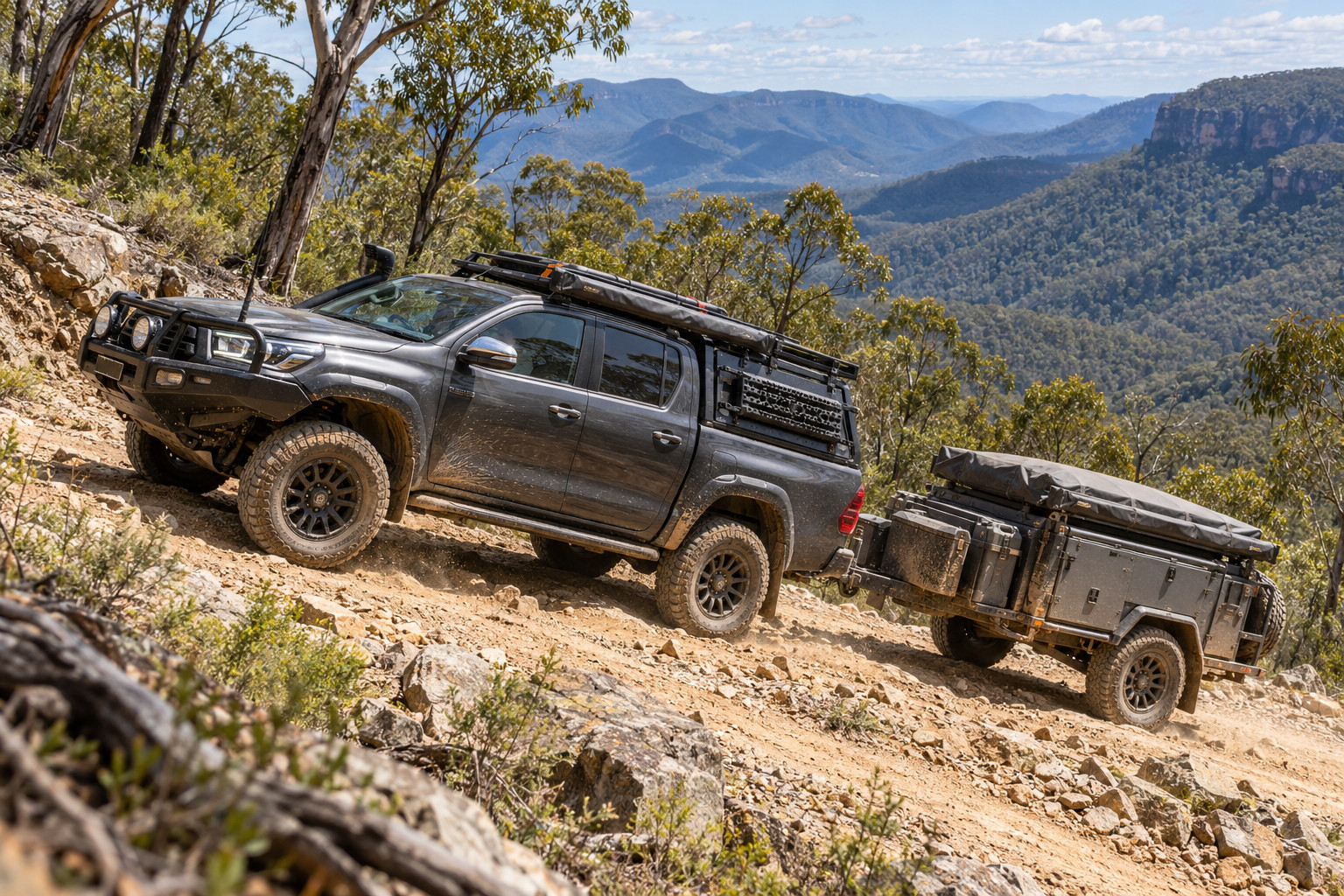
Think about where you sit when you are towing. Heading west out of the Northern Beaches with a camper behind, up the Great Western Highway from Emu Plains, the road climbs for the best part of an hour before topping out near Mount Victoria. You sit in a gear, at part throttle, low in the rev range, for a long time. Peak power lives at the top of the range at full throttle, and you only visit it to overtake.
A dyno sheet also cannot tell you how any of it holds up. A dyno run is short, the air is cool, and nothing has soaked up heat. A long climb is the opposite: everything is hot, the air going into the engine is hot, and the computer starts pulling power back to protect itself. That fade is what an upgrade fixes or makes worse.
So the question for whoever wrote the quote is not how much does it make. It is how much torque lands down where you are sitting, and whether it is still there twenty minutes up the hill.
What an ECU tune can and cannot do
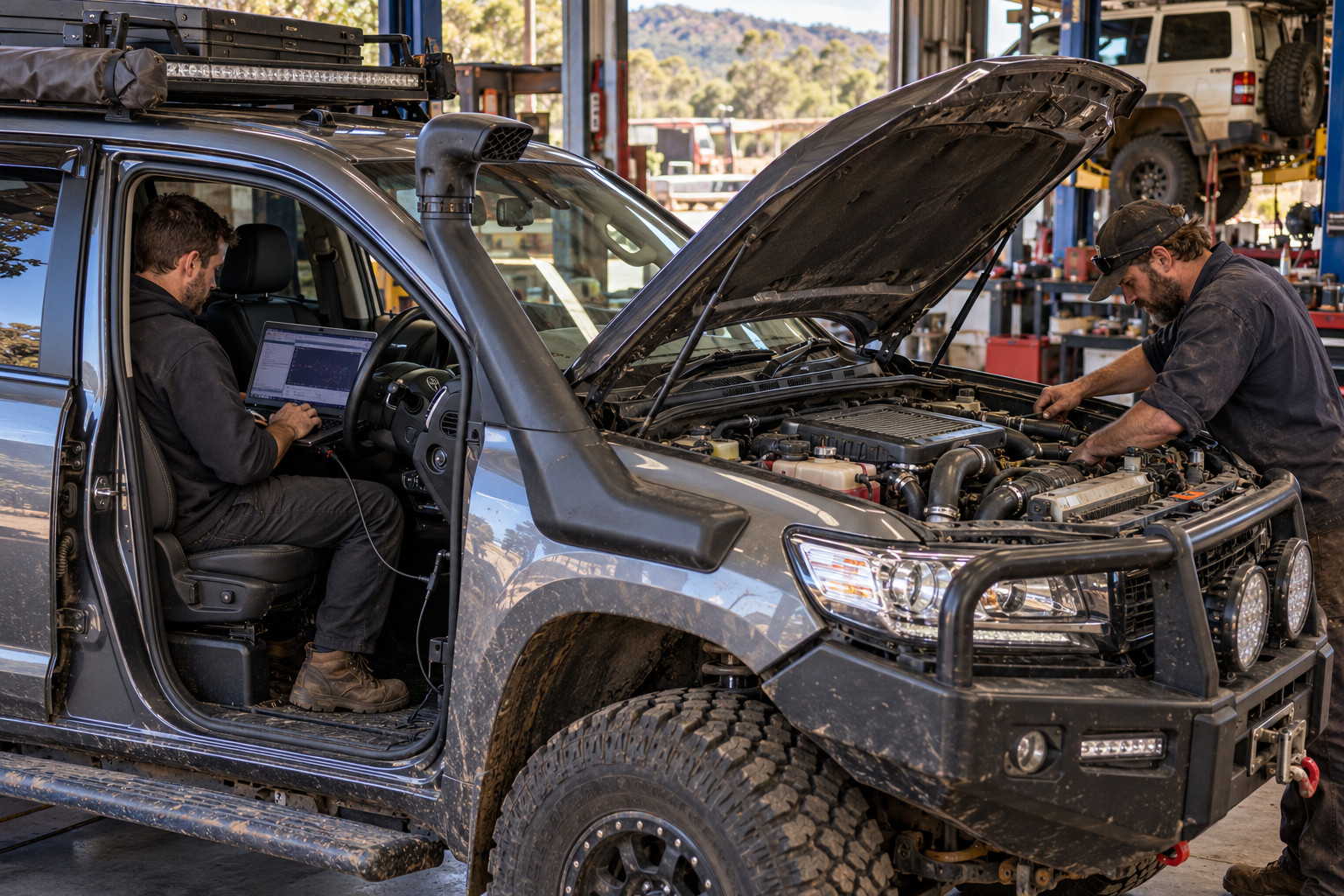
A tune works within the hardware already there, changing fuelling and boost where you use the engine: off the bottom, through the middle, at part throttle. That is why it is the change people notice on a tow.
What it cannot do is invent capacity. Push more fuel and boost through standard hardware and something becomes the limit before the engine does. On a manual that is often the clutch, which can only hold so much torque before it slips. On an automatic it is heat. The utes that come back happiest had their cooling sorted first.
A tune also has to suit your vehicle, not just your engine family.
Are DPF and EGR deletes legal in NSW?
No. In NSW a particulate filter, an exhaust gas recirculation system and the engine management system are all prescribed anti-pollution devices under the Protection of the Environment Operations (Clean Air) Regulation 2022, and the owner of a registered vehicle has to make sure a device fitted to it has not been impaired. Impaired covers removing it, disconnecting it, or changing it so the vehicle emits more, so mapping one out in software counts the same as taking the part off. There is a carve-out for motor racing and off-road motor sport, but it only reaches vehicles that cannot be registered normally, so it does nothing for a registered tourer. In practice it costs the owner a defect notice, which keeps the vehicle off the road until it is back to standard and inspected, plus a change from factory the insurer never agreed to.
Does a performance exhaust do anything on its own?
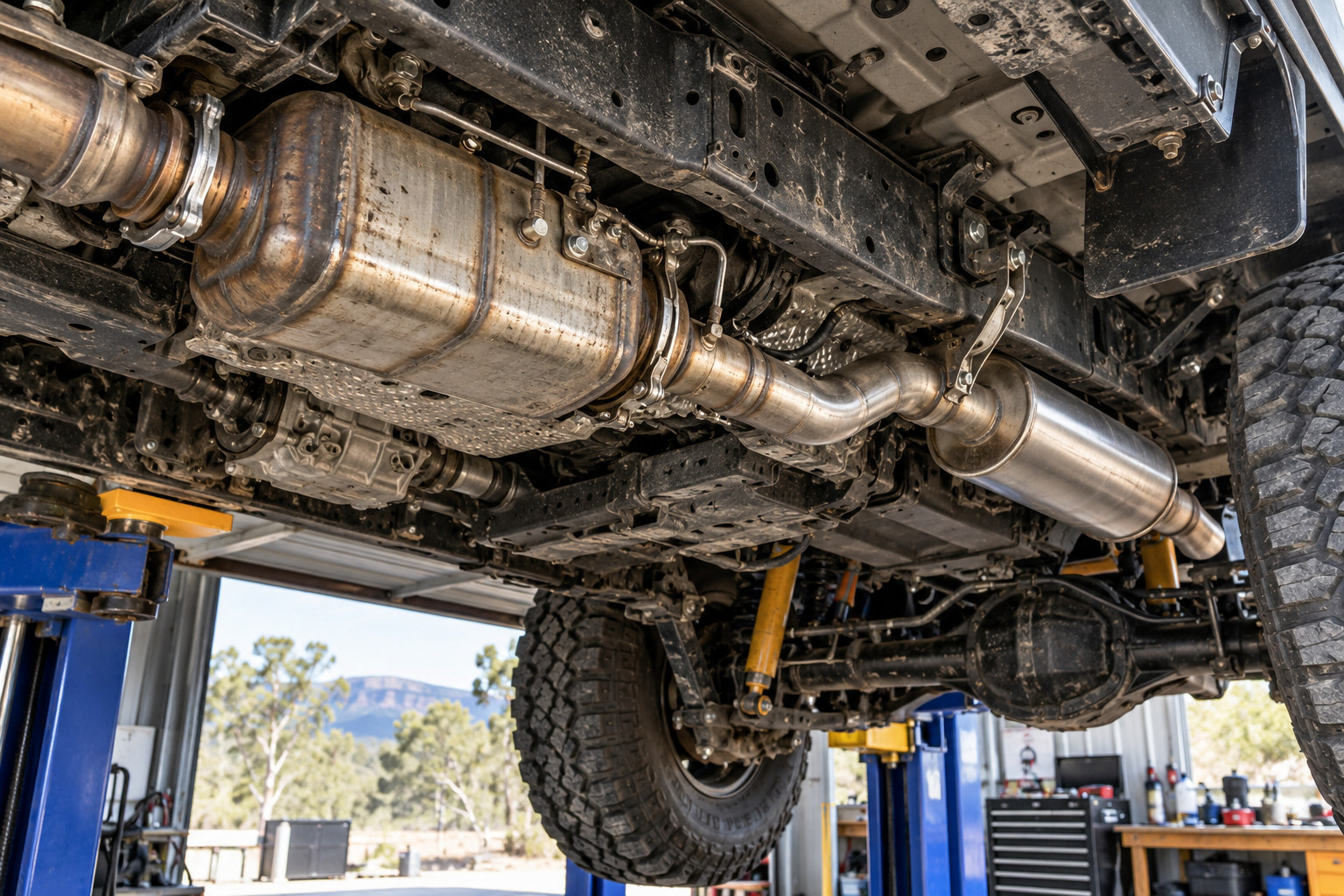
Mostly it changes the sound. On a diesel with a particulate filter in the exhaust, that filter is the restriction, and the pipe after it is not where the engine is held back. Swapping that section gives a deeper note and little else. Worth knowing, since it is often sold as a power part.
Older diesels without a filter are different. There, a larger free-flowing system genuinely helps, mainly by getting exhaust heat out faster.
None of this makes an exhaust a bad buy. Buy it for the note, not the tow.
Why an intercooler matters most on a long loaded climb
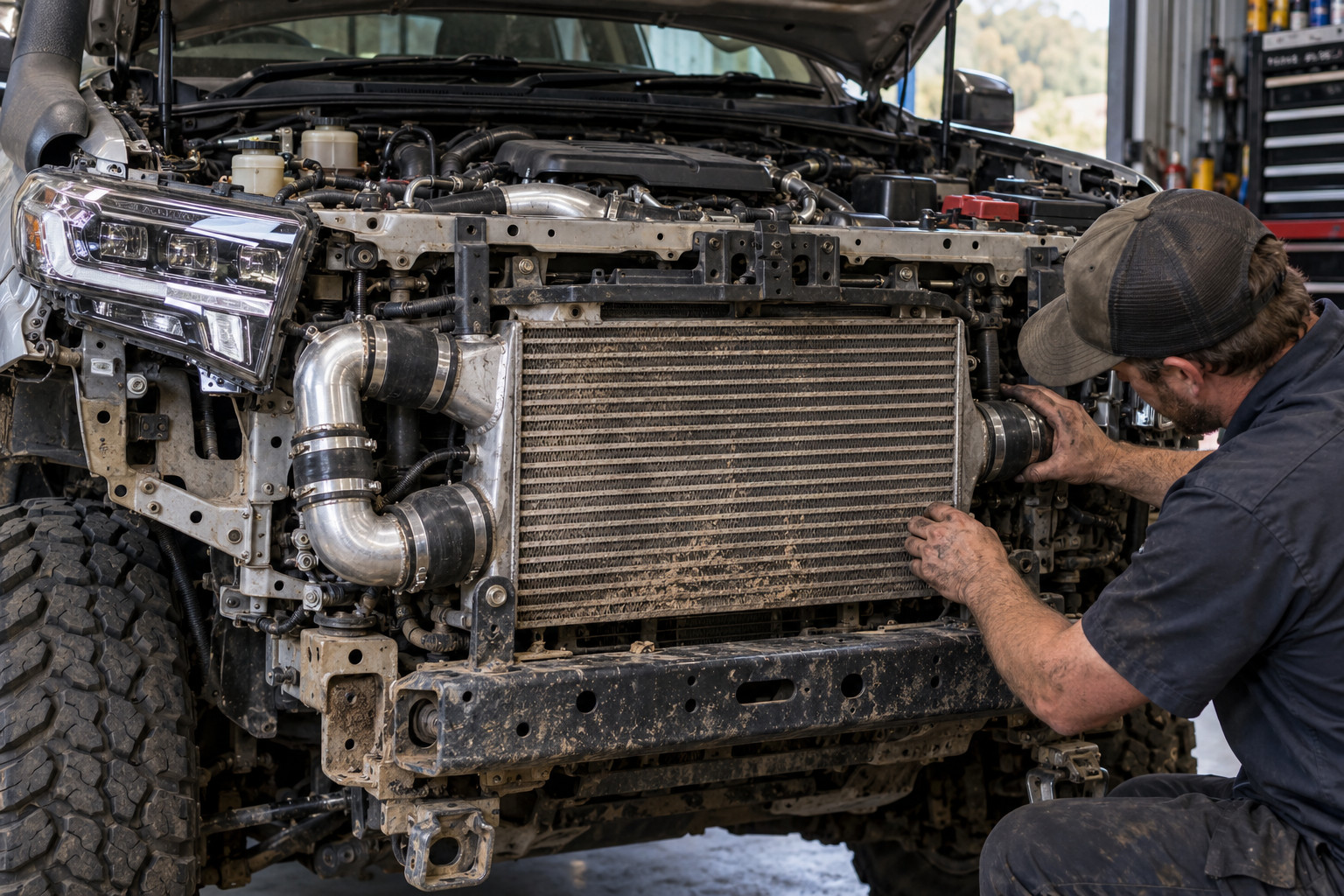
An intercooler is a heat exchanger, so it needs air moving through it. A long grade with a load behind you is the hard case: plenty of heat being made, and the vehicle moving slowly enough that little air is going through anything. The air reaching the engine gets hotter, carries less oxygen, and the computer backs the power off. Strong at the bottom of the climb, tired near the top.
That is the problem a bigger intercooler solves, and why it belongs next to a tune rather than on its own. A tune asks the engine to do more, which makes more heat, and the intercooler gives it somewhere to go.
This only matters if you load the vehicle up. If your climbs are short and the ute is empty, the standard intercooler was designed for that. None of it changes what you are allowed to tow, which comes down to the weights on the vehicle’s plates.
What else has to cope when the power goes up
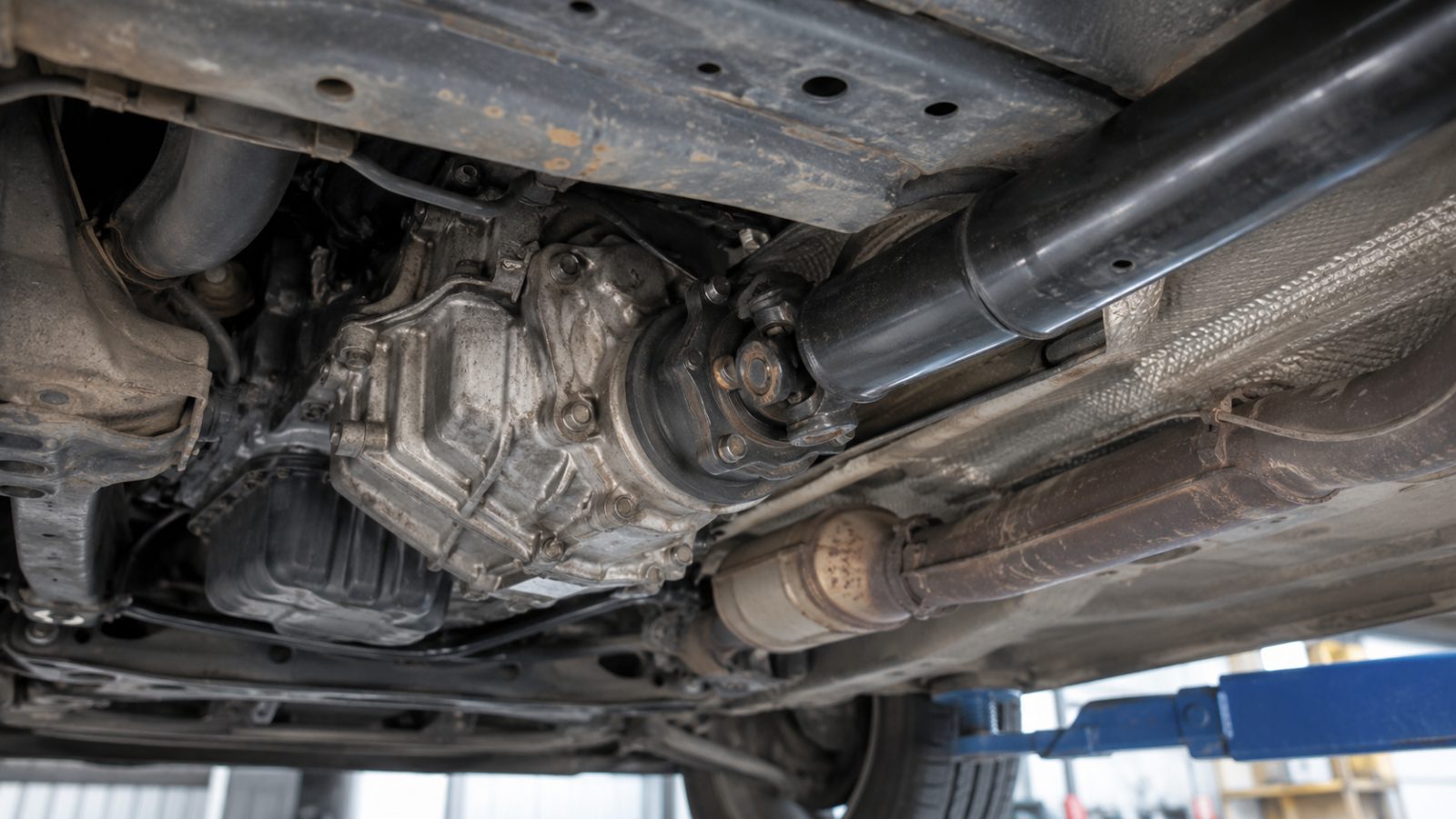
Extra torque does not stop at the engine. On an automatic, the transmission runs hotter. On a manual, the clutch has more to hold. Coming back down loaded, the brakes have more to do. In low range, the shock through the driveline is higher, because the gearing multiplies it.
Each item is its own conversation with whoever does the work. There is a separate article on how a set of 4WD upgrades works together, the better place to start if you are planning more than one.
Which 4WD performance upgrades are worth it, and for whom
If you tow near your limits, or load up for touring and spend real time on long climbs, the tune and the cooling are where the money goes. Get the cooling right, then tune to suit it. A turbo upgrade is for those who have done the rest and still want more.
If your 4WD does the school run, the shops and one trip a year, be honest about that. You will spend a lot and feel little of it, because the conditions that make these upgrades worth having are ones you are rarely in.
One more thing. A modification can affect a warranty claim on a related component, and a change you have not told your insurer about can affect a claim there too. Neither is a reason to leave a vehicle standard, but both are worth raising first.
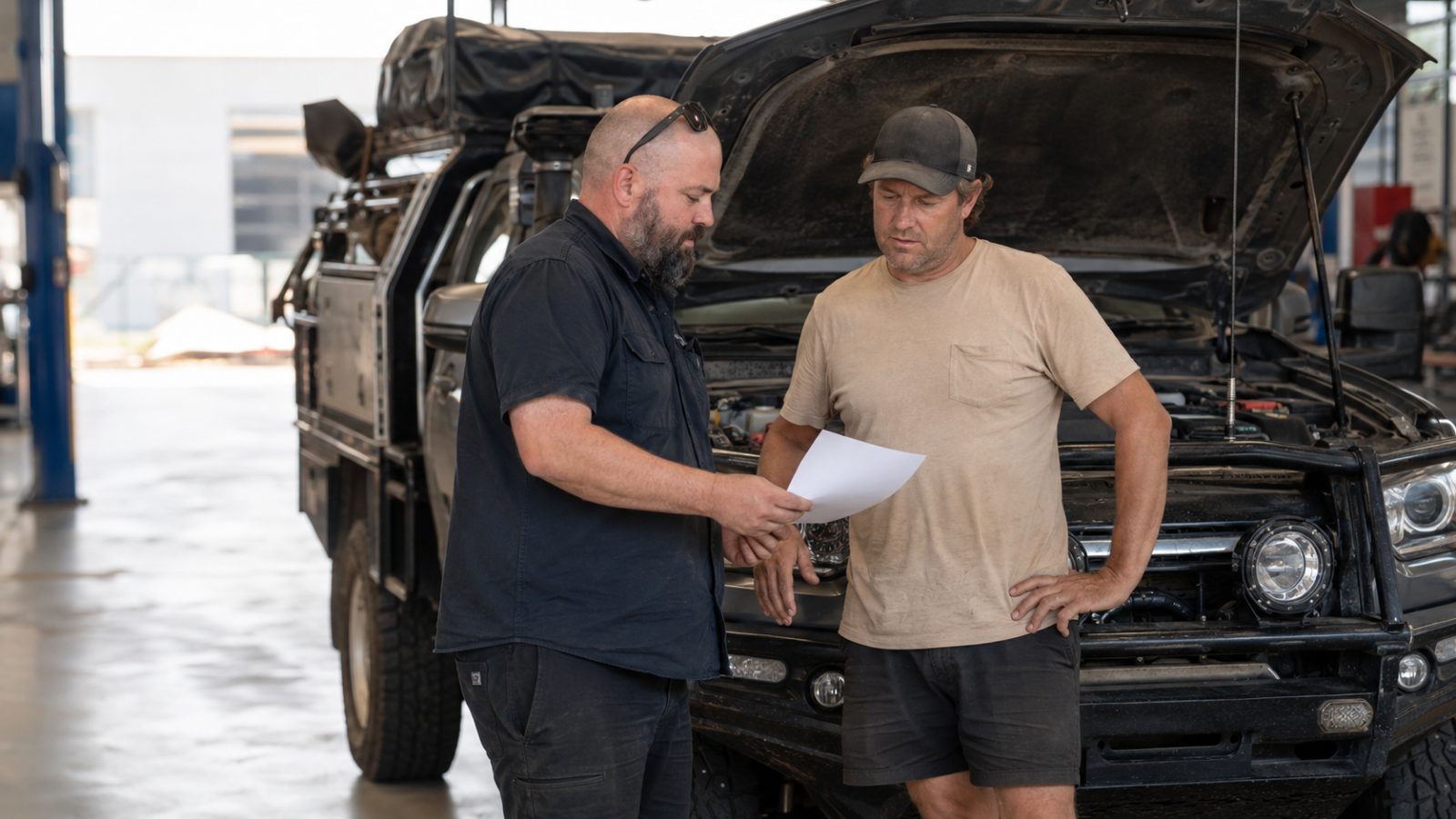
So the useful next step is not a shopping list. It is a conversation about what you tow, how heavy, how far, and where it gets hot. Bring your quote to Xtreme 4×4 and go through it line by line, starting from the 4×4 modifications page.
Frequently asked questions
Will an ECU tune on its own make my 4WD tow better?
Often yes, because a tune works on the part of the rev range you sit in while towing. The limit is whatever sits behind it, so if it already runs hot on a climb, sort that first.
Is a performance exhaust worth buying for a modern diesel?
Treat it as a sound purchase rather than a power one if there is a filter in the exhaust. That is where the restriction sits, not the pipe behind it.
What happens if a 4WD is caught with a delete in NSW?
The vehicle can be defected, which keeps it off the road until it is back to standard and inspected. There is a second cost too, because it no longer matches what the insurer agreed to cover.
Which upgrade should I do first if I tow heavy?
Cooling first, then the tune. Adding torque to a 4WD that already gets hot on a climb brings the problem on sooner instead of curing it.