
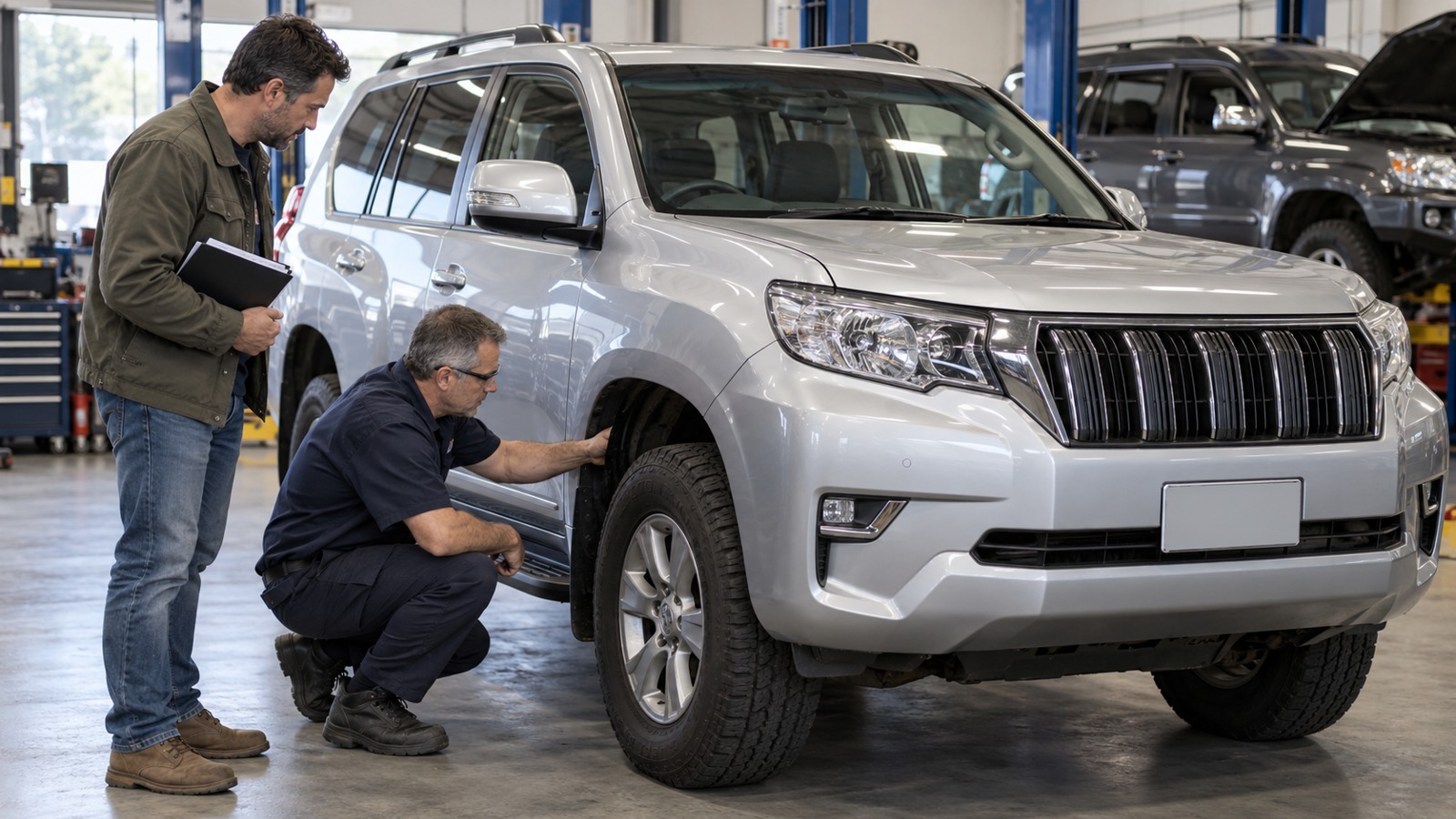
The Prado, the Patrol and the LandCruiser fail in different places. The generation and engine matter far more than the badge. A used Prado’s checks sit with its diesel engine and its suspension options. A Patrol is two different vehicles, depending on whether it is a Y61 or a Y62. A LandCruiser 200, 300 and 70 Series are three separate buys. Work out exactly which one you are looking at. Then check the recall history and the known weak spot for that generation.
Many buyers end up with all three open in separate tabs. The forum threads do not settle it. One calls a model bulletproof. The next calls the same years a lemon.
Check the generation and engine before the badge
The name on the tailgate covers very different vehicles. A Patrol can be a Y61, a turbo-diesel with a live front axle, or a Y62, a petrol V8. A LandCruiser can be a 200 Series wagon, the current 300 Series, or a 70 Series workhorse. A Prado can be the 150 Series or the newer 250. Advice written for one is often wrong for another.
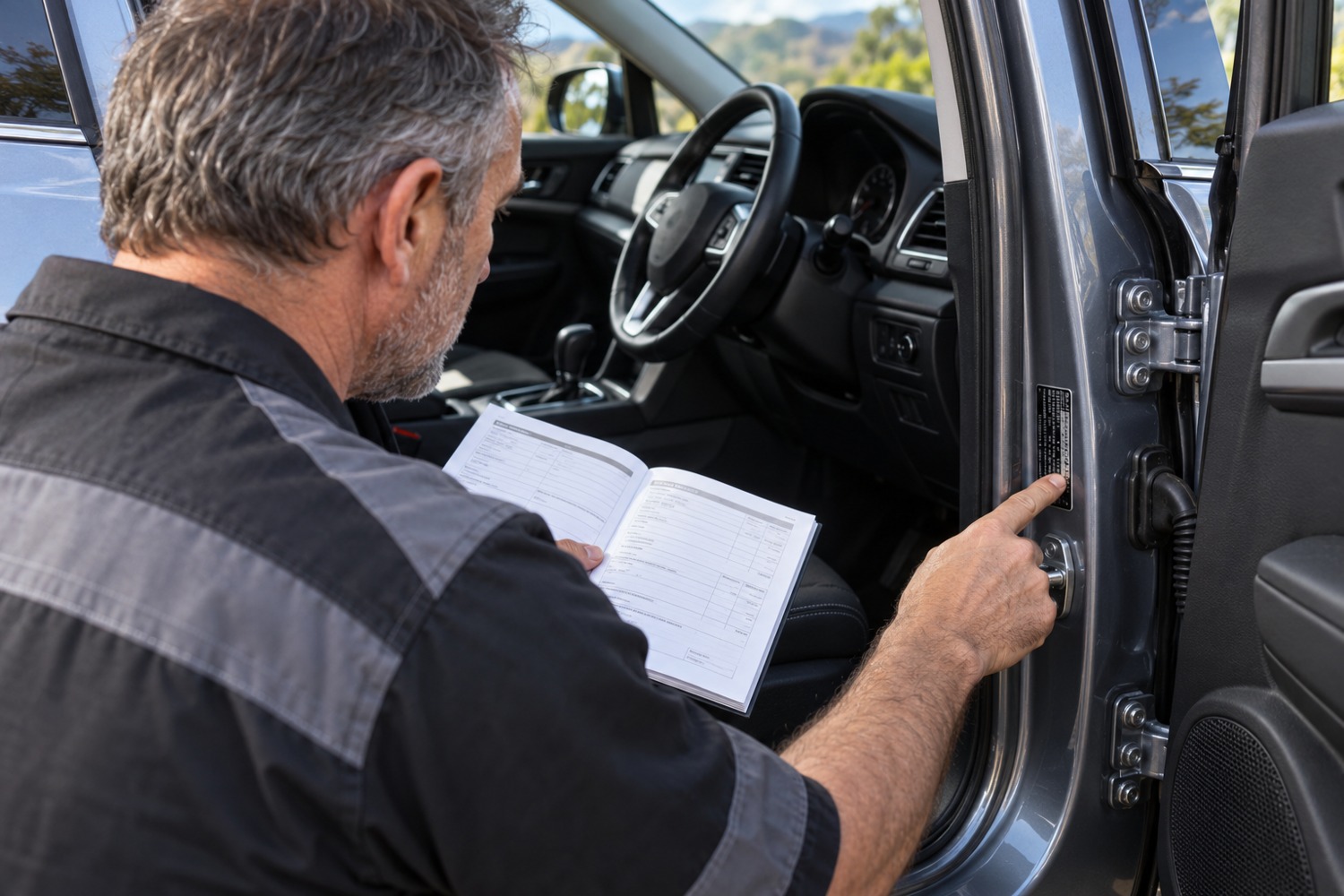
The year in the advertisement will not tell you which. The build plate in the driver’s door gives the month and year it was built. The vehicle identification number, or VIN, is the seventeen character code on that plate. Match both against the service book.
Plenty of all three run to very high kilometres in good order. A documented weak spot is something to check and price, not a reason to walk away.
Common Prado problems to check
Most used Prados are 150 Series cars, sold here from 2009 until the 250 Series replaced the model in 2024. The 250 is too new to show a used-buyer pattern. On one of those, ask whether the warranty is still running and whether any recall work on it has been done.
On a 150 Series, the engine era decides what you check. Diesels built from 2009 to around 2015 use Toyota’s 3.0 litre 1KD-FTV. Cracked pistons are documented on the 2009 to 2014 cars. They turn up most often between 100,000 and 150,000 km. Toyota told its workshops about it in a service bulletin in September 2014. Tougher pistons and better injectors went into production from January 2014, and failures are less common after that. Injectors on the same engine are often replaced between 120,000 and 140,000 km, sometimes a good deal earlier.
So start one from cold yourself. A knock, black smoke, a miss or lost power are the symptoms of a cracked piston. Ask for injector receipts and whether the engine has ever been apart.
Diesel Prados built from late 2015 use the 2.8 litre engine instead. Those built up to 2020 share the particulate filter history set out in the piece on used HiLux and Ranger buying. The checks there apply to them too.
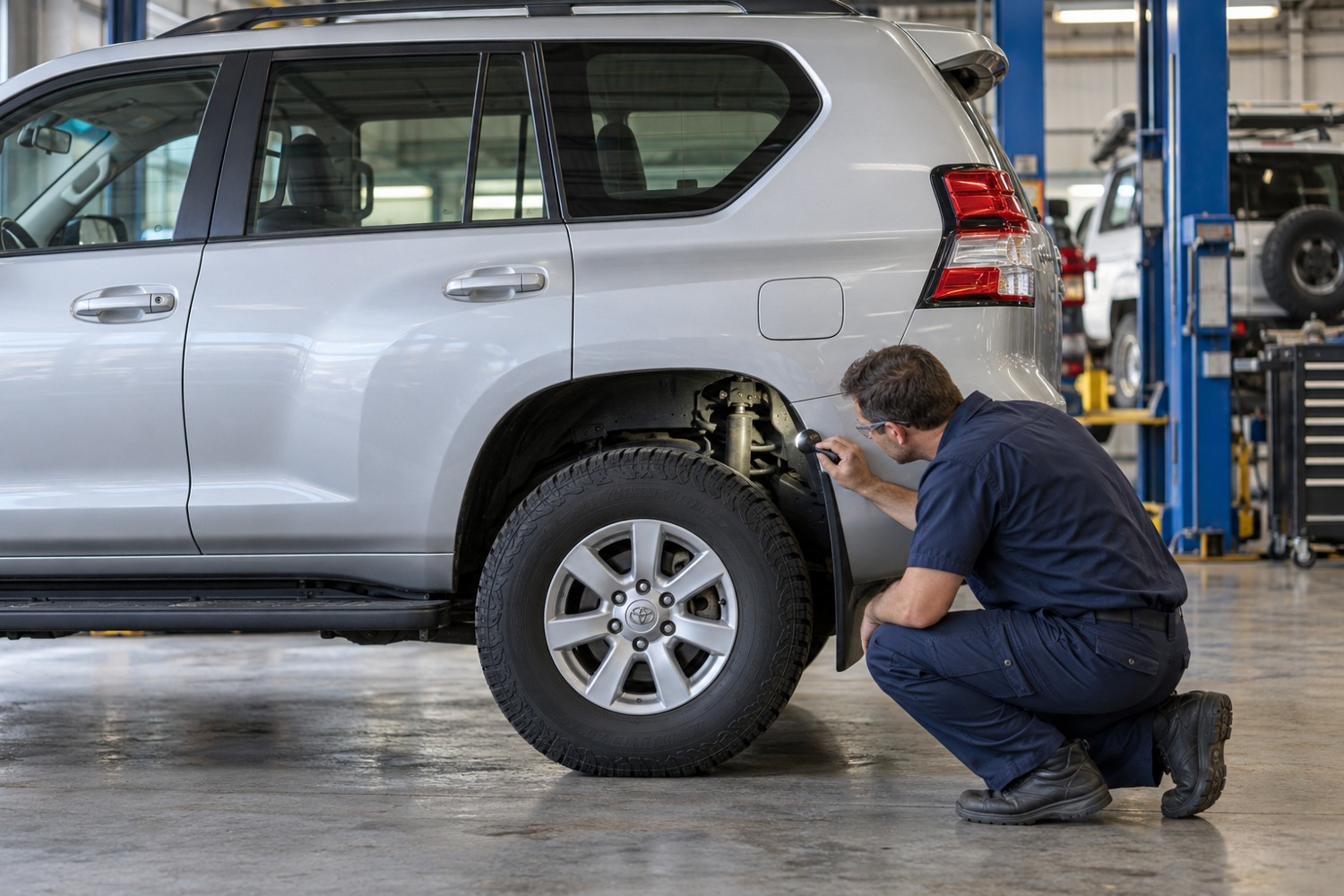
Suspension is the other 150 Series item. Higher grades carried KDSS, Toyota’s Kinetic Dynamic Suspension System. It slackens the anti-roll bars off-road for more wheel travel. The top grade added height-adjusting rear suspension. Leave the wagon parked overnight if you can. Check it is sitting level in the morning. Look for anything weeping around the suspension units. On a seven-seater that has towed, check how the rear sits loaded.
Common Patrol problems: the Y61 and Y62 are different buys
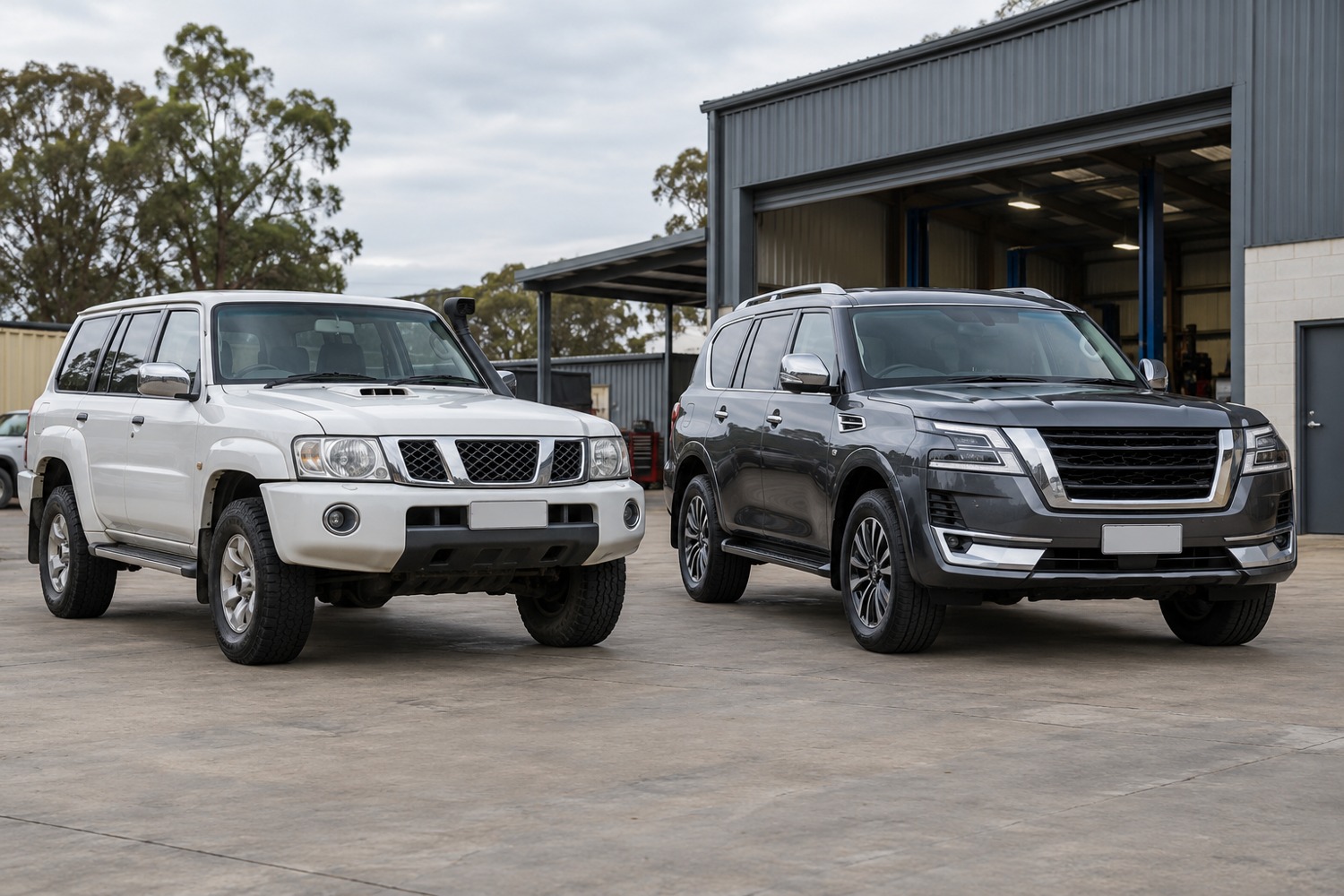
Two Patrols sit on the used market and they have almost nothing in common.
The Y61, also called the GU, is the diesel one, sold here until 2016. It keeps a live front axle and a simple driveline, which is why touring owners still want them.
Y61
The first question is which engine. The 4.2 litre six-cylinder turbo-diesel is the one with the long-life reputation. The 3.0 litre four-cylinder, known as the ZD30, is the one to check. Engines built between 2000 and 2005 have a documented history of cracked pistons, usually number three or four, sometimes holed right through. Several causes have been put forward: exhaust gas recirculation upsetting the fuel mixture, a dirty air-flow sensor, boost spikes. None of them is settled.
That is not a reason to rule out a Y61. It is a reason to ask three things: which engine is in it, whether the bottom end has been rebuilt, and who did the work. Ask for paperwork to back up the answers.
Y62
The Y62 arrived here in February 2013 and is petrol only, a 5.6 litre V8. Fuel is the honest headline. It drinks more than the diesel wagons it is cross-shopped against. On a long tour, that shows at every stop.
Two Australian recalls matter on a used one. Cars built in 2013 and 2014 were recalled over a fuel pressure sensor that could work loose and leak fuel. Cars from 2019 and 2020 were recalled over a fuel pump that could bind and stop the engine. Both are fixed free of charge, so the only question is whether it was done.
Higher grades also carry a hydraulic system that limits body roll. Check the wagon sits level and look for fluid around the shock absorbers. Watch for a suspension warning light on the test drive.
Common LandCruiser problems: 200, 300 and 70 Series
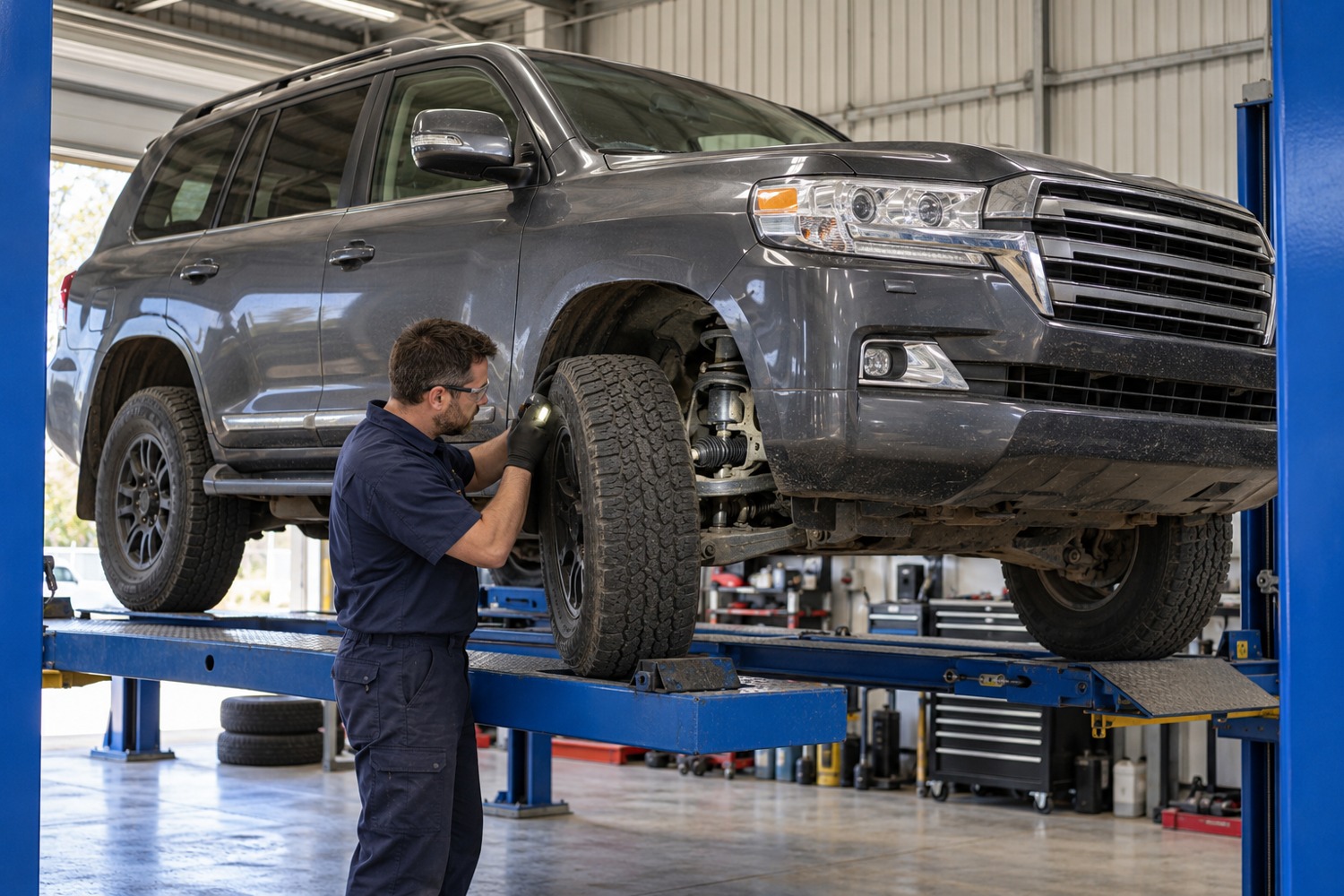
Three LandCruisers, three different buys.
The 200 Series was the full-size V8 wagon from 2007 until the 300 replaced it in 2021. Most of what needs attention on one is high-kilometre touring wear. The documented item worth your time is the front constant velocity joints. They let the front wheels steer and drive at once. Their rubber boots split with age and grit gets in. Look for grease flung around the inside of the front wheels, and listen for clicking on full lock. Cars built in 2007 and 2008 could also thunk at the rear when pulling away. Toyota fixed that under a service bulletin by replacing the propeller shaft.
The 300 Series is the current wagon, with a twin-turbo V6 diesel, and its check is the simplest here. There are two Australian recalls on the automatic transmission. One covers cars built between July 2021 and January 2024, the other covers 2025 cars. Both are sorted with a software update at a Toyota dealer at no cost to the owner. That is a reason to confirm the work has been done before you buy. It is not a reason to avoid the car.
The 70 Series is the ute, the troop carrier and the 76 wagon, and it is still sold new. It is bought for simplicity and for carrying a load. The trade-off is how it drives on the road, which is noisier and less settled than a Prado or a 200. Drive one at highway speed before you commit. Look hard at what it has done for a living, because a 70 Series that has worked shows it underneath.
Red flags on a used Prado, Patrol or LandCruiser
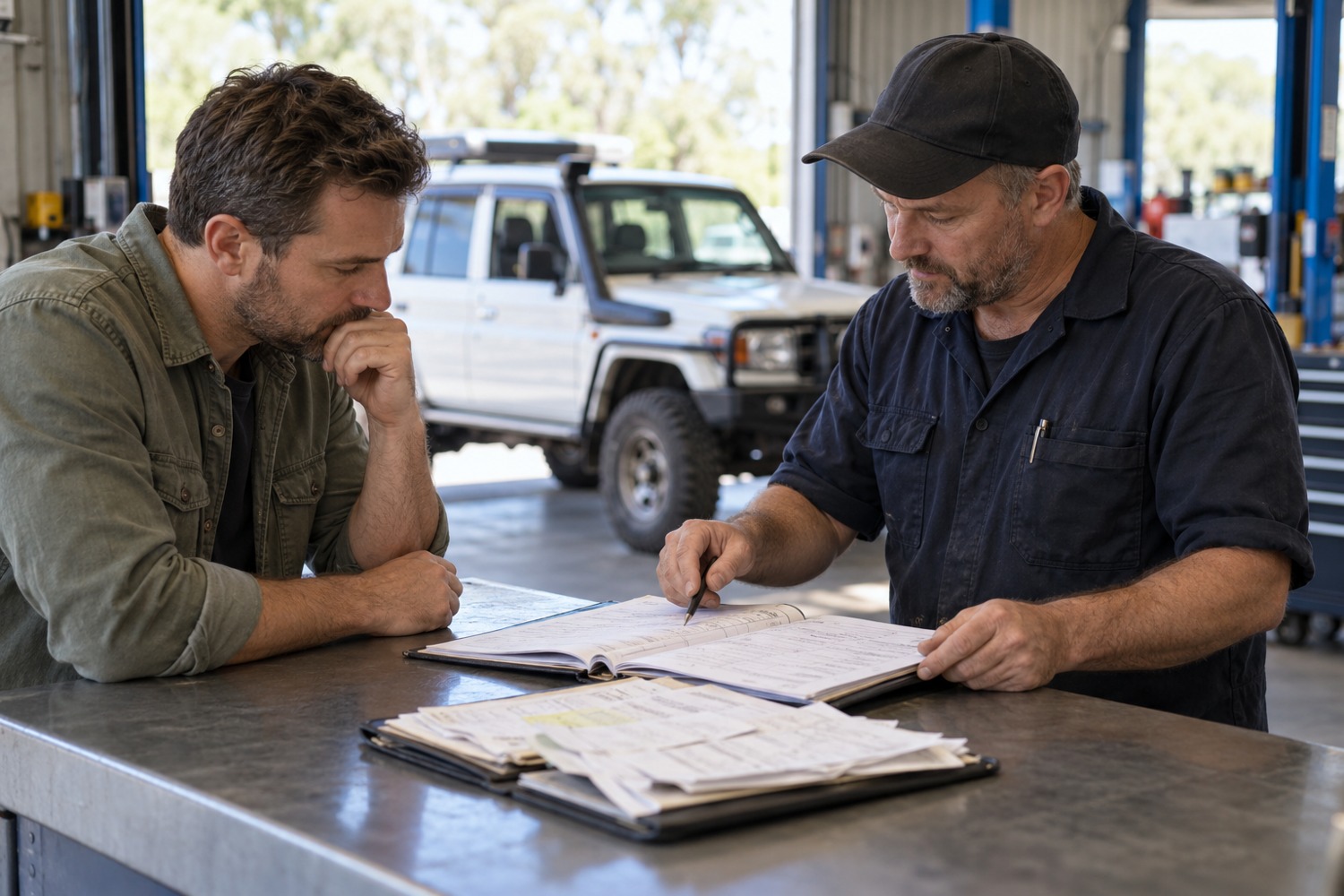
Each one is a check rather than a verdict.
| Red flag | What it usually points to | Walk away or negotiate |
|---|---|---|
| A Y61 with the 3.0 litre engine and no record of a rebuild or regular oil changes | The ZD30 piston history, with nothing to say where this one sits in it | Walk away unless the paperwork turns up |
| A 2009 to 2014 diesel Prado that knocks on a cold start and blows black smoke | The cracked-piston and injector pattern on that engine | Walk away, or price an engine strip into the offer |
| A 300 Series whose transmission recall work has not been done | Software still on the original program | Negotiate, and have it booked in before any long trip |
| A Prado sitting low at the rear after a night parked | A leak in the height-adjusting rear suspension | Negotiate, with a written quote in your hand |
| Clicking from the front of a 200 Series on full lock | A split boot and a worn constant velocity joint | Negotiate, it is routine work |
What a wagon inspection checks that a ute inspection does not
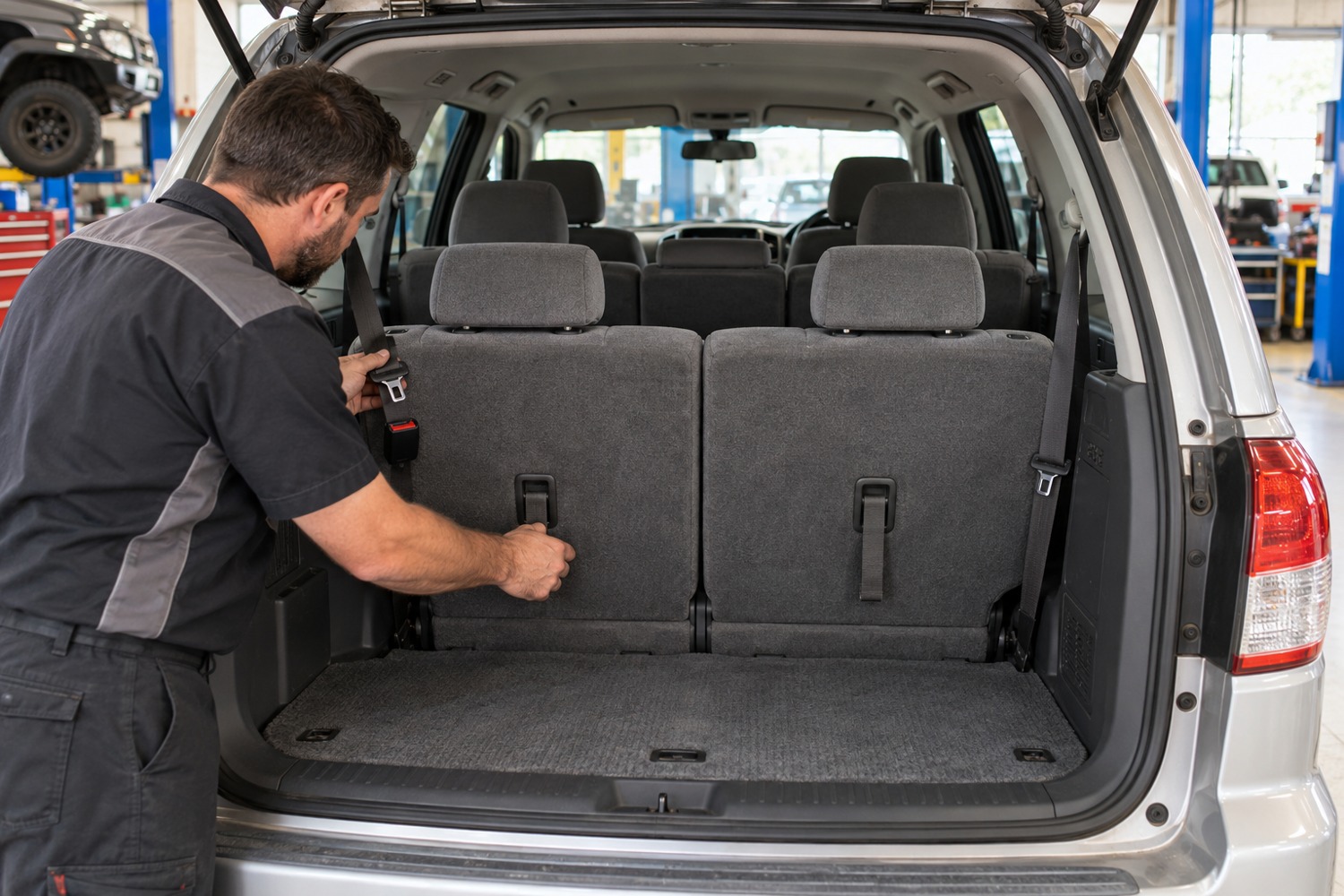
A touring wagon carries people where a ute carries gear, and the inspection changes with it. On the hoist, the extra items are the height-adjusting or hydraulic suspension, where it is fitted, and the towbar wiring. Underneath, it is the body of a wagon loaded to the roof rather than to a tray. Inside, it is the third row, the rear climate control and the wear eight years of children leave behind.
Three checks come before any of that, and the first of them is free. Start with the registration check on the Service NSW site. It gives the registration status, any restrictions and the compulsory third party insurer. It also gives the three most recent yearly odometer readings. Those are the quickest way to see whether the kilometres on the dash make sense. A paid vehicle history report says whether the wagon has been written off or reported stolen. Service NSW also tells anyone buying privately to search the Personal Property Securities Register. It is the national register that shows whether money is still owed on a vehicle.
Then the recalls. A dealer can list what is outstanding against a VIN while you are on the phone. The work costs the owner nothing.
Already modified? What that changes
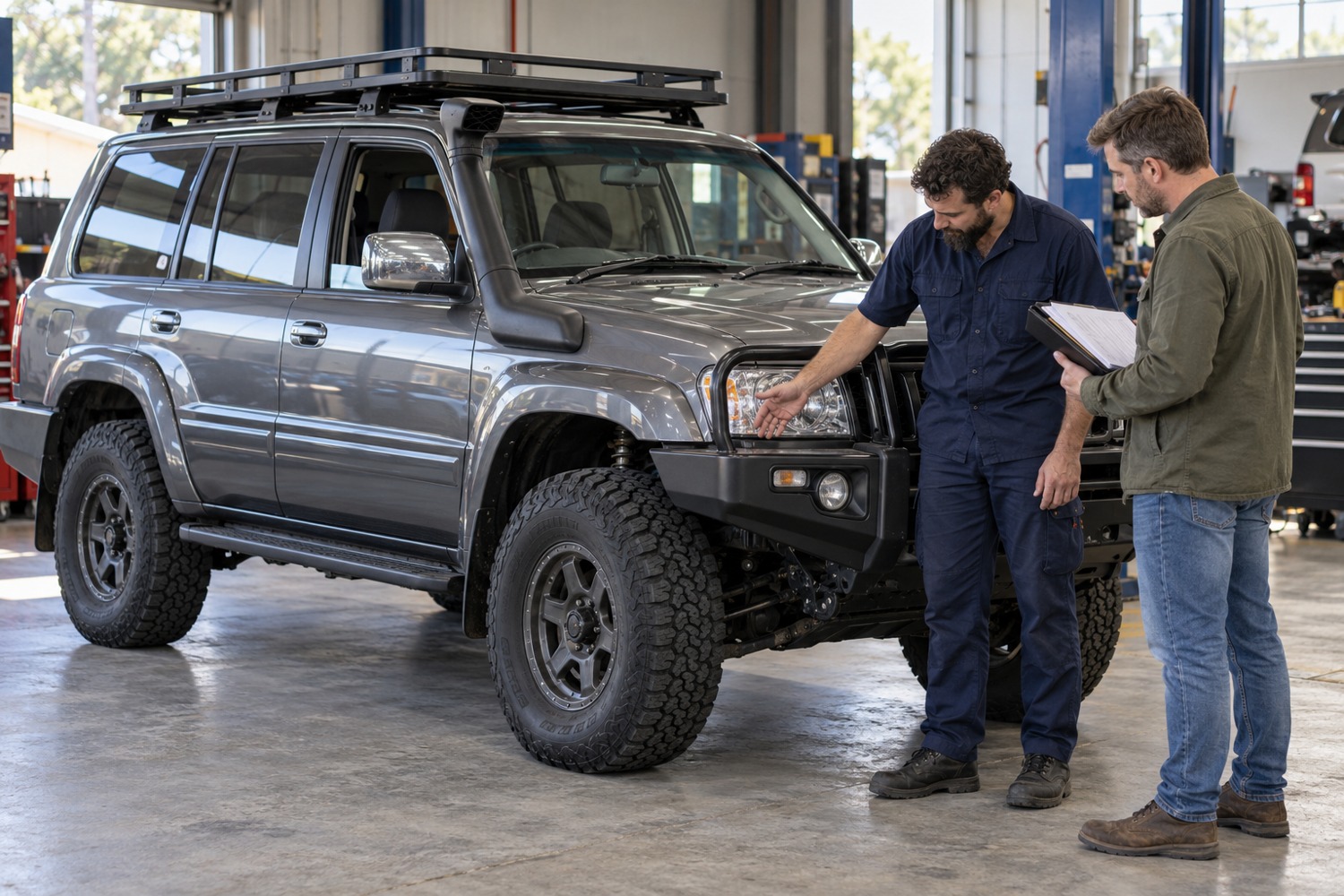
Plenty of used touring wagons arrive with a lift, bigger tyres, a GVM upgrade or an engine tune. None of that is a problem by itself. Each is a question about who did the work and whether the paperwork exists.
A wagon bought on the Northern Beaches has often had an easier life than its kilometres suggest. It has often never been looked over properly either. Before you hand the money across, book a pre-purchase inspection with Xtreme 4×4. Have the wagon checked for the weak spot of its own generation.
- A lift and bigger tyres: the limits that apply before a lift needs certifying are specific. Ask how much height was added altogether, and whether the wagon sits inside them.
- A GVM upgrade, which raises the legal loaded weight of the wagon: ask whether it was certified and whether the higher rating is on a plate. What a GVM upgrade costs is money you save if that work is already done.
- An engine tune: ask who wrote it, what was changed and whether the standard file was kept.
Frequently asked questions
How do I check whether recall work has been done on a used LandCruiser?
Copy the vehicle identification number off the build plate and give it to a Toyota dealer. They can list anything still outstanding against that car. The work itself costs the owner nothing.
Is a high-kilometre Y61 Patrol still worth buying?
It can be, provided you know which engine is in it and what has been done to that engine. A 4.2 litre with a folder of receipts beats a tidy 3.0 litre with no history.
Is a pre-purchase inspection worth it on a wagon with a full service history?
A service book records what was paid for, not what the wagon has been through. Time on a hoist finds wear and repairs that no stamp in a book mentions.