
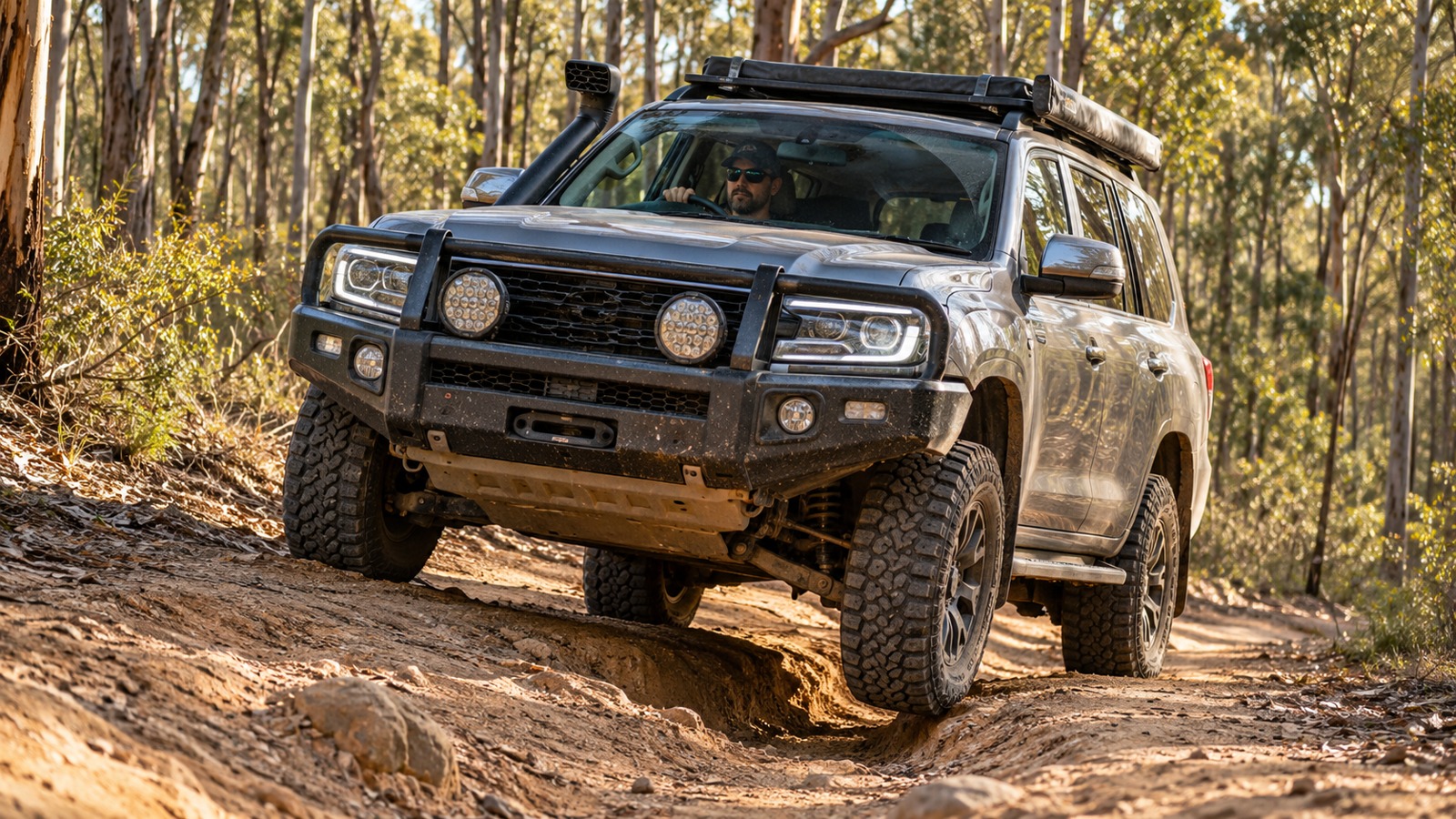
Electronic traction control brakes a spinning wheel. The drive then crosses to the wheel that still has grip. It waits for the spin to start before it acts. A differential lock ties both wheels on an axle together. Neither can spin alone, so both keep driving even with one wheel in the air. On sand and gravel, good tyres and the traction control already fitted usually do the job. A locker earns its money in ruts, steps and cross-axle climbs.
Someone at a campsite tells you that you need a rear locker. The honest answer starts with what your vehicle already has.
What does traction control do when a wheel starts spinning?
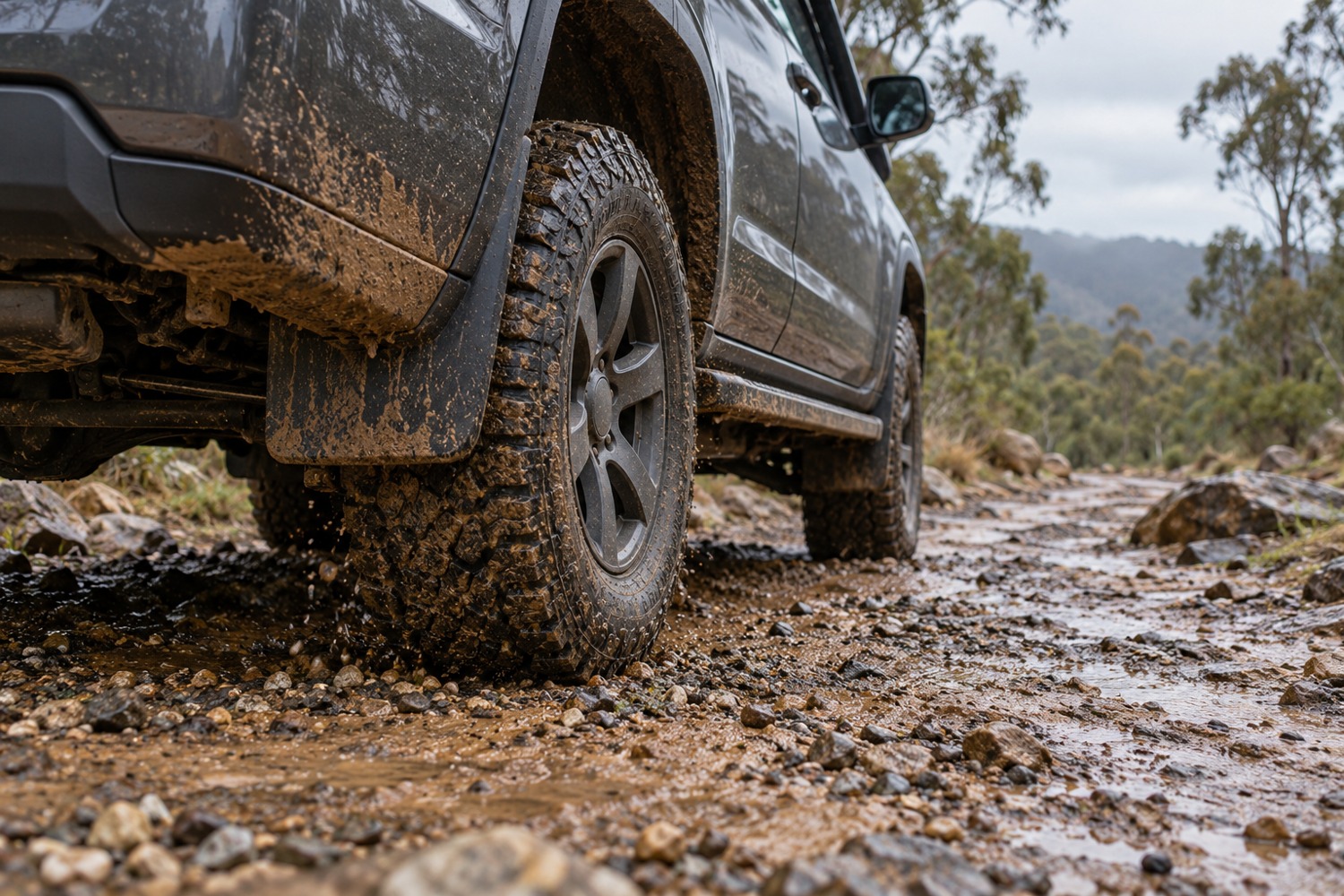
Start with the differential. It is the gearset in the middle of an axle that lets the two wheels turn at different speeds, which every corner needs. An ordinary one, called an open differential, splits the drive evenly whatever the ground is doing. Put one tyre on wet clay and the other on dry rock. The clay tyre spins, and the one with grip gets no more effort than it. Part makers say it plainly: a conventional differential lets a vehicle get stuck when one side loses traction.
Traction control is the vehicle’s answer. Wheel speed sensors pick up the wheel turning faster than the rest, and the system brakes it. That builds resistance on its side of the axle, so the drive crosses over. Isuzu describes its own system doing exactly that.
The limit is in the word spinning. The same maker says its standard setting waits for wheel spin before reacting. So it added a rough terrain mode that brakes from just off idle. Systems differ a lot between vehicles. Brake-based help suits loose but even ground, and has less to work with when a wheel is light or clear of it.
Diff locks, limited slip and factory e-lockers: what each one is
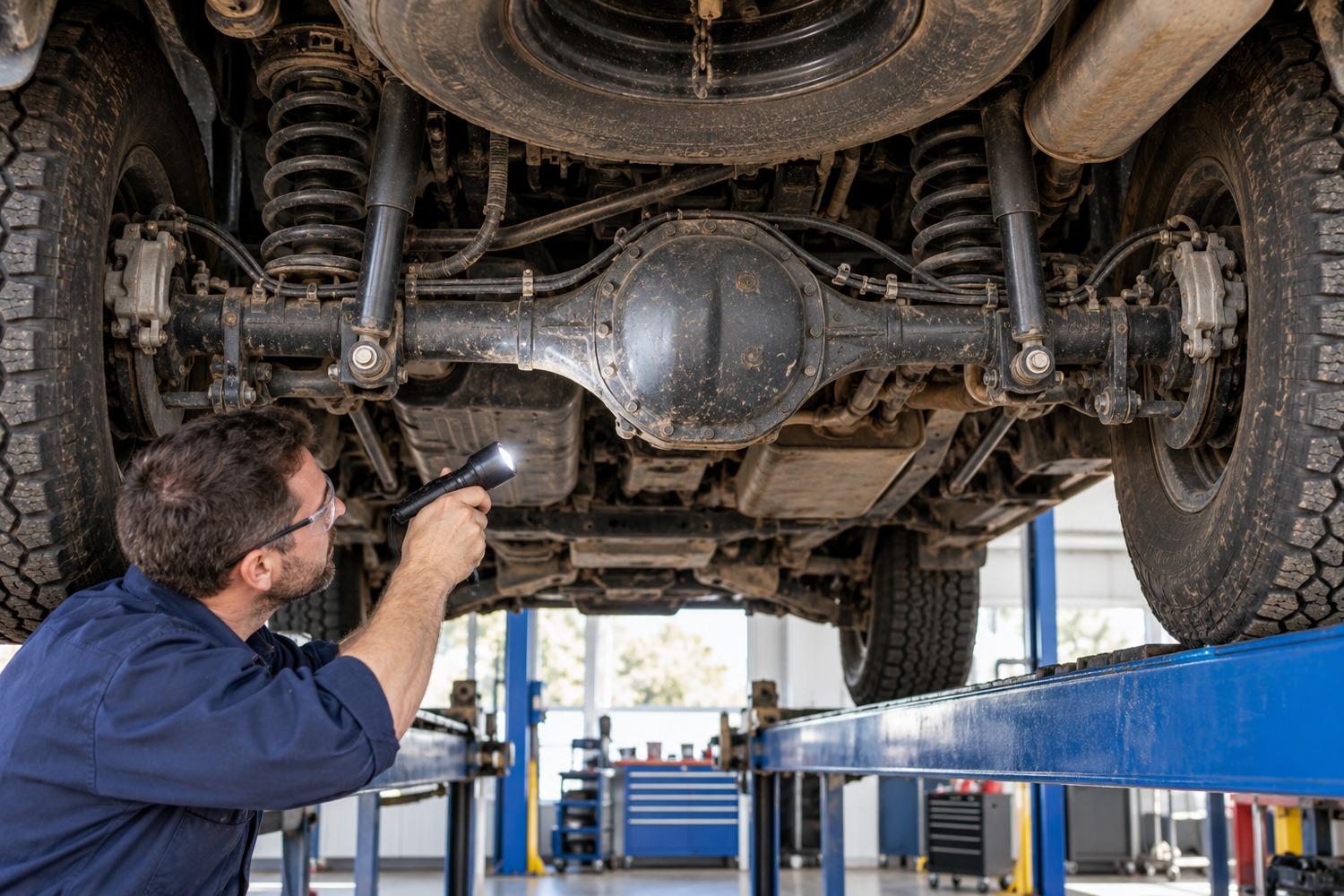
Four different things get called the same thing.
- Selectable locker. The driver switches it on when needed, then off again. With the switch off it behaves as an open differential, so corners and car parks feel normal. Air and electric versions exist. Makers differ on when to switch one in, and some say stopped or at walking pace, never with a wheel already spinning.
- Automatic or mechanical locker. No switch. It drives both wheels all the time, and releases itself when a corner turns the outside wheel faster. Makers describe it as keeping both wheels driving even with one wheel lifted off the ground. You feel it working on the road, and you cannot choose when.
- Factory e-locker. Fitted from new on some utes and wagons, almost always on the rear axle, with a console button. Ford says its own system drops out above a set speed and is not meant for dry sealed roads.
- Limited slip differential. Not a lock, and the one owners get wrong most often. It biases drive towards the wheel with grip rather than tying the two together. Eaton’s manual says its own unit behaves like an open differential in normal driving. On wet or loose ground it shifts power to the wheel with the best grip. The catch is in the same manual: it needs resistance on the ground to work, and may move nothing if the spinning wheel is in the air.
Rear locker, front and rear, or neither?
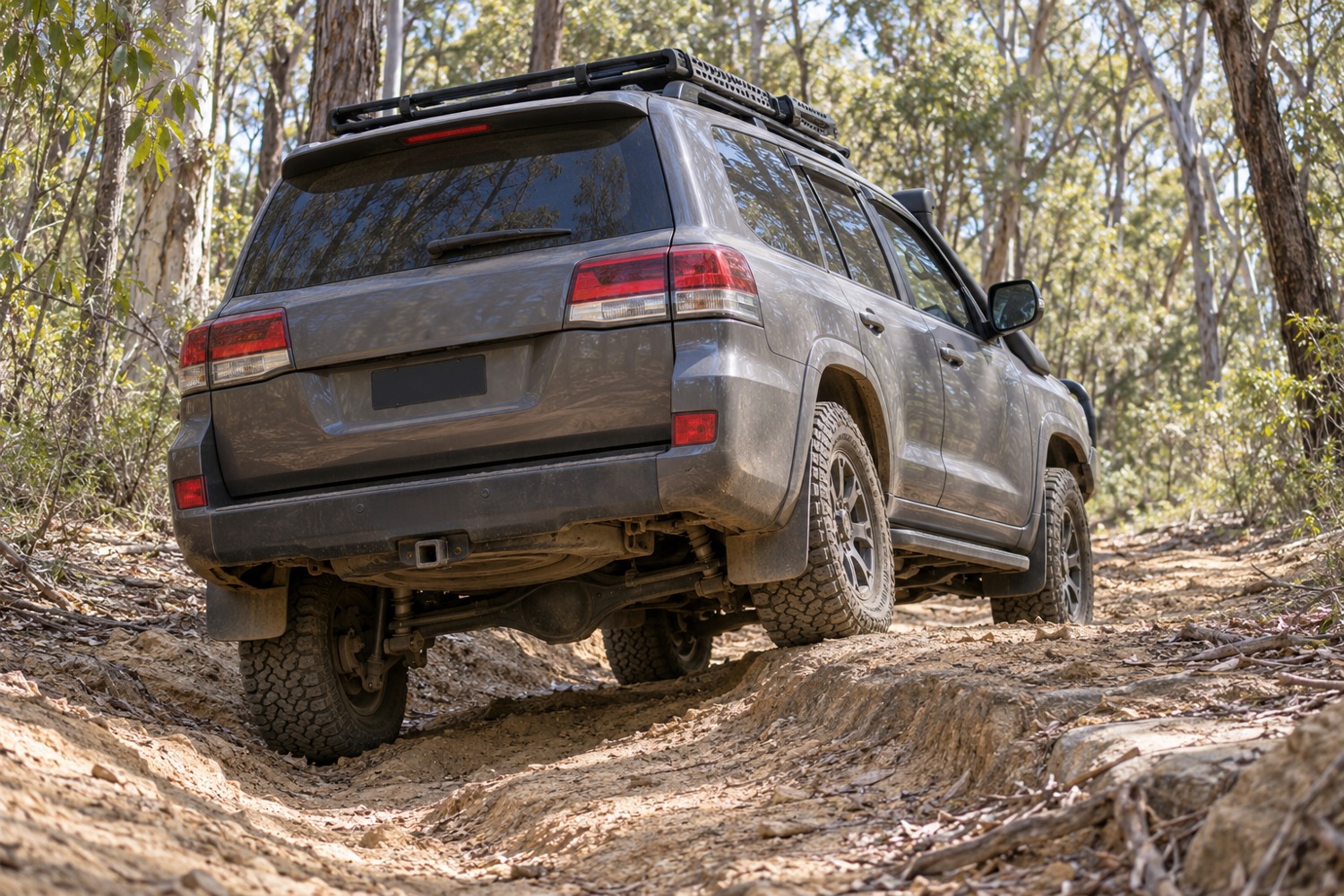
For a touring 4WD the rear axle comes first. It carries the weight on a climb, and it is where the factory fits one if it fits one at all.
A front locker is a different decision, because it changes how the vehicle steers while it is engaged. Harrop’s instructions for its electric unit are blunt. Steering response and manoeuvrability may be reduced dramatically, and steering may be difficult with the front one engaged. Use it only at low speed and only in four-wheel drive. For owners who tour rather than crawl, that settles it.
Two lockers suit a vehicle that often runs both axles out of grip at once. Rock steps, deep ruts, climbs with a wheel in the air. On ground you never meet, the second one is money in the wrong place. If you are working out what to buy first, the first five mods for a new 4WD are a better starting point.
So go by the driving you do. Beach runs, gravel access roads and dry fire trails, no locker needed. Add the occasional wet clay climb and a rear locker is worth considering. For rutted cross-axle work behind the Hawkesbury and in the Watagans, fit the rear one. The park service says most roads up there need a four-wheel drive in any weather, and gates can shut when wet.
Diff lock or traction control, surface by surface
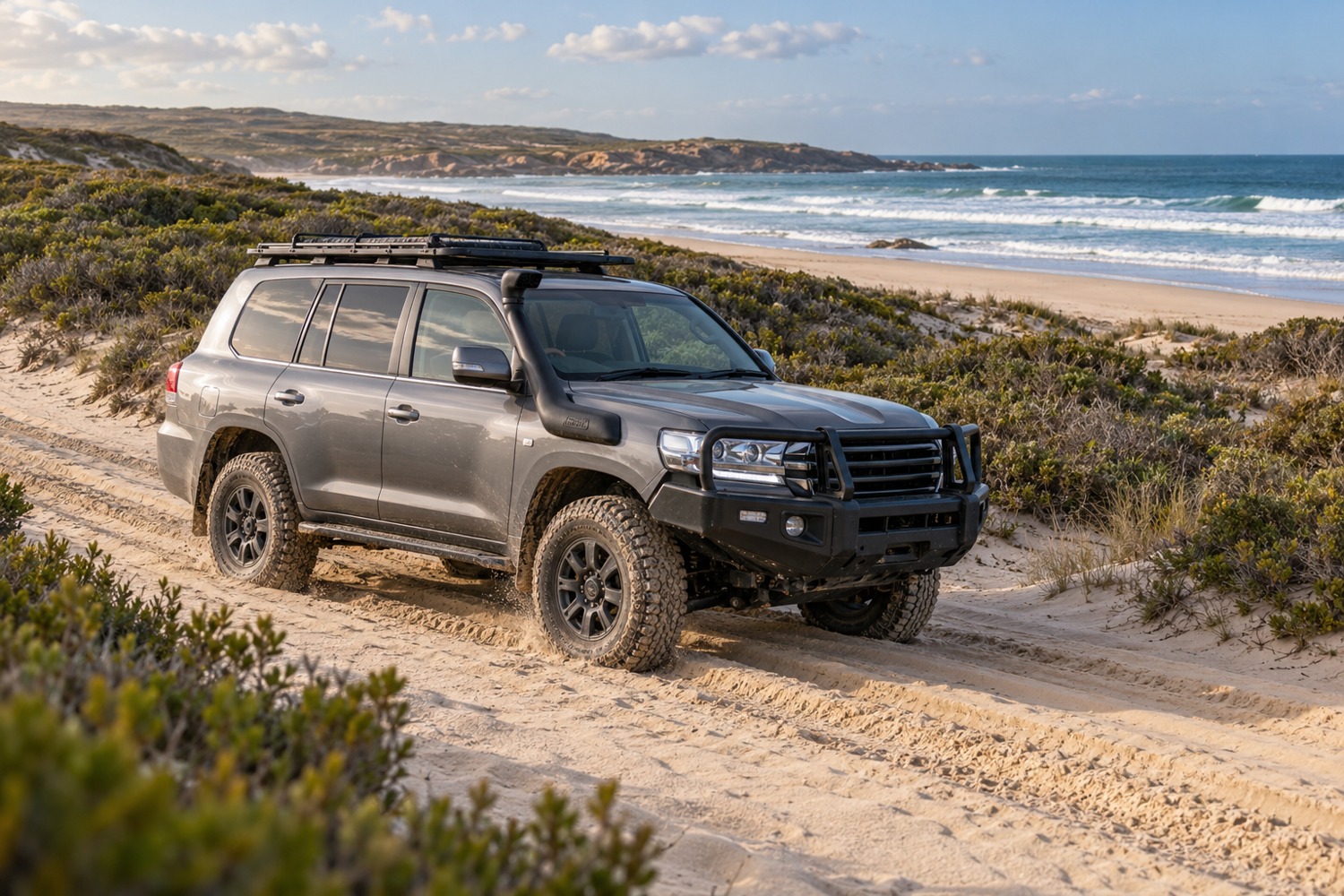
Match the answer to the ground, not the badge. Does this surface take grip from one wheel at a time, or from all four at once? A locker only helps with the first.
Sand deserves a straight answer. Many Northern Beaches owners spend their off-road time there, and it is where a locker does least. Both wheels turn in the same soft stuff, so there is no spare grip to reach. Sand is a flotation problem, and the fix is the tyres.
| Situation | What traction control does | What a locker does |
|---|---|---|
| A wet clay climb, both wheels slipping | Brakes each spinning wheel and keeps you moving | Little extra, as neither wheel has grip to share |
| A rutted trail, one wheel dropping into a hole | Reacts once that wheel spins, which costs momentum | Holds the drive on the loaded wheel at once |
| A step-up with one wheel clear of the ground | Has almost nothing to brake against on that corner | Drives the wheel still on the ground |
| Deep dry sand | Works with you if the tyres suit the surface | Very little, as all four wheels sink rather than slip |
| A gravel road in the wet | Handles it, and this is the ground it suits | Nothing you would notice |
What a diff lock will not fix
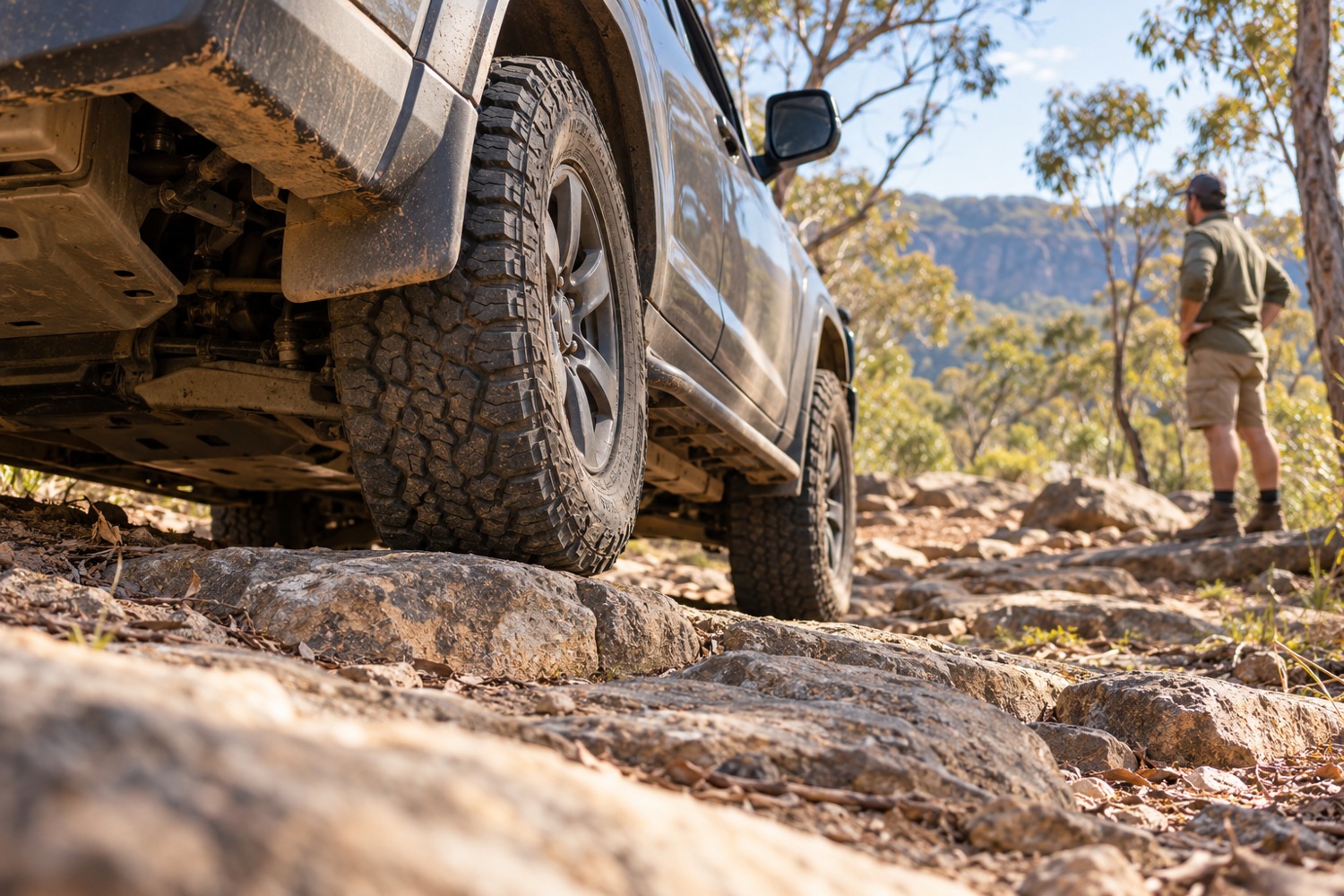
A locker adds no grip. It only stops one wheel giving away the grip the other one has.
Tyres come first, every time, and the choice between all-terrain and mud-terrain tyres is its own job. Ground clearance is next. A locker will not lift the diff housing over a rock, and a vehicle hung up underneath is not short of traction. Then there is momentum and driver input, which decide more climbs than any part in a box.
Who does not need a locker at all
Picture three or four trips a year: beach access tracks, gravel roads to a campsite, dry fire trails. A locker will do very little for you. You will spend a serious amount of money and feel almost nothing for it. That money buys better tyres, a recovery point you can trust, or the suspension work the vehicle is asking for. The request across the counter is usually a rear locker, and what the vehicle needs is usually further down the build.
What fitting a locker involves, and what it switches off
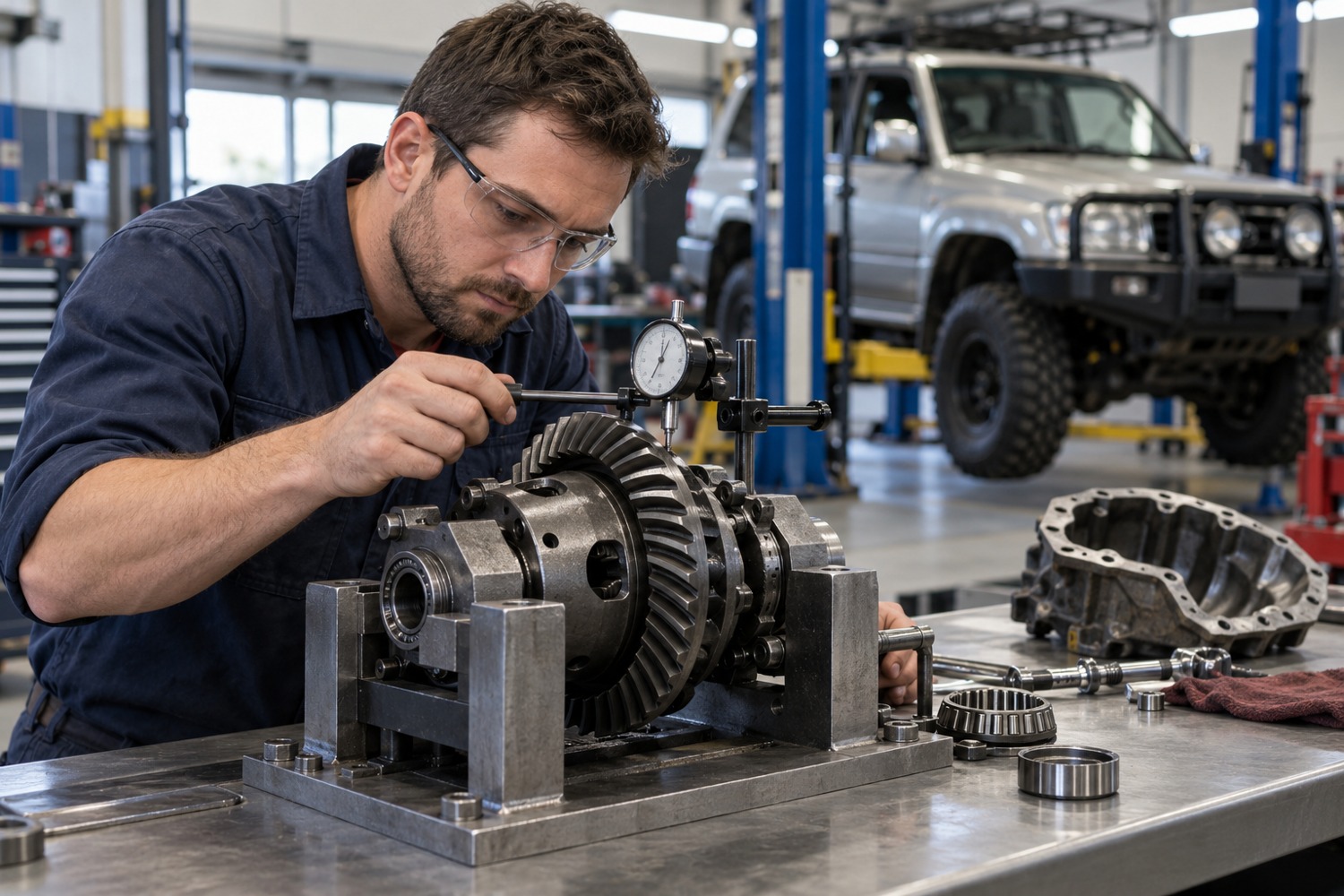
This is not a bolt-on. The differential centre comes out of the axle, oil and all. The new unit goes back in with the gear mesh set to the vehicle maker’s figures. Harrop’s installation instructions say the job needs sound experience and the ability to set gear backlash accurately. Get it wrong and you can wreck the crown wheel and pinion. A selectable unit also needs a switch, and either an air line and a compressor or wiring run to the axle.
Gear ratios come up in the same conversation, because one workshop does both. They are different jobs, and changing the final drive ratio can need certifying where speedometer accuracy is affected.
Locking an axle also changes what the electronics can do, because braking one wheel of a locked pair can no longer shift drive across it. On at least one Australian-market wagon, the maker switches the brake-based traction help off once the rear lock goes in. Your own manual will say what yours does. Either way, switch the lock off as soon as you are out of the rough.
Work out which surfaces your vehicle really meets before you order a locker. Then have someone who fits 4×4 modifications look at what is already in it. The team at Xtreme 4×4 can tell you what your axles already have.
Is a diff lock legal in NSW?
Fitting one inside the axle you already have does not need certification in New South Wales. Transport for NSW lists the modifications needing a compliance certificate in its Vehicle Standards Information sheet number 6, revision 4, issued on 1 July 2026. It covers light vehicles up to 4.5 tonnes. Its driveline table gives fitting aftermarket internal drive axle components, with differential locks as the example, as a case that needs no certification. Swapping in a whole drive axle from a vehicle that is not an equivalent one does. The sheet calls itself a live document, so check the current one.
Frequently asked questions
Can you drive on the road with a diff lock engaged?
You can, briefly and slowly, and you should not. Makers of aftermarket units say not to hold the lock in at road speed. They warn that a locked axle on a high-grip surface strains the drivetrain.
Does a limited slip differential do the same job as a diff lock?
No. It shifts drive towards the end of the axle with grip, where a lock turns both wheels at one speed. The difference shows when a wheel leaves the ground: the lock keeps working, the limited slip often cannot.
Is a diff lock worth fitting for beach driving?
Rarely. Sand takes grip from both wheels on the axle at once, so there is no spare grip for a lock to use. Tyre choice and pressure change a sand day far more than anything inside the differential.