
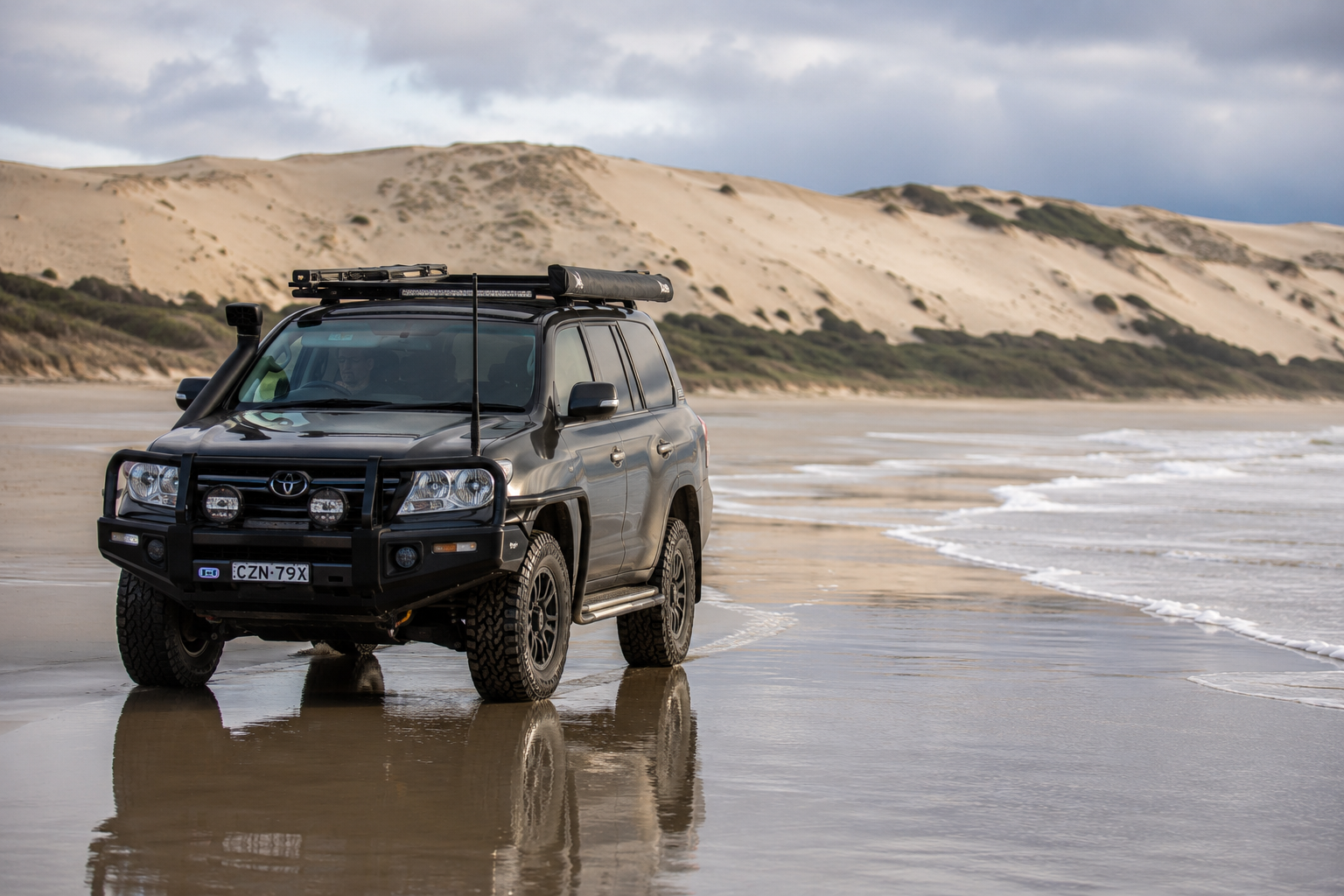
You are standing in a driveway somewhere off the Northern Beaches, or you have driven two hours to a country listing, and the ute in front of you looks tidy. Clean paint, decent tyres, a service book on the seat. The seller seems fine. But a HiLux or Ranger can hide its worst problems from the person standing in the yard, and a quick loop around the block will not bring them out.
The short version: the common HiLux problems and common Ranger problems worth worrying about on a used diesel are mostly emissions and driveline related, and most of them only show up cold, on a hoist, or in the service history. On a HiLux that usually means the diesel particulate filter (DPF), the part that traps soot in the exhaust. On a Ranger it depends on the engine. A cold-start check and a look underneath catch far more than a warm test drive, because a warm engine hides cold-start smoke and a short loop never loads the driveline.
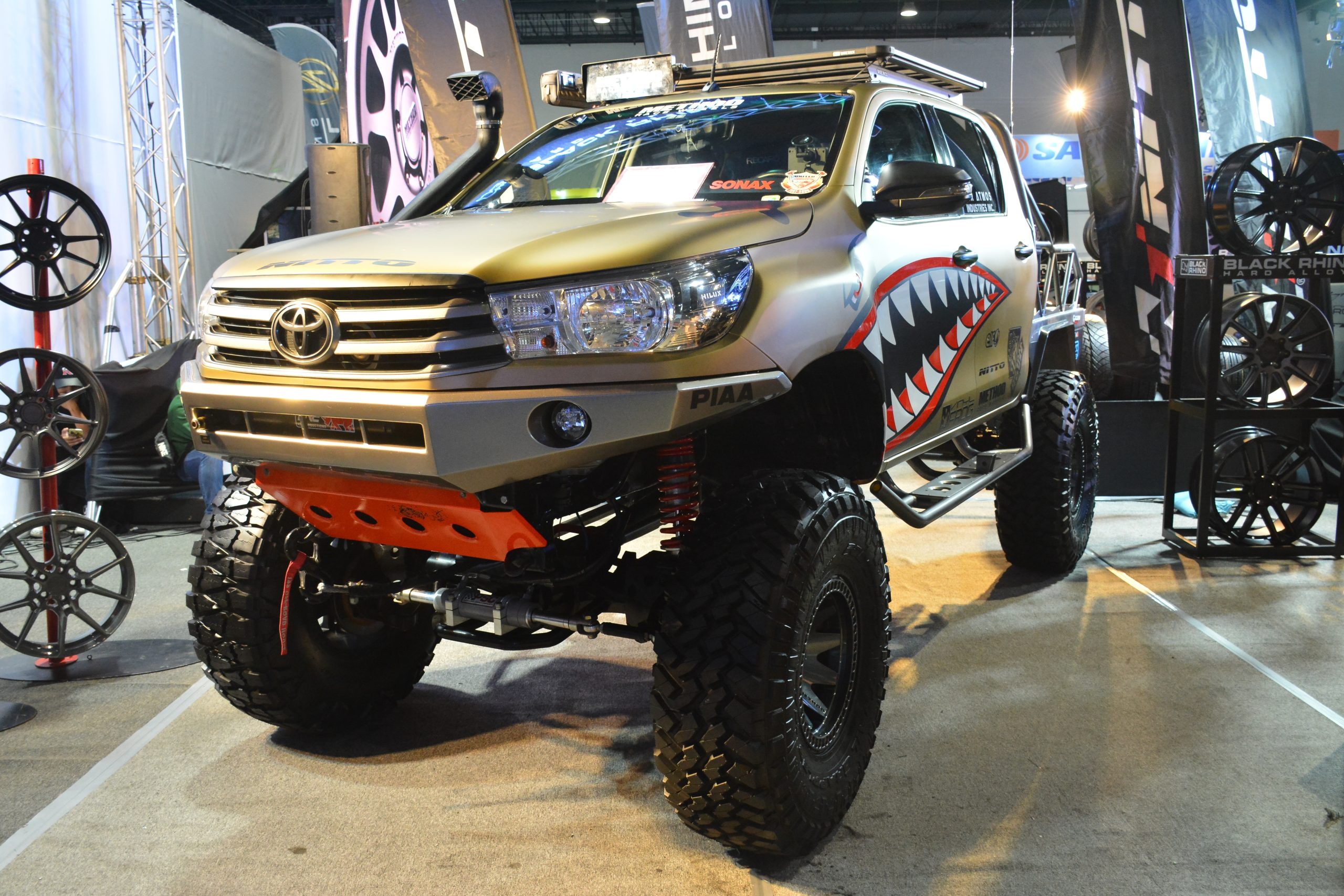
Common HiLux problems to check
The diesel HiLux built between late 2015 and 2020 is the one to look at closely. Those years ran Toyota's 2.8 litre GD engine, and the DPF on that engine has a known history. In 2022 the Federal Court found the DPF fitted to about 264,000 HiLux, Prado and Fortuner vehicles from that period was defective, with symptoms like white smoke, warning lights and lost power. Toyota added a manual burn-off button in 2018 and gave the engine a bigger update in 2020.
Here is why it matters to a buyer. A DPF needs long, hot runs to clean itself. A ute that has spent its life doing ten-minute school runs around Warriewood never gets hot enough, so soot builds up. We still see these utes come through the Mona Vale workshop smoking on cold mornings.
What to check on a HiLux:
- Cold start. Ask the seller not to warm it up before you arrive. Thick white smoke that hangs around after a cold start points to DPF or injector trouble.
- DPF and dash history. Frequent regeneration messages, a ute stuck in a regeneration loop, or heavy soot around the DPF injector all say the system is struggling.
- Service history. Look for a full book, and oil changes done on time. Short-run city utes need more care, not less.
A well-kept 2015 to 2020 HiLux can still be a good buy. The point is knowing what era you are looking at and checking the DPF behaviour before you pay.
Common Ranger problems to check
With a used Ranger, the first question is which engine sits under the bonnet. It changes what you check.
The 3.2 litre five-cylinder, in the PX, PX2 and PX3 from roughly 2011 to 2022, drives its camshafts with a timing chain, which is generally tough. Its weak points are the usual short-run diesel ones: a DPF and an EGR valve (the exhaust gas recirculation valve, which feeds some exhaust back through the engine) that clog up on stop-start city driving.
The 2.0 litre bi-turbo, meaning two turbochargers working together, is the one that needs more care. It uses a “wet” timing belt, a rubber belt that runs inside the engine oil. Ford quotes a long replacement life for it, but the belt breaks down as the oil ages, and the debris can block the oil pump pickup. When it lets go, the damage is usually severe and costly. Ford thought enough of the problem to drop the wet belt and move back to a chain from 2026.
What to check on a Ranger:
- Which engine, and the belt history. On a 2.0 bi-turbo, ask when the wet belt was last done and whether oil changes were kept short. Stretched oil changes are the enemy of that belt.
- Cold start and smoke. Same as the HiLux. White smoke on a cold morning points at the DPF. Blue smoke points at oil burning.
- Oil condition. Fresh, clean oil is a good sign. Ask to see the last few service invoices.
What a 4x4 specialist checks that a test drive won't
A test drive tells you the ute drives. It does not tell you how it has been used. That is the gap a proper inspection fills, and it is why plenty of buyers have a 4x4 mechanic go over a ute before they commit.
Cold and up on the hoist, the things worth finding are:
- Cold-start behaviour and DPF soot load, read with a scan tool rather than guessed from the exhaust.
- Signs of a hard tow or load life, like a worn tow hitch, sagging rear springs, or a clutch on its way out.
- Underbody and chassis condition, including rust and salt damage on a coastal ute, or bent and scraped underbody from off-road use.
- Modifications done badly, like a lift kit fitted without the right parts, messy wiring behind a dual battery, or a GVM upgrade with no paperwork.
This is the pre-purchase side of the coin. If you already own your 4WD, the same wear shows up after a big trip, which is worth a read on its own.
Red flags at inspection, and what they mean
Some faults are worth walking away from. Others are just money off the price. This is roughly how we read the common ones.
| Red flag at inspection | What it usually points to | How serious |
|---|---|---|
| White smoke that hangs around after a cold start | DPF or injector trouble on either model | Serious, can be a big bill |
| Frequent DPF or regeneration warnings | A DPF struggling with short-run use | Serious, budget to sort it |
| No record of the wet belt on a 2.0 Ranger | Belt life unknown, risk of failure | Serious, price in a belt job |
| Blue smoke on start-up | Engine burning oil, worn internals | Serious, walk away or dig deeper |
| Gaps in the service book | Unknown maintenance, especially oil | Caution, verify before you commit |
| Sagging rear, worn tow hitch | A hard tow or heavy load life | Minor to moderate, negotiate |
| Surface rust underneath a coastal ute | Salt exposure, usually manageable | Minor, negotiate |
Walk away, or use it to knock the price down
Walk away when the fault is expensive and hidden. Blue smoke on start-up, a DPF that will not hold a regeneration, or a 2.0 bi-turbo Ranger with no belt history and high kilometres can all cost more to fix than any discount you talk the seller into.
Use the rest to negotiate. Tyres near the end, a service that is due, surface rust, a sagging spring, or a tow hitch that has clearly worked hard are all normal wear. None of them are dealbreakers on their own. They are just numbers you bring to the conversation.
A high-kilometre diesel is not automatically a bad buy. A 200,000 km ute with a full service history and clean oil can be a safer bet than an 80,000 km one that has been neglected. History beats the odometer.
What the fixes cost
Rough numbers help you judge whether a fault is a dealbreaker or a bargaining chip. A used 4WD pre-purchase inspection in Australia usually runs around $250 to $400, a bit more than a standard car because a 4WD takes longer to go over. That is the cheapest money you will spend in the whole buying process.
The repairs are where it gets serious. A DPF clean or replacement, a wet-belt job on a 2.0 Ranger, or injector work can each run well into four figures. We will not put a firm price on your specific ute here, because it depends on the model, the fault, and what else turns up once it is apart. The point of an inspection is to know that number before you buy, not after.
Get it checked before the money changes hands
The ute in that driveway might be exactly what it looks like. Plenty are. But a HiLux or Ranger hides its worst faults from a test drive, and the cheapest way to find them is before you hand over the cash, not after. If you are looking at a used HiLux or Ranger on the Northern Beaches, book an inspection with the team at Xtreme 4x4 in Mona Vale and get an honest report before you buy.