
A fridge running overnight is usually when 4WD power stops being theory. The camp lights are on, phones are charging, someone plugs in a compressor, and the starter battery still has to crank the car the next morning.
A dual battery system gives your 4WD a second battery for accessories while protecting the main starter battery. For camping, touring and beach-driving setups, it can be one of the more useful 4WD mods. For light day trips, it may be unnecessary.
For Northern Beaches owners planning a dual battery setup, Xtreme 4x4 in Mona Vale can assess the vehicle, accessory load and trip style before parts are chosen. That matters because modern alternators, lithium batteries and tight engine bays can change what works safely.
What does a dual battery system do?
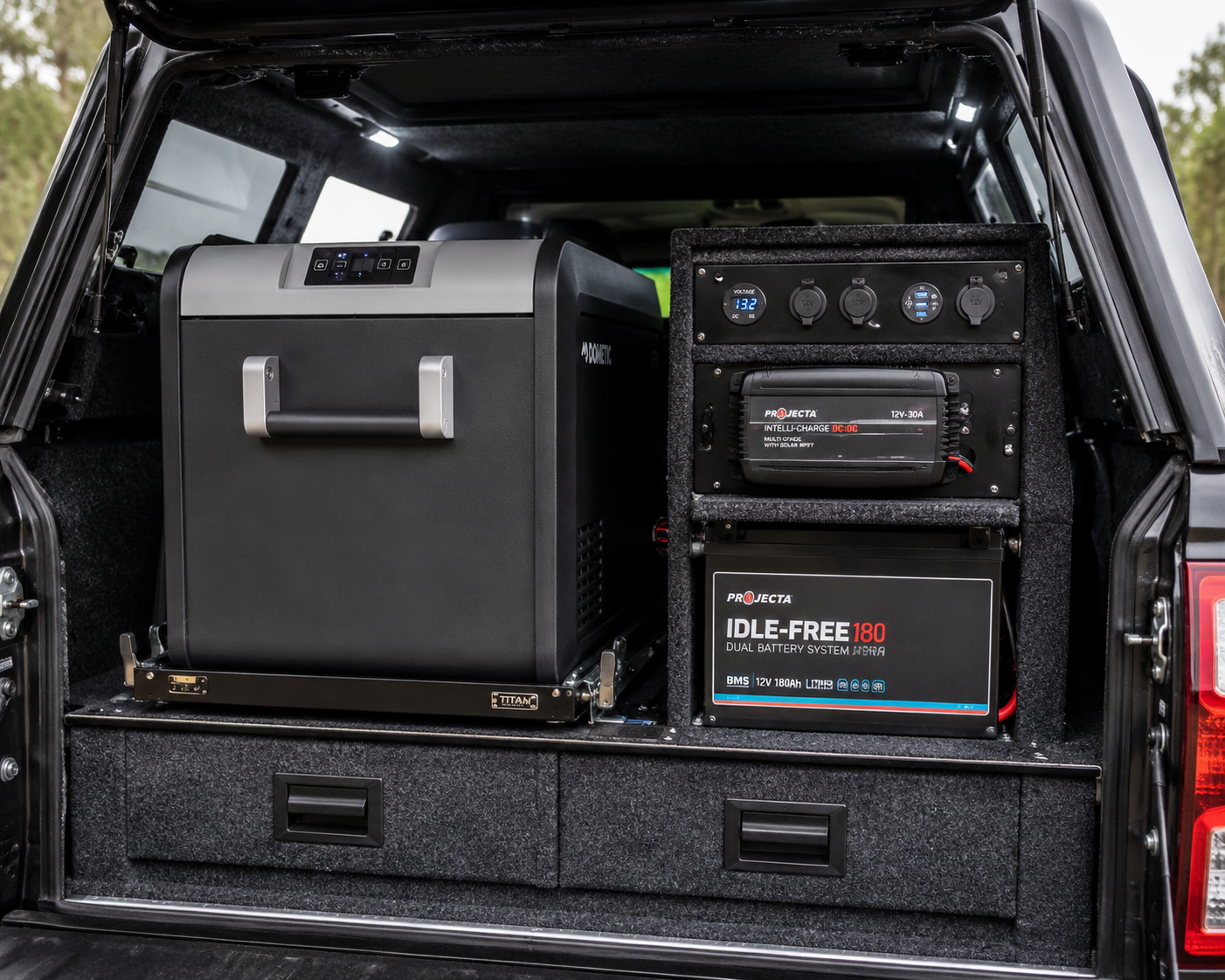
A dual battery system separates starting power from accessory power. The starter battery remains there to start the vehicle. The auxiliary battery runs gear such as a fridge, camp lights, USB outlets, an air compressor or work equipment.
Most systems include four main parts:
- Auxiliary battery: stores power for accessories.
- Isolator or DC-DC charger: controls charging and protects the starter battery.
- Cable and fuses: move power safely between components.
- Outlets and distribution: send power to fridges, sockets, lights and monitors.
Older 4WDs may suit a simpler isolator-style setup. Many newer 4WDs need a DC-DC charger because smart alternators do not always deliver a steady charging voltage to the second battery.
Who needs a dual battery setup?
A dual battery setup is useful when the vehicle is parked and still running electrical gear. It is less useful if the 4WD only does short trips where accessories run while the engine is on.
| You probably need one if | You may not need one if |
|---|---|
| You run a fridge or freezer | You only do day trips |
| You camp overnight or tour regularly | You mainly charge a phone |
| You use camp lights away from powered sites | Accessories only run while driving |
| You carry cameras, tablets or work gear | You do not run a fridge |
| You park for long periods at the beach or in the bush | You rarely stop away from power |
| You want solar charging while parked | You are keeping the 4WD close to stock |
The fridge is usually the deciding factor. A fridge can draw power for hours after the engine stops. Without a second battery, that load comes from the starter battery unless the setup has been designed to prevent it.
What type of dual battery setup suits your 4WD?
The right 4WD dual battery setup depends on battery type, alternator behaviour, mounting location and how much power the accessories need.
AGM and lead-acid batteries can suit simpler systems. They usually cost less than lithium and can handle basic fridge and lighting use. The trade-off is weight, charging speed and usable capacity. A 100Ah AGM battery should not be treated like a 100Ah lithium battery, because much less of its stored power is practical to use.
Lithium batteries are lighter, charge faster and give more usable capacity. They suit touring builds, canopy setups and owners who run more gear. The trade-off is price and placement. Many lithium batteries are not suitable under the bonnet because engine-bay heat can shorten battery life or void warranty conditions.
| Location | Best suited to | Watch for |
|---|---|---|
| Under bonnet | Older vehicles, heat-rated batteries, shorter cable runs | Heat, limited space and battery warranty limits |
| Ute tub or canopy | Touring utes, fridge setups and lithium systems | Dust, water, mounting strength and cable length |
| Wagon cargo area | Fridges, sockets and compact lithium systems | Ventilation, cargo protection and safe mounting |
| Portable battery box | Occasional camping and flexible use | Charging limits, loose gear and less integrated wiring |
A modern touring ute with a canopy often suits a lithium battery, DC-DC charger, fused outlets and a battery monitor. A simpler older wagon used for weekends may only need a smaller AGM system.
What should be checked before installation?
A good installation starts with the vehicle, not the parts catalogue. The same kit can behave differently in a Ranger, HiLux, Prado, Patrol, LandCruiser or Jimny.
| Check | Why it matters |
|---|---|
| Alternator type | Smart alternators often need a DC-DC charger |
| Battery location | Heat, water, vibration and space affect battery choice |
| Accessory load | A fridge, lights, inverter and compressor need different capacity |
| Cable route | Long cable runs need correct sizing to reduce voltage drop |
| Fuse protection | Fuses and breakers protect the vehicle if a cable shorts |
| Fridge location | Socket placement affects convenience and wiring length |
| Canopy or cargo layout | The system should match how the vehicle is packed |
| Payload and weight | Batteries, trays, chargers and wiring add load |
| Beach use | Salt, sand and water exposure change connector choices |
Payload is easy to forget. A dual battery system is not just a small electrical accessory. Battery, tray, charger, cables, outlets and fridge can add meaningful weight, especially on a touring ute already carrying bar work, drawers, recovery gear, water and passengers.
How much does a dual battery system cost?
Dual battery system cost varies because the job can be anything from a basic second battery to a full touring electrical fit-out. The figures below are broad Australian guide ranges, not Xtreme 4x4 quotes.
| Setup type | Typical cost guide | Best suited to |
|---|---|---|
| Basic AGM or lead-acid setup | About $800 to $1,500+ | Older vehicles and light camp use |
| AGM with DC-DC charger | About $1,200 to $2,500+ | Fridge use, newer vehicles and weekend touring |
| Lithium with DC-DC charger | About $1,800 to $3,500+ | Touring, canopy setups and heavier accessory loads |
| Full canopy or touring setup | Often $2,500 to $5,000+ | Lithium, solar, inverter, monitors and multiple outlets |
The final price changes with battery capacity, charger size, cable length, mounting hardware, outlets, monitoring, solar input, inverter use and labour.
The cheapest setup is not always cheaper once it is on tracks. Undersized wiring, poor fuse placement, weak mounts and the wrong charger can lead to poor charging, nuisance faults or damaged components.
What can go wrong with a poor setup?
A poor dual battery setup usually fails when the vehicle is furthest from help. The problem may be slow charging, a warm fridge, a blown fuse or a starter battery that still goes flat.
Common problems include:
- Starter battery drain if the batteries are not isolated properly.
- Voltage drop from cable that is too small for the run length.
- Poor charging from a smart alternator without the right charger.
- Heat damage when batteries or chargers are mounted in the wrong place.
- Water or salt corrosion around sockets, plugs and connectors.
- Loose battery mounts after corrugated tracks.
- Blown fuses caused by incorrect fuse size or rough cable routing.
- Fridge cut-out because the auxiliary battery is not reaching full charge.
This is why the installation matters. A dual battery system is not just a battery bolted into spare space. It is a charging, storage, protection and distribution system.
Is a dual battery system worth it?
A dual battery system is usually worth it if you camp, tour, run a fridge, work from the vehicle or spend long periods parked away from mains power. It lets you use accessories without gambling with the starter battery.
It may not be worth it if the vehicle only does day trips, light beach runs or short local drives with minimal electrical gear. In that case, a portable power station or smaller removable battery box may be enough.
The better question is not whether every 4WD needs one. They do not. The useful question is what you are running, how long you are parked, and how important it is that the vehicle starts in the morning.
For a touring build, Xtreme 4x4 can look at the vehicle, fridge, camp setup and accessory list before recommending a dual battery setup that suits the way the 4WD is used.
Frequently Asked Questions
A correctly designed dual battery system can protect the starter battery by separating it from the accessory battery when the engine is off. The fridge, lights and sockets should draw from the auxiliary battery instead.
Many modern 4WDs need a DC-DC charger because smart alternators can vary their output. A DC-DC charger gives the auxiliary battery the correct charging profile and can help it reach full charge.
Lithium is worth considering if you tour regularly, need more usable capacity or want to reduce weight. AGM can still suit lighter use, but lithium usually performs better in higher-demand touring systems.
Yes, if the battery capacity, fridge draw, wiring and charger are matched properly. A small battery and a hungry fridge may still struggle, especially in hot weather.
In many utes, the second battery is mounted in the tub or canopy. In wagons, it may sit in the cargo area or in a purpose-built rear setup. Under-bonnet mounting depends on space, heat, battery type and manufacturer guidance.