
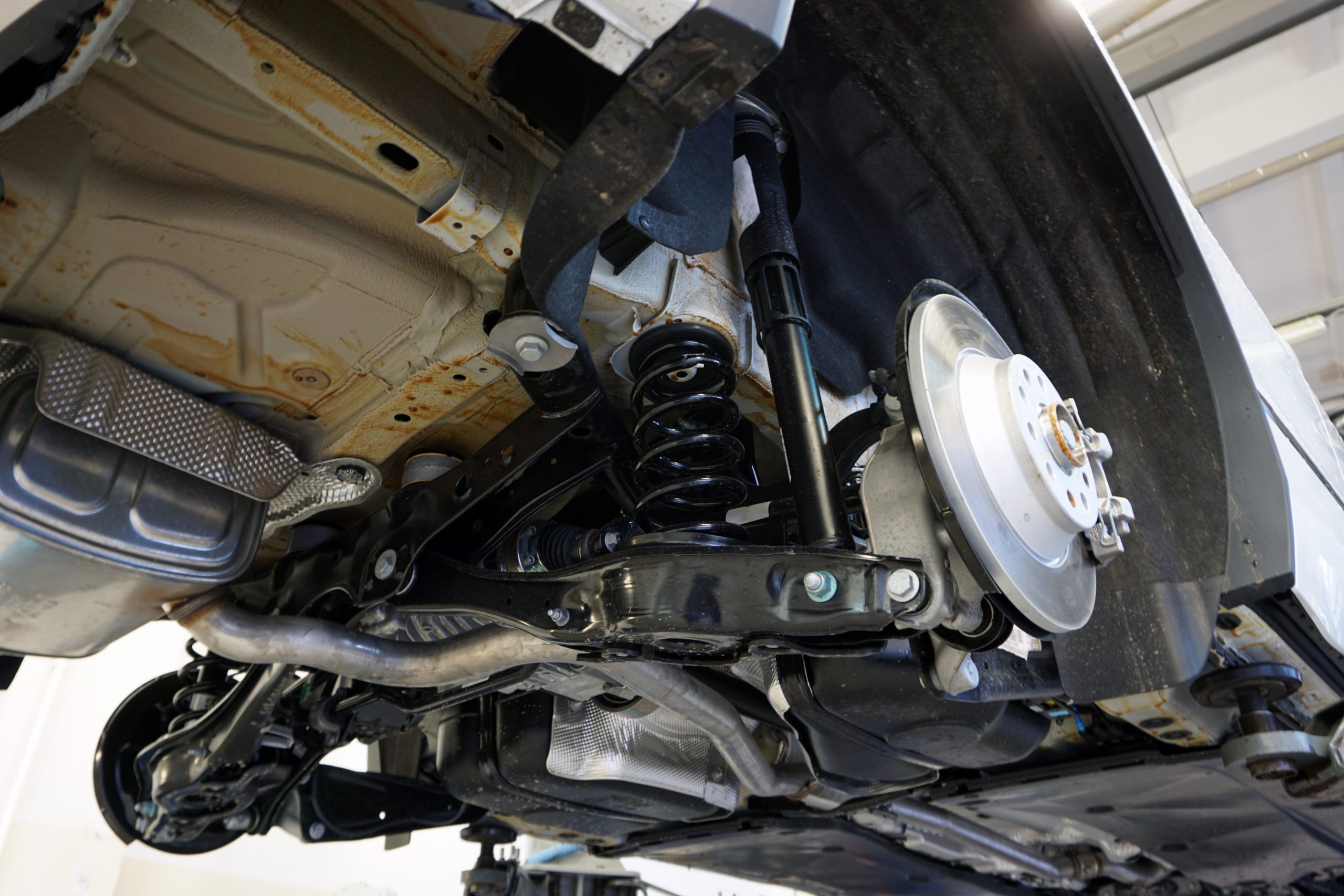
A GVM upgrade is one of the easiest ways to spend serious money on a touring build without realising where it went. Two quotes can look like they cover the same outcome and still land thousands of dollars apart. Most of that gap is not labour rate. It is scope, certification pathway, and what the vehicle needs to safely and legally carry the weight you are planning to put on it.
If you are comparing quotes, this piece explains what moves the number and what to look for in writing before you commit.
What GVM means in practice. GVM is the maximum laden mass specified for a vehicle. That is the total weight of the vehicle with everything on it: fuel, passengers, accessories, cargo, and tow ball load from a connected trailer. It is set by the manufacturer and recorded on the compliance plate. A GVM upgrade is a certified change that allows the vehicle to legally operate at a higher figure.
Safety and compliance note. A GVM upgrade is a compliance change as much as a parts change. The technical framework referenced by most Australian jurisdictions is Vehicle Standards Bulletin 14 (VSB 14), the National Code of Practice for Light Vehicle Construction and Modification, maintained by the federal Department of Infrastructure, Transport, Regional Development, Communications, Sport and the Arts. Administrative requirements vary by state and territory. In NSW, post-registration certification runs through the Vehicle Safety Compliance Certification Scheme (VSCCS).
This article is written by a repair shop. Use it as a benchmark to compare any provider, and ask to see evidence behind every recommendation.
The biggest thing that moves the price: which pathway you are using
There are two broad routes to a GVM upgrade in Australia, and the cost structure differs significantly.
Second stage of manufacture (SSM). This is done while the vehicle is still new and has never been registered. An SSM is a federally approved process where the base vehicle is modified and re-certified under the Road Vehicle Standards Act 2018 before it enters the market. The upgrade is recorded on an additional compliance plate and recognised nationally. Because the testing, documentation, and federal approval already exist for the kit, the certification cost at fitment is typically lower. However, it must be done before the vehicle is first registered in any state or territory, and the components in the approved kit must be fitted as specified. Substituting or omitting parts invalidates the approval.
Post-registration upgrade. This is for vehicles already on the road. It requires state-based certification rather than federal approval. In NSW, the certifier works within the VSCCS framework. In Western Australia, only a licensed vehicle modifier approved by the Department of Transport can carry out and certify the work. Other states have their own processes. Post-registration upgrades are generally more expensive per vehicle because the assessment is individual rather than batch-approved, and the certifier must inspect and sign off on the specific build.
If one quote assumes an SSM pathway and another assumes post-registration certification, you are not comparing like with like.
What drives cost up from there
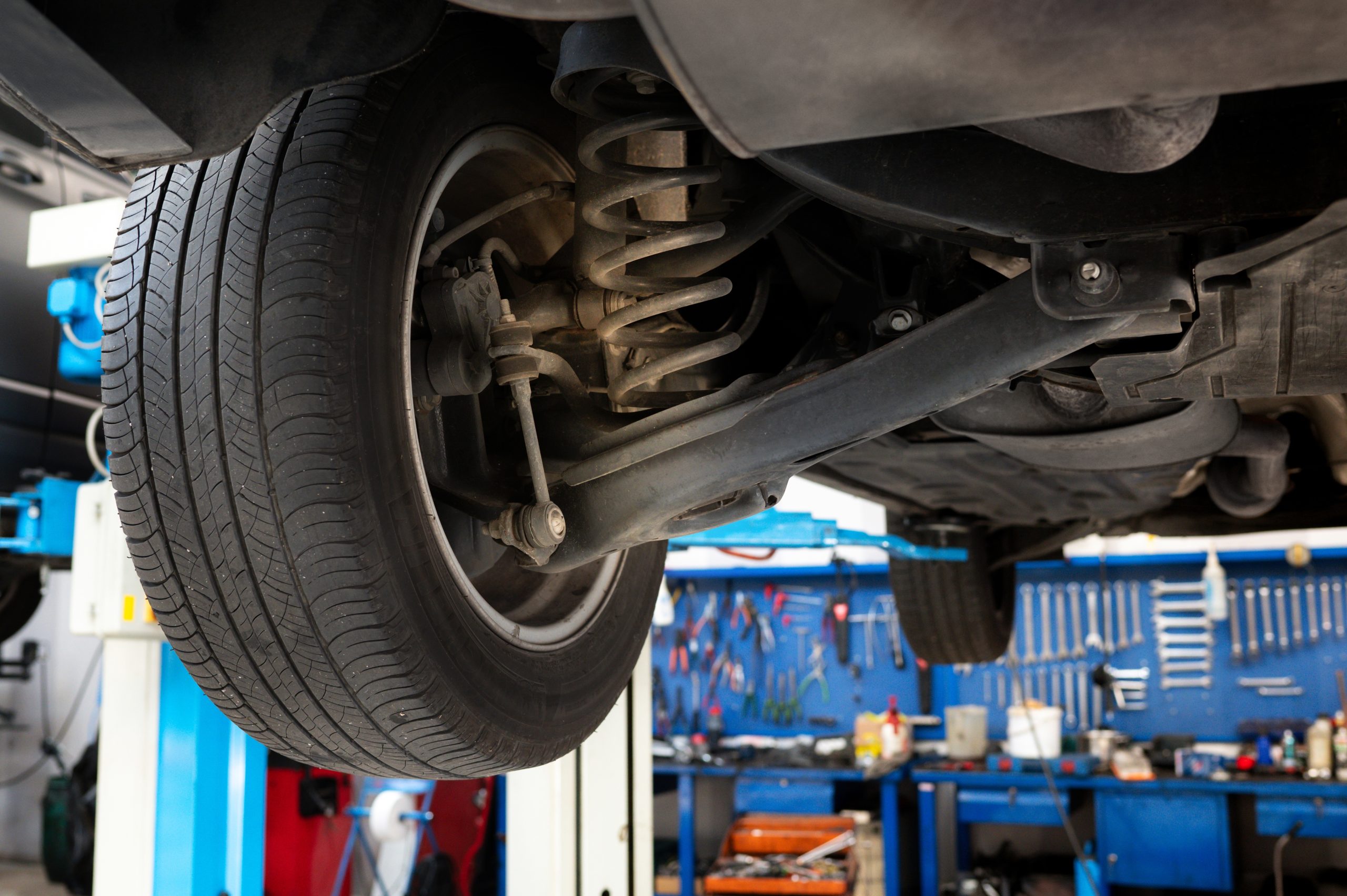
Front-end type and accessory load. A leaf-sprung rear with an independent front suspension, a coil-sprung front end, heavier accessory loads, and different tyre sizes all change what the kit must include. Heavier springs alone are not the same thing as an engineered package that maintains handling, ride control, and braking performance at the higher mass. If the build includes a steel bull bar, winch, dual batteries, and a long-range tank up front, the front axle load has changed substantially, and the spring rates, shock valving, and potentially the geometry correction components must reflect that.
Component package level. Some quotes include only the obvious parts. Others include what is needed to make the result safe and compliant over time.
| Cost driver | Why it adds to the price | What to ask for |
|---|---|---|
| Higher-spec shocks | Better heat management and damping control at higher mass | Shock model and intended load range, not just a “heavy duty” label |
| Springs matched to constant load | Prevent sag and maintain bump stop clearance under everyday weight | Target constant load and ride height at that load |
| Bushes, joints, mounts | Worn components can prevent certification and ruin alignment stability | Inspection findings in writing |
| Alignment and geometry | Higher loads magnify poor caster and toe stability | Before-and-after readings and a recheck policy |
| Brake performance evidence | Some pathways require brake testing or compliance documentation | What standard is met and how it is verified |
| Tyres and load ratings | Tyres must be rated for the load outcome, not the marketing name | Required load index and confirmation plan |
Certification and paperwork scope. Certification is professional time and liability, not a rubber stamp. The cost rises with the number of items the certifier must assess, whether evidence packages already exist for the kit, and whether the build includes other modifications that need to be captured at the same time. If one quote includes certification and another does not, the cheaper quote may simply be incomplete.
Vehicle condition and age. Older vehicles often add cost through seized fasteners, tired bushes, worn ball joints, and alignment adjusters that no longer respond. Even if those items are not part of the GVM kit, they may need to be addressed to complete the job properly, to pass certification, and to keep the vehicle safe at the higher operating weight.
The trap most people miss: what a GVM upgrade does and does not do for towing
This is one of the most misunderstood areas in the 4x4 touring world, and getting it wrong can cost far more than the upgrade itself.
A GVM upgrade increases your legal payload. It does not automatically increase your towing capacity or your Gross Combination Mass (GCM). The federal Administrator’s Circular 0-4-6, published in June 2018, states that second stage manufacturers are not permitted to increase the towing capacity of a light vehicle as part of an SSM approval that results in a GVM upgrade. GCM changes for light vehicles are treated as in-service matters by the federal department and fall to state and territory registration authorities.
Here is where the maths matters. GCM is the maximum total weight of the loaded vehicle plus any trailer it is towing. If your GCM stays the same but your GVM goes up, and you load the vehicle to the new GVM, the weight left over for the trailer goes down by exactly the amount you have added to the vehicle.
Example. A vehicle has a factory GVM of 3,350 kg, a braked towing capacity of 3,500 kg, and a GCM of 6,850 kg. You upgrade the GVM to 3,900 kg. If the GCM does not change, then the maximum trailer weight when the vehicle is loaded to its new GVM is 6,850 minus 3,900, which is 2,950 kg. You have gained payload but lost available towing capacity at full load.
This does not mean a GVM upgrade is wrong for someone who tows. It means the towing question needs to be answered separately, with its own evidence and compliance pathway, not assumed to come bundled with the GVM result.
The one-visit-or-two problem
A common cost blowout pattern runs like this: springs and shocks are fitted, the vehicle sits wrong or wanders or the tyres start feathering, then geometry parts, bushes, or additional corrections are added in a second round, the alignment is repeated, and certification is rebooked. Doing it in stages is almost always more expensive than doing the correct package in one visit, because labour and alignment costs repeat and certification may need to be reassessed.
The same logic applies to combining modifications. If you are doing a lift and a GVM upgrade on the same vehicle, or fitting accessories that affect axle loading at the same time, building those into one assessment is usually cheaper and cleaner than running them through separately.
How to control cost before the first quote
Know your actual weight. The cheapest and most useful thing you can do before requesting a GVM quote is weigh the vehicle as you use it. Take it to a public weighbridge with your normal load on board. Government-licensed weighbridges are listed on the National Measurement Institute website, and many BP service stations on major highways now have self-service scales. A single weigh typically costs between $40 and $60. Without real axle weights, every quote is a guess.
Know whether you have a weight problem or a sag problem. If the vehicle is within its factory GVM but sagging under load, you may need load-matched suspension rather than a GVM upgrade. Better springs and shocks matched to your constant load can fix ride quality, headlight aim, and handling without the certification cost. A GVM upgrade is the answer when you genuinely need the vehicle to legally carry more than its factory rating allows.
Know whether the vehicle is new or already registered. This determines the certification pathway. If you are buying a new vehicle and intend to build it for touring, arranging the GVM upgrade as an SSM before first registration is typically simpler, cheaper, and produces a nationally portable result. If the vehicle is already on the road, the post-registration pathway is the only option.
What a transparent quote should include
A quote that is straightforward to compare usually states the target GVM figure and what it means for payload given your specific build, the exact parts list including springs, shocks, and any geometry or braking components, what happens if inspection reveals worn components that need replacing, alignment inclusions and a recheck interval, the certification pathway and what is included in the certification fee, what documentation you receive at the end, and what you need to do with it for your state’s registration records.
If any of those items is missing, the quote is harder to compare and may be incomplete.
Common quote traps
A few patterns that reliably inflate the final bill: the quote is for springs only but your accessory load requires a different constant-load spring rate. The quote excludes an alignment recheck after the suspension has settled. The quote assumes no worn bushes or joints, but the vehicle is already loose underneath. The quote excludes certification or implies it can be done later with no clear plan or cost. The quote does not specify the tyre load rating required for the upgraded GVM. And the quote does not address what happens to towing capacity if the GCM is unchanged.
The short version
FAQs
A change that allows a vehicle to legally operate at a higher maximum laden mass than its original manufacturer rating. GVM is the total weight of the vehicle including fuel, passengers, accessories, cargo, and tow ball load. The upgrade requires an engineered suspension package and certification through either a federal SSM process (for new vehicles) or a state-based process (for registered vehicles).
Because the scope varies. Some quotes cover parts only, while others include geometry correction, alignment rechecks, worn component replacement, and certification. The certification pathway (SSM vs post-registration) also changes the cost structure. Quotes built around your actual build weight and accessory list are more accurate than generic kit pricing.
Not by itself. Heavier springs can reduce sag and improve ride control, but legal payload is governed by the certified GVM figure and its supporting documentation. Without certification, the factory GVM still applies regardless of what springs are fitted.
For a post-registration GVM upgrade, certification by an authorised person is required in all Australian states and territories. The process and terminology vary by state. In NSW, the framework is the VSCCS. In WA, a licensed vehicle modifier must carry out and certify the work. For new vehicles, the SSM process provides federal certification before first registration.
Not automatically, and in some cases it can reduce available towing capacity. If the GCM stays the same and you load the vehicle to the new higher GVM, the remaining capacity for a trailer decreases. Since the 2018 federal Administrator’s Circular 0-4-6, second stage manufacturers have not been permitted to increase towing capacity as part of an SSM GVM upgrade. GCM changes are handled separately and are a state-based matter.
Sometimes, but it often costs more overall. If the certifier requires additional parts, alignment corrections, or brake evidence, you pay for repeated labour and potentially a second alignment. Building the full package in one visit is usually cheaper and produces a more consistent result.
Yes. Tyres must carry a load index appropriate to the upgraded GVM. A tyre rated for the factory weight may not be rated for the upgraded weight. A thorough quote will specify the required load index and confirm that the tyres fitted to the vehicle meet it.
Weigh the vehicle at a public weighbridge with your normal load on board. This costs between $40 and $60, gives you real axle weights, and allows every quote to be built around actual numbers rather than assumptions. Government-licensed weighbridges are listed on the National Measurement Institute website.
These independent sources provide additional background on the regulatory and technical framework discussed in this article. None are affiliated with Xtreme 4x4 or its suppliers.
Department of Infrastructure – Second stage of manufacture: explanation of the federal SSM process for modifying new vehicles before first supply.
Department of Infrastructure – VSB 14, National Code of Practice for Light Vehicle Construction and Modification.
Transport for NSW – Vehicle Safety Compliance Certification Scheme (VSCCS).
Transport Western Australia – GVM and GCM FAQs: plain-English government explanation of GVM, GCM, and towing capacity interactions.
Department of Industry, Science and Resources – Find a public weighbridge: National Measurement Institute directory of government-licensed weighbridges.